



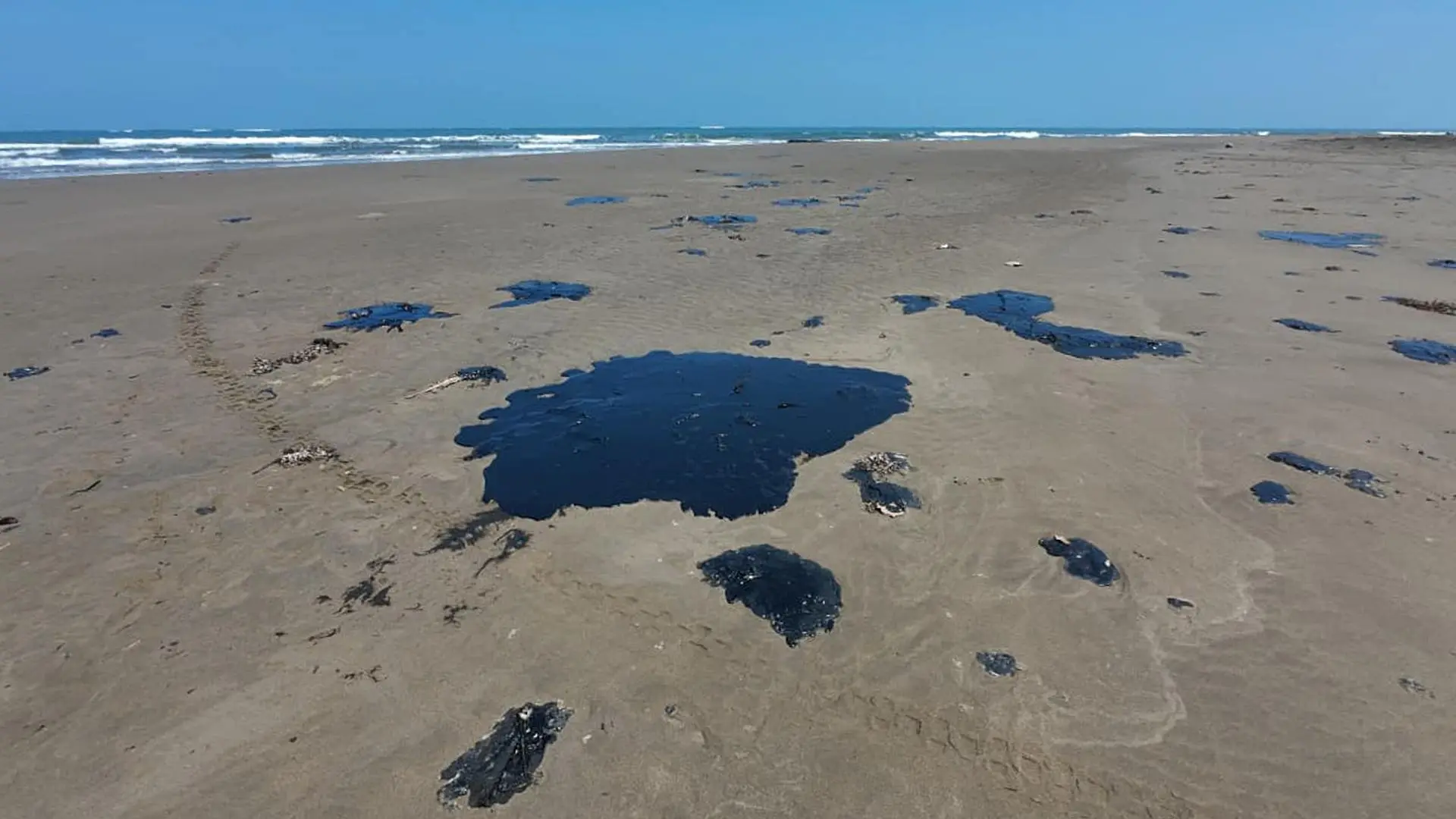
Federal authorities reported that 700 tons of pollutants have been collected on 39 beaches in the Gulf of Mexico, mainly in Veracruz and Tamaulipas, following the oil spill. These actions cover more than 480 kilometers of coastline, including sensitive ecosystems such as mangroves and estuaries.
The National Contingency Plan deployed more than 3,000 personnel, along with 46 vessels, 45 vehicles, seven aircraft, aerial and underwater drones, and 1,000 meters of containment barriers. These resources have enabled progress in the recovery of the coastal environment and containment of the hydrocarbon dispersion.
Offshore Operations
In the Campeche Sound, particularly in the Cantarell complex, research and mitigation work is ongoing with the support of specialized units and underwater inspection technology.
The goal is to address the phenomenon from its origin and prevent it from continuing to affect the coasts.
Ecological and Social Impact
The spill already affects 630 kilometers of coastline, according to reports from communities and organizations of the Gulf of Mexico Reef Corridor Network, which labeled the event as a “environmental disaster”. 51 sites with the presence of tar have been documented, 42 in Veracruz and 9 in Tabasco, with kilometer-long impacts on beaches and ecosystems.
The first sightings were reported on March 18 in Tamiahua, Tuxpan, and Cazones, coinciding with the commemoration of the Oil Expropriation in Mexico.
Supervision and Responsibilities
ASEA and Profepa continue with supervision and investigation actions to determine the origin of the spill and proceed according to law against those responsible.
So far, official versions have mentioned possible causes such as a private vessel, natural tar emissions, or a leak in Cantarell, but the origin has not yet been confirmed.
Political and Social Debate
The parliamentary leader of the PRI, Rubén Moreira Valdez, denounced that the spill constitutes an environmental tragedy of enormous dimensions and criticized the government for trying to downplay it. He submitted a request for a hearing in the Chamber of Deputies for officials from Semar, Semarnat, Pemex, and Profepa, pointing out inconsistencies in the official version.
The hydrocarbon spill in the Gulf of Mexico exposes the fragility of coastal ecosystems and the need to strengthen prevention, surveillance, and transparency in environmental emergency management.
Although authorities report progress in cleaning and containment, affected communities insist that the disaster continues to expand and demand clear answers about its origin and those responsible.



