



The Ministry of Public Works of Chile announced the concession for the construction of the highway that will connect Chacao with Chonchi, a project aimed at improving the connectivity of the Chiloé archipelago. The project includes measures aimed at reducing the impact on the wildlife and local biodiversity.
The initiative includes the improvement of about 126 kilometers of highway and the incorporation of modern infrastructure. Among its features are seven wildlife crossings designed to facilitate the safe movement of animals across the territory.
The concession was awarded to the company Costanera SpA and the route will begin at the southern access of the future Chacao bridge. From there, it will continue to the bifurcation of the northern access of Chonchi, crossing different sectors of the archipelago.
In addition to the wildlife crossings, the project includes seven new bridges, forty pedestrian walkways, fourteen grade-separated interchanges, shoulder widening, and more than forty kilometers of service roads. These works aim to transform the road infrastructure of the territory while incorporating environmental criteria in its planning.
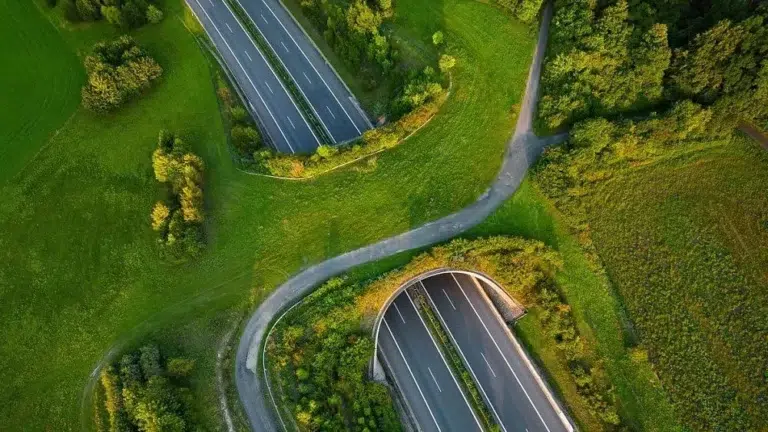
Infrastructure to reduce the impact on wildlife
One of the most notable aspects of the project is the inclusion of wildlife crossings, structures specially designed to allow animals to cross roads safely. These works function as ecological corridors that connect different sectors of the natural landscape.
In regions with high biodiversity, habitat fragmentation caused by roads can pose a risk to many species. The wildlife crossings help mitigate this problem by facilitating the movement of animals between different areas of the ecosystem.
The incorporation of these structures also aims to reduce wildlife roadkill, one of the main impacts of road infrastructure on ecosystems. In this sense, the project marks progress in incorporating conservation criteria within public works in Chile.
Additionally, the start of the works is scheduled for 2028, once the engineering studies and the environmental impact assessment are completed, which will allow obtaining the corresponding environmental resolution.
The benefits of wildlife crossings for ecosystems
Wildlife crossings offer multiple benefits for the conservation of biodiversity. Firstly, they allow maintaining the connectivity of natural habitats that are often fragmented by roads or human infrastructure.
This connectivity is essential for species to move in search of food, shelter, or a reproductive partner. Without these natural corridors, many animal populations become isolated and may suffer a genetic decline.
Moreover, these structures help reduce animal mortality on roads and highways. By offering safe crossing routes, the number of roadkills significantly decreases. They also provide benefits for road safety, as they reduce the likelihood of accidents caused by the presence of animals on the road.
For these reasons, wildlife crossings have become a key tool within modern environmental planning strategies.

Wildlife roadkill: a historical problem on the Island of Chiloé
The Island of Chiloé has been facing a problem related to wildlife roadkill for years. This situation particularly affects native species that inhabit the forests and wetlands of the archipelago.
Among the most affected animals are the pudú, the Chiloé fox, the huiña, and the huillín. Many of these specimens arrive at rehabilitation centers after suffering accidents on roads and rural paths.
Records from conservation organizations indicate that a significant portion of the animals admitted for recovery comes from roadkills. However, it is also estimated that many specimens die on the road without being recorded.
This reality highlights the need to adopt measures that reduce the impact of roads on wildlife. In this context, the incorporation of wildlife crossings represents a significant advancement to protect the biodiversity of the archipelago and improve the coexistence between infrastructure and nature.


