



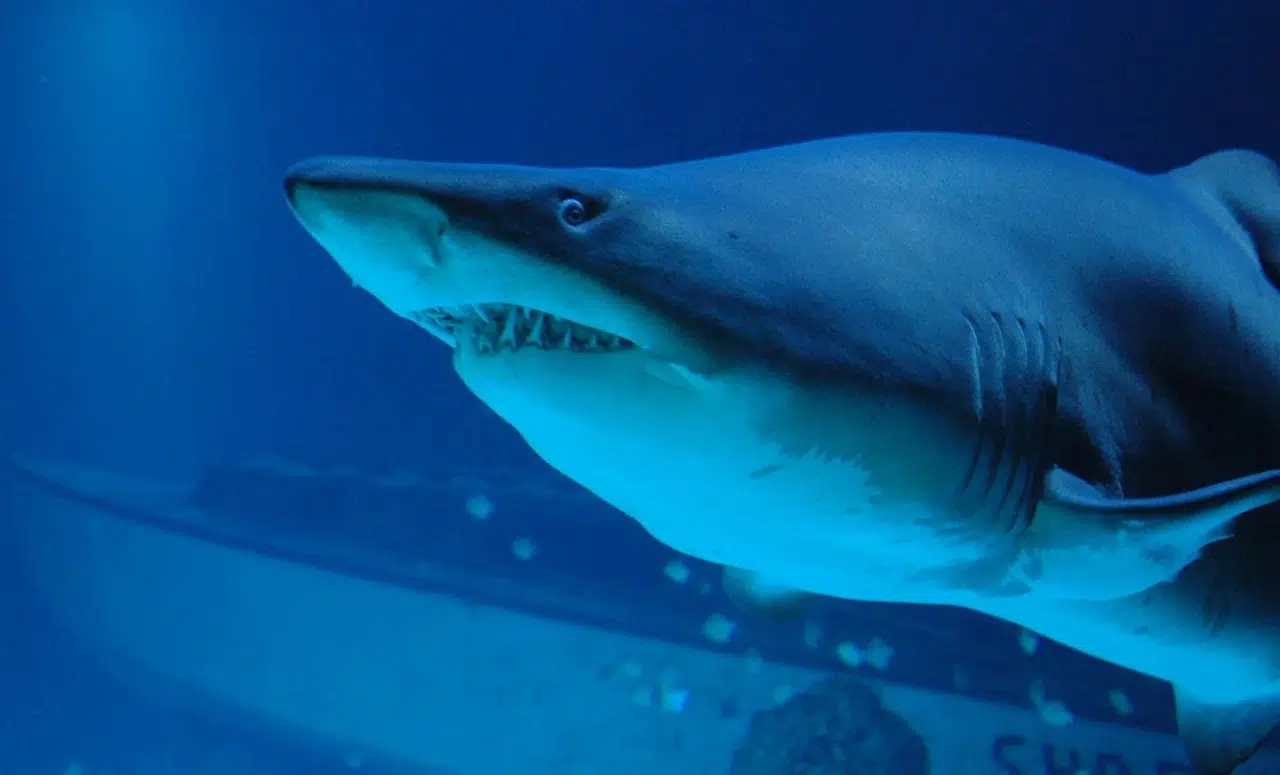
A study led by Trinity College Dublin and the University of Pretoria, published in Science, reveals that warm-blooded sharks and tunas face a double threat in the context of ocean warming: higher energy demands and risk of body overheating.
These mesothermic predators, which represent less than 0.1% of marine species, have the ability to retain metabolic heat and keep parts of their body warmer than the surrounding water. This advantage allows them to be faster and more efficient, but it also comes with a high energy cost.
Extreme Energy Consumption
The study concludes that these animals consume approximately 3.8 times more energy than similarly sized cold-blooded fish.
According to Dr. Nicholas Payne, an increase of 10 °C in body temperature can double the basal metabolic rate, forcing these predators to consume even more food to sustain their activity.
The Overheating Problem
As the specimens grow, their bodies generate heat faster than they can dissipate it. Larger bodies retain heat better, which exacerbates the problem in species with high metabolic rates. For example, a one-ton shark could struggle to maintain its thermal balance in waters above 17 °C.
When these limits are exceeded, the fish must reduce their activity, modify their physiology, or move to cooler waters, compromising their hunting ability and survival.
Adaptations and Limits
The study explains already observed patterns: the tendency of large predators to inhabit higher latitudes, colder waters, or greater depths, as well as their seasonal migrations.
Some species, like the Atlantic bluefin tuna, can temporarily adapt by increasing heat loss or descending to greater depths, but these strategies have limits.
Vulnerability in a Changing Ocean
Researchers warn that these animals already operate with a tight energy budget, making them especially vulnerable when prey availability decreases.
This situation is compounded by overfishing, which affects both predators and their food sources, increasing the risk in a context of climate change.
Consequences of Ocean Warming
The increase in ocean temperature, which absorbs more than 90% of the excess atmospheric heat, causes:
- Coral bleaching and habitat loss.
- Sea level rise due to thermal expansion and ice melting.
- Acidification that hinders the survival of calcifying organisms.
- Ocean stratification, reducing oxygen and nutrients.
- Extreme weather events, such as more intense hurricanes and marine heatwaves.
Impact on Humanity
- Food security: the migration and disappearance of fish affects global fishing.
- Coastal protection: natural defense against storms and floods is reduced.
Warm-blooded sharks and tunas, icons of the oceans, are among the most vulnerable to global warming. Their double risk —high energy demands and overheating— threatens their survival and highlights the fragility of marine ecosystems.
Reducing greenhouse gas emissions is essential to mitigate this impact and preserve both biodiversity and human food security.


