



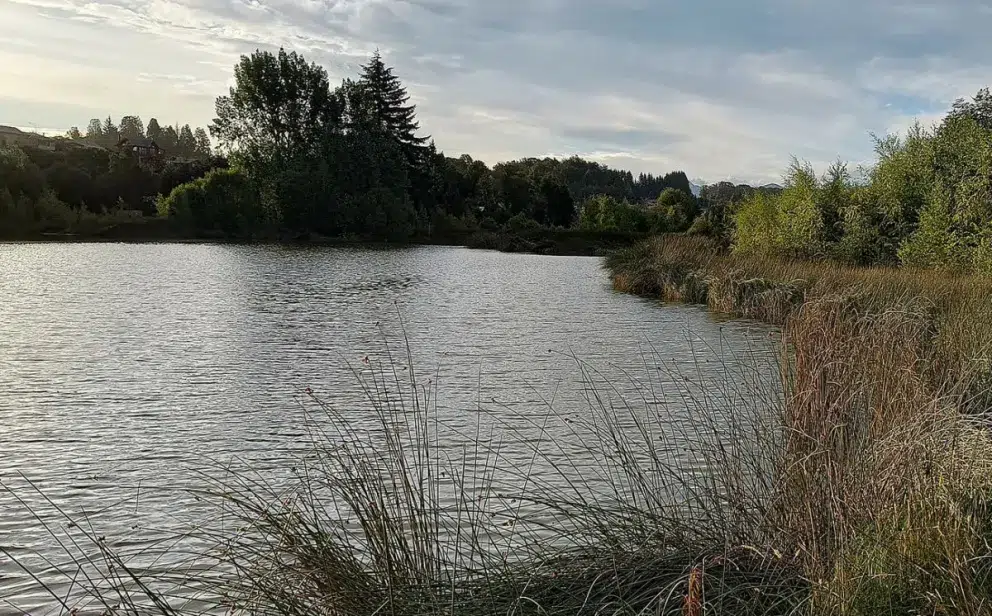
The Laguna Calafate, located in Villa La Angostura, Neuquén, was recently evaluated by environmental organizations and residents to determine its real condition. The initiative is part of the progress of the El Mallín neighborhood towards sewer connection, aiming to establish the basis for environmentally responsible planning.
During the survey, conducted by SOS Humedales, Tejido Urbano Foundation, and Mesa del Mallín, samples were taken at five strategic points of the lagoon. Over 40 key parameters of water and soil were analyzed, including heavy metals, nutrients, and bacteria.
The results confirm that this urban wetland plays a vital role: significantly reducing the bacterial load of the waters that flow through it. Its role as a natural filter makes the lagoon a silent pillar of environmental health for the entire community.
However, elevated levels of bacteria and nutrients were also detected, which could accelerate eutrophication processes. This alerts about the urgency to mitigate the discharge of untreated sewage effluents into the ecosystem.
An Ecosystem with Multiple Benefits
Beyond its purifying function, Laguna Calafate offers other ecosystem services of great value. It hosts a rich biodiversity, with native birds such as crested ducks and gallinules, which are indicators of a still resilient environment.
It is also a key space for environmental education. An example of this was the participation of School 186, whose students raised awareness about the importance of protecting this wetland. These community actions strengthen the bond between nature and society.
The report also highlights the recreational and scenic value of the place, reinforcing its role as an essential green infrastructure for urban well-being. Investing in its conservation means improving collective quality of life.
Protecting wetlands like this is not only an environmental issue, but also an investment in public health, flood prevention, and adaptation to climate change.
How to Protect Wetlands
Wetlands are highly productive, yet fragile ecosystems. Their conservation requires a combination of strategies involving both institutions and citizens.
One of the main tools is land planning. Avoiding uncontrolled urban expansion and respecting buffer zones helps reduce pressure on these ecosystems. In the case of urban wetlands, this involves planning infrastructures with an environmental approach.
Another key measure is ecological restoration. It consists of restoring degraded functions through reforestation with native species, controlling invasive species, or rehabilitating water flows. This helps restore the natural balance of the wetland.
It is also essential to promote education and community participation. School campaigns, guided recreational activities, and access to clear information about these environments strengthen collective awareness and empower neighbors to care for them.
 The importance of wetlands.
A Call to Local Action
The infographic of the recently published study clearly summarizes the risks and strengths of the wetland. It emphasizes its role as a purifier, habitat, and meeting space for the community.
The commitment of residents, teachers, and environmental organizations paves a possible path. However, truly protecting Laguna Calafate requires sustained and cross-cutting efforts, with public policies that recognize the strategic value of these ecosystems.
Conserving urban wetlands is key to addressing the current ecological crisis. They are natural barriers against climate change and sources of life that cannot continue to be ignored or degraded.
Laguna Calafate, like many other wetlands in the country, reminds us that nature offers solutions. It only requires listening to them and acting in a timely manner.



