



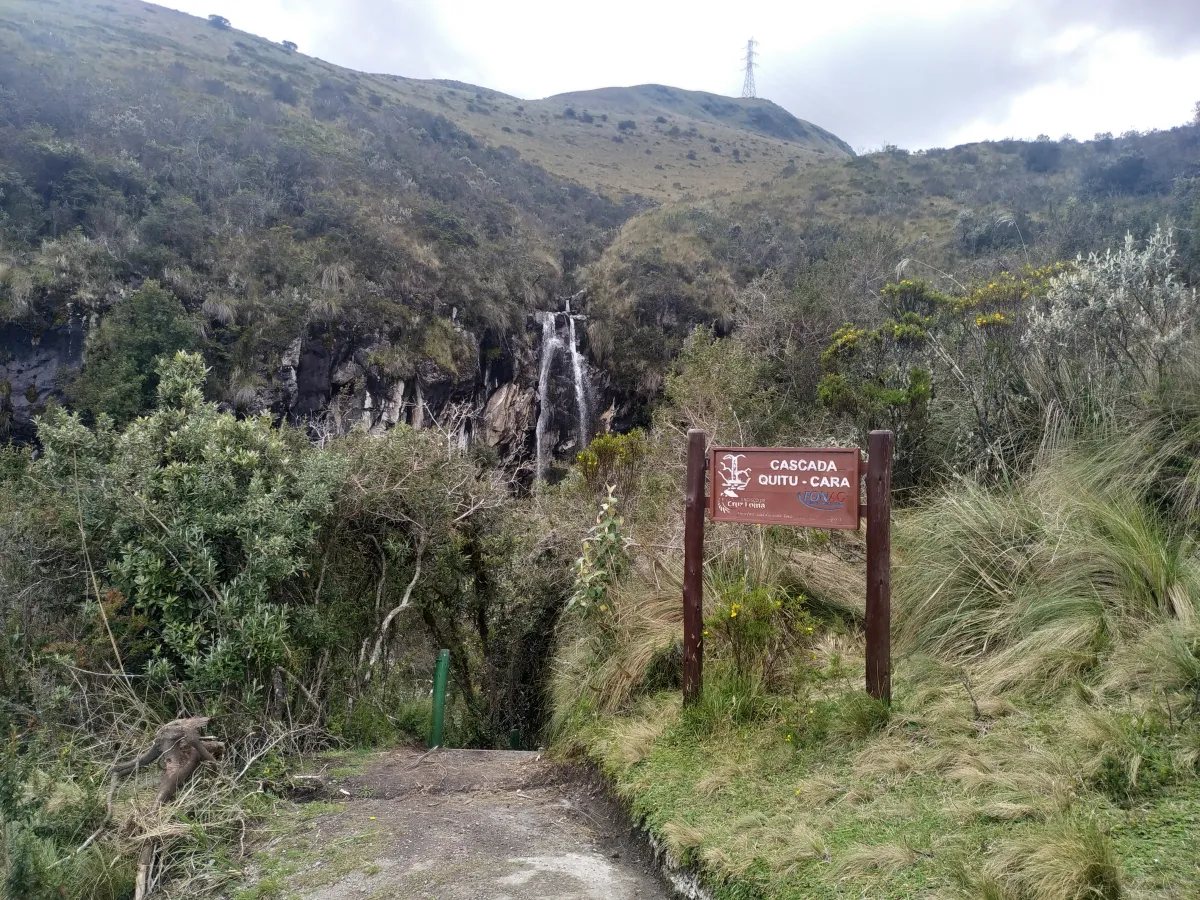
At more than 3,000 meters above sea level, on the slopes of Rucu Pichincha, the community of San Francisco de Cruz Loma found a sustainable way to care for the water that supplies the Ecuadorian capital. There, about 30 families decided to transform their way of life to protect the moorlands and forests that feed the watercourses flowing down towards Quito, Ecuador.
Since 2017, they abandoned intensive livestock farming and began to venture into ecotourism and environmental education. This transition was made possible thanks to their incorporation into the Quito Water Fund (Fonag), an innovative financial mechanism that combines public and private resources to protect water sources.
The fund allows city residents to contribute, unknowingly, to conservation: 2% of each drinking water bill is allocated to actions in key areas like Cruz Loma. In return, there is a progressive improvement in the quality and flow of water available to more than 2 million people.
While preserving the ecosystem, the benefits multiply: residents have access to treated water, develop basic infrastructure, and generate new sources of income without harming the natural environment.

An investment that protects life
Thanks to Fonag, the community built water purification systems, household connections, and a more efficient distribution network. Parallel projects such as nurseries, interpretive trails, and educational programs for tourists and locals also emerged.
The transformation of the environment brought back wildlife such as the Andean bear, but it also brought a growing problem: abandoned dogs. In the rural area near the city, many people leave domestic animals that later form dangerous packs for both people and native wildlife.
The community now seeks to control this situation with coordinated measures, aware that conservation must include managing indirect impacts like animal abandonment. The goal is to maintain ecological balance while advancing human well-being.
For every dollar invested in these ecosystems, more than two are saved on costly future works. Caring for water at its source is also an excellent ecological business.
What is Fonag and how is it implemented in other countries?
The Environmental Fund for Water Protection (Fonag) was created in 2000 by a group of companies and institutions that shared the use of the same water sources. It is the world’s first water fund and served as a model for other similar experiences.
This mechanism functions as an environmental “savings account”. Of the total amount collected, 70% is invested in capital to ensure its sustainability, while the rest finances direct actions for conservation, restoration, and education.
In just over two decades, Fonag intervened in 70,000 hectares of moorlands and Andean forests, installed weather stations, and signed agreements with rural communities. Its impact was even measured in economic terms: it reduces future costs in water infrastructure and improves water quality.
The model has been replicated at least 32 times in Latin America and the Caribbean. Mexico, Colombia, Peru, Brazil, and the Dominican Republic have similar funds. Through them, investments in water in the region reached $389 million in 2023.
What is the purpose of this type of Fund?
This type of fund represents a key tool to address climate change, protect biodiversity, and ensure equitable access to drinking water in cities.
The story of Cruz Loma shows how environmental solutions can also be social. When those living in key ecosystems are included, conservation ceases to be just talk and becomes a real strategy. In a world where water is increasingly scarce, protecting its source is protecting life.



