



The **leather industry**, a key player in the Argentine economy, is facing **critical environmental challenges** due to the **high pollution load of its effluents**, containing toxic compounds such as **tannins and chromium**.
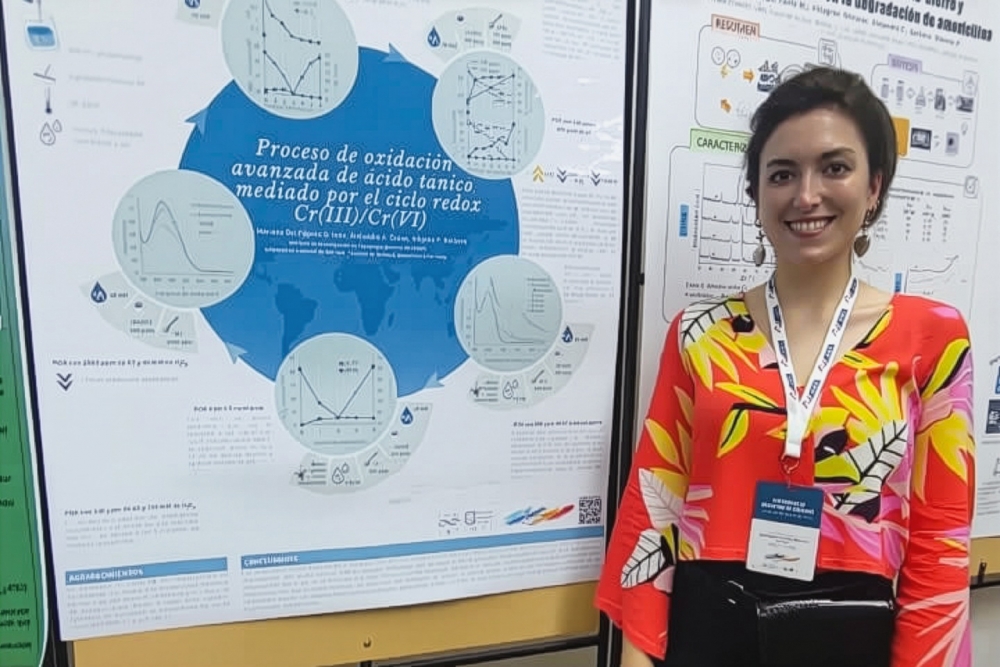
In response to this issue, chemical engineer **Mariana Del Pópolo Grzona**, a graduate from the **National University of San Luis**, conducted a doctoral research focused on **combined advanced chemical oxidation processes and biological treatments** to improve the **quality of wastewater**.
## The tanning process and intensive livestock farming as waste and emission generators
The leather industry generates multiple forms of pollution:
– **Water pollution**: effluents containing heavy metals, dyes, and sulfides
– **Soil pollution**: discharges affecting groundwater
– **Solid waste**: sludge, leather scraps, and organic by-products
– **Gas emissions**: polluting gases and greenhouse effect
– **Intensive livestock farming**: deforestation and natural resource consumption
## Combined treatments: advanced chemistry and filamentous fungi
**A strategy to transform toxic compounds into less aggressive substances**
The thesis, initiated in **2018**, explored various methodologies to address tannery effluents, considered **more complex than textiles**. The following were evaluated:
– **Advanced oxidation processes**, capable of degrading resistant contaminants
– **Biological treatments with filamentous fungi**, providing efficiency in the transformation of organic compounds
– **Combination of both methods**, showing promising results in the **reduction of pollution load**
“Industrial effluents represent a serious risk to the environment and require effective solutions,” explained Del Pópolo.
## Environmental and social impact: towards a more sustainable production
**The research proposes applicable alternatives to protect water resources.**
The main contribution of this work is to offer **new tools for the treatment of highly polluting effluents**, directly contributing to:
– Preserving water quality
– Promoting a more sustainable industrial production
– Improving the environmental health of nearby communities
“Tanning is a strategic industry in Argentina, which is why it is essential to develop effective and scalable solutions,” noted the researcher.
## Scientific methodology and analytical tools
**Optimized experimental designs with R language and advanced monitoring techniques**
To validate the processes, **experimental designs supported by R programming** were applied, allowing to:
– Optimize treatment conditions
– Statistically analyze the results
The monitoring included:
– **Colorimetric techniques** for COD and polyphenols
– **Spectroscopy and chromatography**
– **Phytotoxicity tests** to evaluate the environmental impact of treated effluents
– **Total organic carbon analysis**, as an efficiency indicator
## An interdisciplinary approach to addressing complex challenges
**Environmental chemistry, engineering, microbiology, and biotechnology in synergy**
The research draws from **multiple scientific disciplines**, enabling the comprehensive and effective addressing of the problem:
– **Environmental chemistry**
– **Chemical engineering**
– **Microbiology**
– **Biotechnology**
This interdisciplinary approach reinforces the **ability to generate real solutions** for an industry that needs to **reduce its environmental footprint without losing competitiveness**.


