



A recent report from the World Meteorological Organization (WMO) exposes the close relationship between air quality and climate change. The document highlights significant achievements in emission reduction, but also warns about the devastating effects of forest fires in various regions of the planet.
In eastern China, emission control policies have led to a significant decrease in fine particulate matter (PM 2.5), a dangerous pollutant for health. This improvement confirms that sustained actions achieve measurable results in the atmosphere.
The situation is very different in other parts of the world, where wildfire seasons have caused a sharp increase in pollutant particles. Regions like the Amazon, Canada, and Siberia recorded PM 2.5 levels well above normal.
Large-scale fires, increasingly frequent due to climate change, act as a driver of transboundary pollution. Smoke travels long distances and affects the air quality of distant cities, with immediate impacts on public health.

Transboundary Consequences of Forest Fires
The Amazon faced a critical season in August 2024. Emissions from fires affected the air quality in cities like Santiago de Chile, Quito, and São Paulo. This phenomenon confirms that pollution knows no borders and can degrade ecosystems and urban environments thousands of kilometers away.
Europe also experienced this issue. The Iberian Peninsula went through its most intense fire season in two decades in 2025. Over 1% of its surface was affected, and the smoke reached neighboring countries, generating pollutant clouds that drifted to Western Europe.
This scenario highlights that the climate crisis intensifies fires and, consequently, air degradation. The result is a vicious cycle: more emissions, more warming, and an increased risk of extreme events.
Faced with this situation, the WMO reminds us that air quality and climate must be addressed together. They share sources of pollution, and environmental policies must consider both dimensions to be truly effective.
Atmospheric Pollution: A Silent Enemy
Air pollution has become the second leading risk factor for death worldwide. According to recent studies, it was responsible for over 8 million deaths in 2021, surpassing previous years’ figures. Respiratory and cardiovascular diseases are the main consequences of this chronic exposure.
One of the biggest challenges is that many countries lack reliable monitoring systems to measure air quality. Without accurate data, designing effective public policies and implementing prevention measures becomes complex. This situation hits harder in developing countries, where fires and industrial emissions are often less regulated.
Despite the difficulties, there are encouraging examples. China has shown that sustained actions, such as strict control of industrial emissions, lead to significant improvements in a short time. However, experts insist that a global effort is needed, as pollution knows no boundaries.
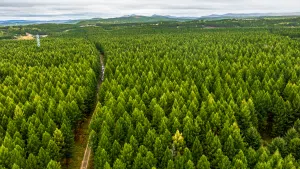 Despite advances in air quality, China is affected by forest fires from other countries. Photo: CGTN en Español.
Implications for the Future
Atmospheric pollution not only threatens human health but also climate stability and biodiversity. Forest fires, intensified by heatwaves and prolonged droughts, release large amounts of carbon into the atmosphere, exacerbating climate change.
Recent experiences show that improving air quality requires integrating mitigation measures, fire prevention, and transitioning to clean energy. Only then will it be possible to reduce the impact of pollutants in the environment and protect the most vulnerable populations.
The fight against air pollution must be seen as an investment in health, well-being, and sustainability. Every policy decision, from transportation to forest management, influences the air we breathe. And it is precisely there where much of the planet’s future is at stake.



