



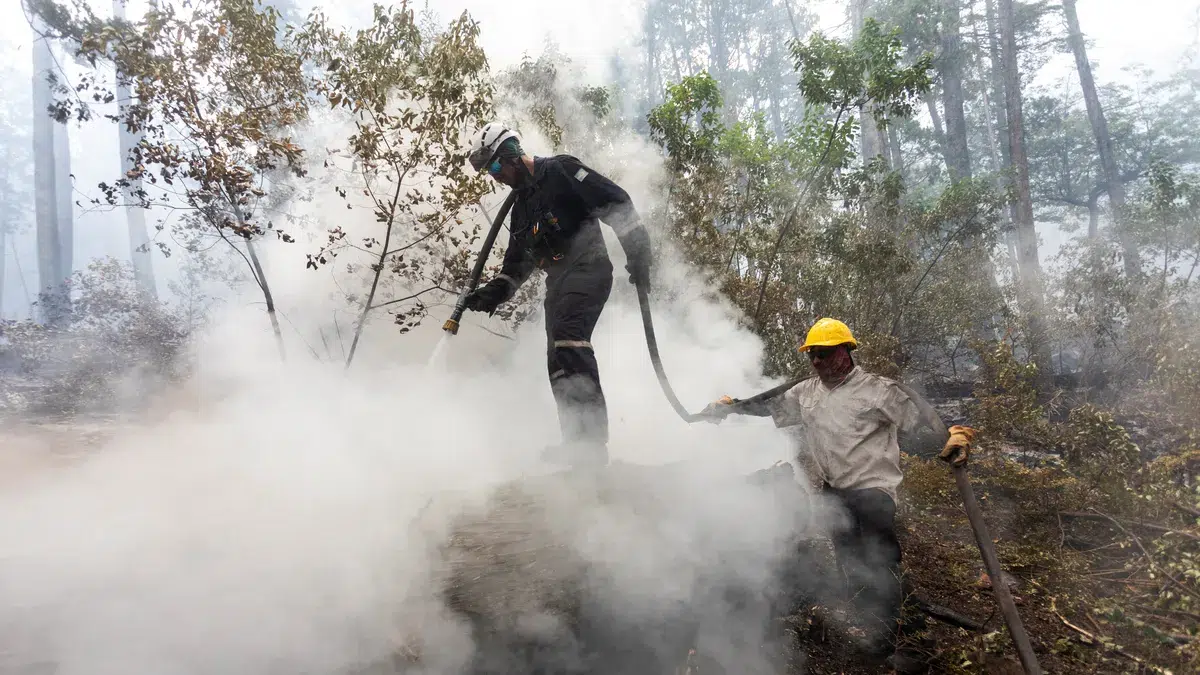
The devastating fire that consumed more than 14,000 hectares in Puerto Patriada, in the province of Chubut, gave rise to an unprecedented environmental restoration strategy based on the use of agricultural drones to sow forage from the air.
Four months after the fire’s advance, the Municipality of El Hoyo and the Ministry of Production of Chubut launched a pilot test on 200 affected hectares. The main objective is to accelerate soil recovery and ensure food for livestock before the next spring.
The initiative emerged as a response to the complex situation faced by rural producers and Mapuche communities in the area, where the loss of pastures forced them to rely on external bales for months to feed animals.
Additionally, the project incorporates precision technology and environmental monitoring to evaluate the evolution of the intervened areas and define future stages of ecological restoration.
How aerial sowing with agricultural drones works
The procedure began with a digital mapping work carried out by the company Huella Cero, from Trevelin. Based on that diagnosis, technicians identified the priority areas and selected species capable of quickly recovering the vegetative cover.
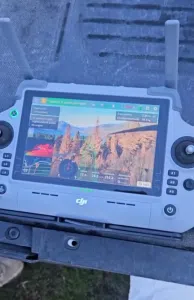
For the intervention, two types of drones are used. A small one performs survey tasks and territorial analysis, while a larger one disperses seeds with loads of up to 100 kilos per flight.
In just two days, the system managed to sow 40 hectares, a speed much higher than that achieved through manual methods or conventional land machinery.
Moreover, this technology allows access to mountainous sectors or difficult-to-access areas, where terrain conditions complicate restoration tasks after a forest fire.
Forages to stabilize the soil and recover ecosystems
The species chosen for the pilot test were agropiro and fescue, two grasses resistant to the cold Patagonian climate that play key roles in environmental recovery.
On one hand, these plants provide forage for cattle, sheep, goats, horses, and poultry. On the other hand, they help stabilize the burned soil, preventing erosion and moisture loss.
Specialists also noted that agropiro has properties that hinder the expansion of pine, an invasive exotic species in parts of Patagonia. This condition would later facilitate the return of native vegetation.
The strategy involves a progressive restoration. First, it seeks to restore the basic soil structure with herbaceous plants and grasses; then, in later stages, incorporate native species like coihues and cypresses.
The environmental and productive advantages of this innovative method
The use of agricultural drones represents a valuable tool to face the consequences of forest fires in sensitive regions like Chubut.
Among its main advantages are operational speed, the reduction of human impact on fragile terrains, and the ability to intervene in extensive areas with greater precision.
Additionally, the method reduces logistical costs and allows for rapid action before intense rains cause severe erosion or definitive nutrient loss in the soil.
From an ecological standpoint, the sown grasses help retain water, intercept snow, and promote the future regrowth of native species, essential for rebuilding the balance of affected ecosystems.
At the same time, the initiative strengthens local livestock production by reducing dependence on external inputs and accelerating the return of rural activities in Puerto Patriada and other areas impacted by the fire in Chubut.



