



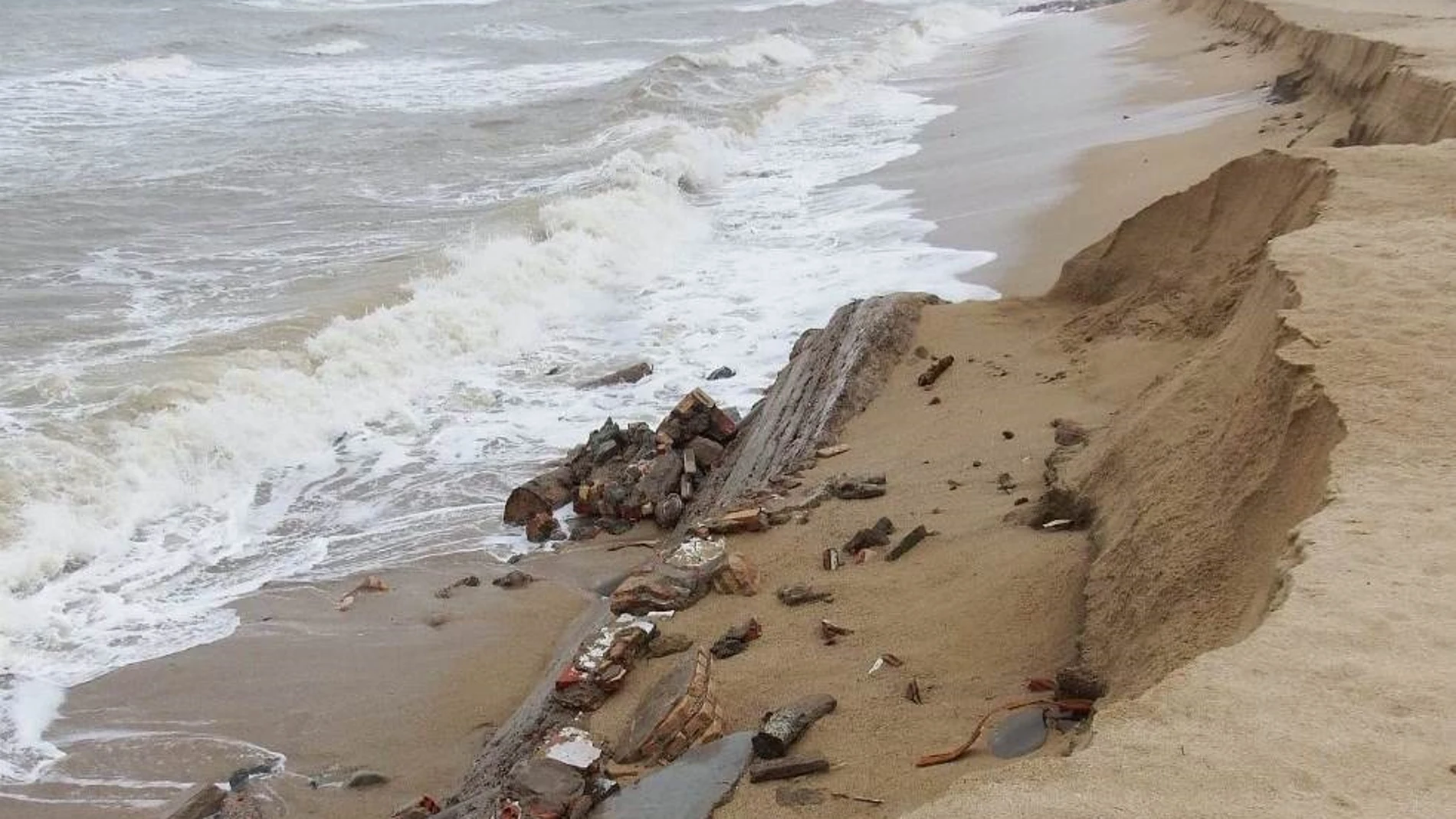
Marine storms and the progressive rise in the sea level, as a result of global warming, are causing accelerated erosion on the artificial beaches of the metropolitan area of Barcelona, warn experts and local authorities. Every year, the sea claims new strips of coast, especially in areas like Montgat, north of the Catalan capital.
These beaches – generated in urban regeneration processes since the 1980s – show a greater vulnerability to erosion than natural coasts.
In Montgat, residents perceive a rapid decrease in the coastline, despite attempts to recover through sand replenishment and the construction of breakwaters.
Montgat: from fishing village to threatened tourist destination
Until the mid-80s, fishing was the main source of income in the Maresme region. But the announcement of the 1992 Barcelona Olympics changed the coastal appearance of municipalities like Montgat, where new beaches were created on old breakwaters and rocky areas, reinforcing the tourist profile of the region.
Today, that infrastructure is threatened. Swells caused by extreme weather systems, such as the DANA that hit southern Europe in autumn and winter, have devastated the local beach. In April 2024, waves reached 5 meters in height, leaving the municipality practically without sand.
Mayor Andreu Absil estimates that only a third of the beach surface remains from a year ago. Stone breakwaters were installed to protect homes from the sea, but the challenge persists.
Europe warms twice as much as the global average
According to the Copernicus Climate Change Service, Europe is the continent that has warmed the fastest since 1980, with a twice the thermal increase compared to the global average. This phenomenon accelerates glacial melting and causes the thermal expansion of seawater, leading to the rise in sea level and increasingly frequent coastal flooding.
On the Catalan coast, the sea level has risen by 14 centimeters in the last 25 years, and the average wave height has increased by 30 centimeters, according to maritime engineer Agustín Sánchez-Arcilla from the Technical University of Catalonia.
Million-dollar costs and urban alert due to beach erosion in Barcelona
Local authorities estimate that 60 million euros will be needed to stabilize the 42 km of metropolitan coast, of which 30 km are urban beaches like Montgat. This is in addition to the annual maintenance costs after each marine storm.
According to researchers and urban planners, the main risk will come when the sea reaches key infrastructures, such as the railway line, nearby houses, and coastal businesses. The rate of sea level rise could lead to irreversible losses if urgent measures are not taken.
Tourism at risk and business concern
Summer tourism is vital for the economy of Montgat and other coastal cities. Local entrepreneurs are concerned about the impact that the progressive disappearance of beaches may have, both on the number of visitors and the profitability of their businesses.
Tourists who return every summer for fresh seafood, cold beer, and seaside landscapes also perceive the changes. The reduction in sandy surface questions the viability of the traditional tourism model, demanding new urban adaptation strategies in the face of climate change.



