



The fires that devastated South America in 2024 and the anthropogenic climate change are directly linked. This was confirmed by a study from World Weather Attribution (WWA).
According to it, global warming tripled the likelihood of the conditions that generated the historic fires in the Amazon and the Pantanal.
The WWA report determined that the burning of fossil fuels altered the water and thermal balance of the continent. The extreme heat even surpassed the influence of El Niño as a determining factor of dryness.
In specific areas of the Amazon, the risk of extreme conditions was up to 20 times greater than in the pre-industrial era.
The combination of low humidity, winds, and extreme temperatures turned wet ecosystems into territories vulnerable to fire.

The impact extended from the tropics to Patagonia
The fires did not only affect tropical regions. In January 2026, climate change also left its mark in the southern part of the continent.
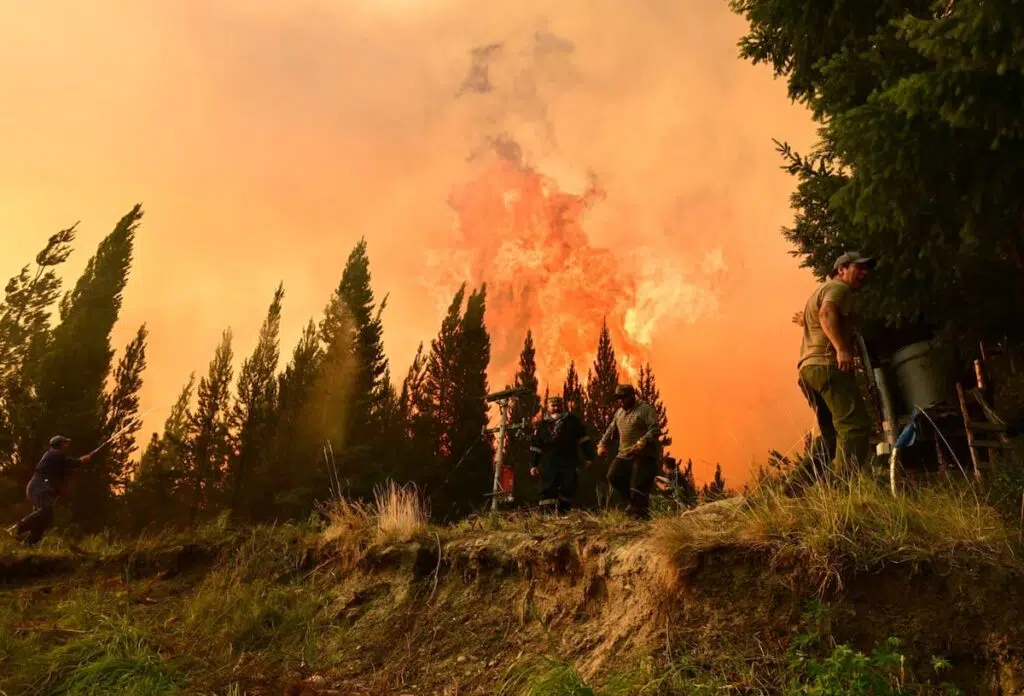
For example, the fires in Los Alerces National Park in Chubut put at risk alerce populations over 3,000 years old.
The specimen known as “El Abuelo”, with over 2,600 years of history, became a symbol of that fragility.
Winds of 50 km/h and humidity below 10% transformed the landscape into a powder keg impossible to contain.
By early February, more than 45,000 hectares in northern Argentine Patagonia had burned, affecting Lago Puelo, El Hoyo, and Epuyén.
Fires and climate change: a vicious circle threatening regional stability
The fires of 2024 released record amounts of CO2. Bolivia and several Brazilian states recorded historic carbon emissions from biomass burning, fueling a climate feedback loop.
With the loss of evapotranspiration capacity of jungles and forests, the formation of “atmospheric rivers” is weakened. This ensures even drier and more fire-prone future seasons.
Among the factors science identifies as key in this crisis are:
- The structural drying of the landscape due to less rainfall
- The spread of invasive species like pines, which accelerate fire spread
- Deforestation and land management as the origin of most fire outbreaks
- The transformation of carbon sinks into emission sources
- The loss of the Amazon’s ability to generate its own rain
Dr. Friederike Otto, co-director of the WWA, was categorical: “As long as we continue burning fossil fuels, South America will face longer droughts and fiercer fires that will surpass any current adaptation capacity.”
The link between fires and climate change no longer represents a future threat. The evidence from 2024 solidified it as a component of the present climate that demands a profound review of environmental and energy policies across the continent.



