



The provincial legislator Magdalena Odarda, from the Vamos con Todos bloc, submitted a request for information to the Ministry of the Interior due to the increasing presence of capital and authorities from the United Arab Emirates in strategic areas of the province of Río Negro.
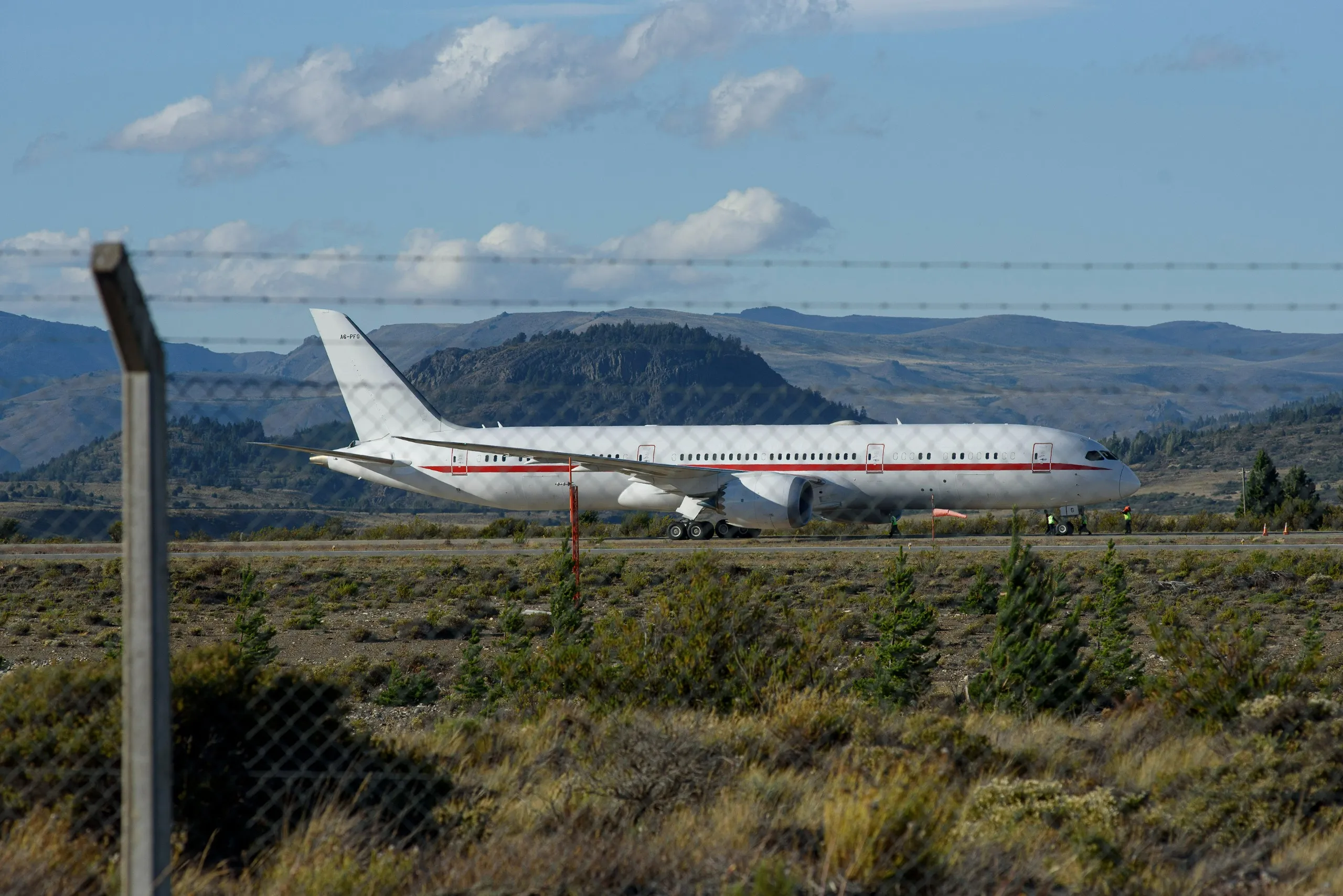
In recent days, two planes from the Emirates arrived in San Carlos de Bariloche, carrying contingents of foreign citizens. Additionally, the upcoming visit of Emirati President Mohamed bin Zayed Al Nahyan has been confirmed, with the aim of advancing in the purchase of extensive land areas in the region.
Transparency and sovereignty
Odarda warned that this is not a protocol visit, but rather concrete land acquisition operations in sensitive areas, some of which are covered by the border security regime. She pointed out that these purchases are projected in high strategic value areas of Río Negro, linked to critical infrastructure and natural resources, and recalled that current legislation requires prior mandatory compliance according to Decree Law 15.385, the National Defense Law, and the Law 26.737 on Rural Lands.
The legislator also highlighted the coincidence between energy, territory, and foreign capital: “The land purchases are projected in the same province where the arrival of ships transporting Liquefied Natural Gas (LNG) is planned, making Río Negro a central piece of the national energy strategy.”
Risks of fraud and simulation
Odarda warned about the possible use of individuals or legal entities as intermediaries, a prohibited practice that could constitute fraud against the Argentine state. “If it is proven that these operations were carried out by evading controls or through opaque structures, we would be facing a serious violation of sovereignty and national security,” she stated.
Finally, she was categorical: “Patagonia is not a free zone nor a territory available for opaque negotiations. The national state has the non-delegable obligation to control who buys land, where, and for what purposes”.
The issue of land foreignization
The sale of land to foreigners in Patagonia is a critical issue affecting national sovereignty, access to natural resources, and the rights of local communities. The main points of conflict include:
- Impact on sovereignty and the environment: acquisition in border areas raises concerns about the loss of state control in key areas such as forests, rivers, and glaciers.
- Legal framework and deregulation: although the law limits foreign ownership to 15% of the territory, the relaxation of regulations has intensified buying and selling.
- Conflicts with indigenous communities: operations often overlap with ancestral Mapuche territories, causing dispossession and social tensions.
- Change in land use: productive lands are transformed into hunting grounds, private reserves, or tourist paradises, restricting public access.
- Suspicions of fraud: maneuvers such as trust triangulation and the use of frontmen to conceal the identity of buyers are reported.
The situation in Río Negro reflects the dilemma between the need for investment and the protection of national sovereignty. The presence of foreign capital in strategic areas, combined with the coincidence with key energy projects, makes the region a high-tension scenario.
Odarda’s request for information seeks to ensure transparency and state control in the face of a phenomenon that puts the future of the Patagonian territory up for debate.


