



The Argentine Government is moving forward with the international tender to grant a 25-year concession for the dredging, beaconing, and logistical management of the Paraná River, the longest in the country. The goal is to turn it into a waterway for large ocean-going vessels capable of transporting up to 80,000 tons of cargo.
This trade corridor crosses five countries (Brazil, Bolivia, Paraguay, Argentina, and Uruguay) and covers about 3,400 km of navigable waters. The largest stretch corresponds to the Paraná in Argentine territory, where there is an effort to increase the depth of the channel from 10 to 13 meters.
Environmental and social risks
Experts warn that dredging and artificialization of the river generate:
- Irreparable damage to wetlands and riparian ecosystems.
- Removal of contaminated sediments affecting fauna and flora.
- Erosion of coasts and islands, posing risks to homes, bridges, and farmland.
- Increased flooding due to accelerated water flow.
The Paraná supplies drinking water to 14 million people and is the largest source in the country. Altering its dynamics compromises water security and resilience against droughts and floods.
Climatic context
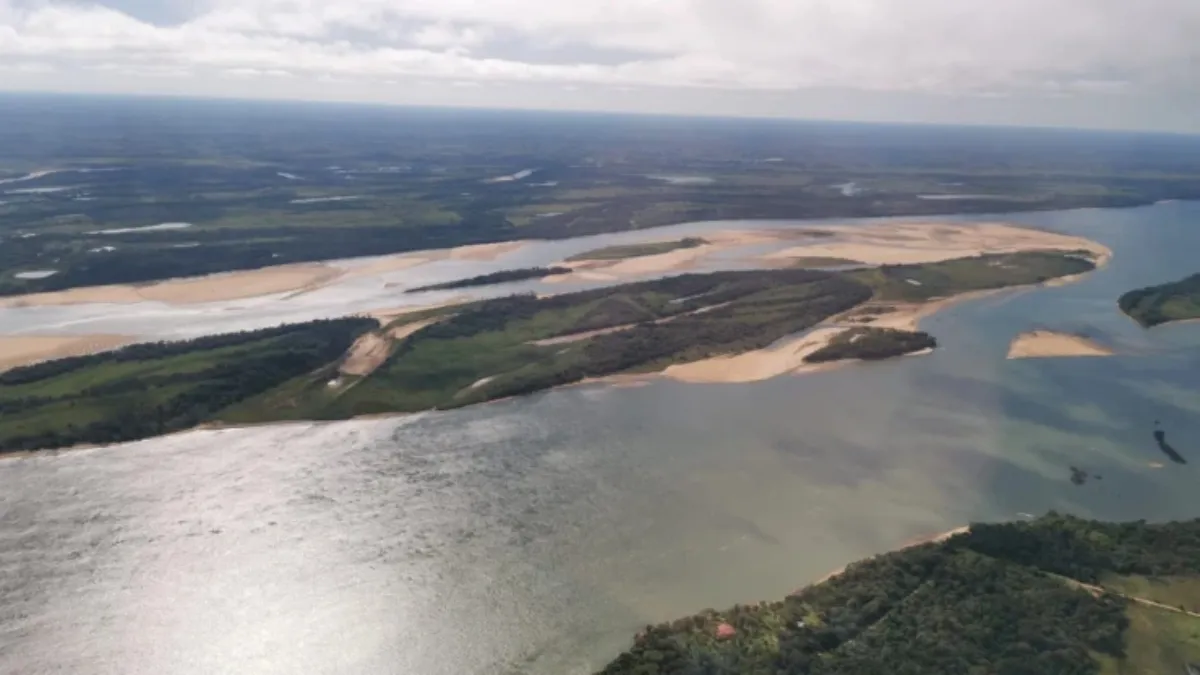
Between 2019 and 2024, the Plata Basin experienced one of the worst droughts in 80 years, linked to climate change and Amazon deforestation. Reports from the IPCC indicate that Buenos Aires and Santa Fe are critical areas, with increasingly frequent water crises. In this scenario, specialists describe the artificialization of the Paraná as an “ecocide”.
Political and legal conflicts
The project violates regulations such as the Escazú Agreement, which guarantees access to information and citizen participation in environmental matters. Additionally, it affects provincial natural resources, generating jurisdictional conflicts.
The tender revives the model of the 90s when Hidrovía S.A. (Jan De Nul and Emepa) operated the system. After the expiration in 2021, the State assumed interim control, but in 2024 the government of Javier Milei resumed privatization, with clauses favoring European companies and without environmental impact studies.
Ecological value of wetlands
The wetlands of the Paraná River perform essential functions:
- They clean contaminated waters.
- They prevent floods thanks to their absorption capacity.
- They store fresh water during droughts.
- They host a great biodiversity of fauna and flora.
Dredging threatens these ecosystem services and hinders the formation of new islands in the delta, a territory expanding through sediment accumulation.
Historical and cultural dimension
The Paraná has been a strategic scenario from indigenous resistance to Argentine independence. Controlling the river meant controlling trade, supply, and territorial sovereignty. Today, the project redefines it as a commercial waterway, subordinating its natural dynamics to the global extractivist logic.
The privatization of the Paraná poses a dilemma between the extractivist model and water sovereignty. Turning it into a waterway implies altering its cycles, accelerating its degradation, and compromising its ability to sustain life. In the face of increasingly intense climate crises, specialists and communities warn that preserving the river as a living organism is vital for Argentina’s environmental and social future.


