



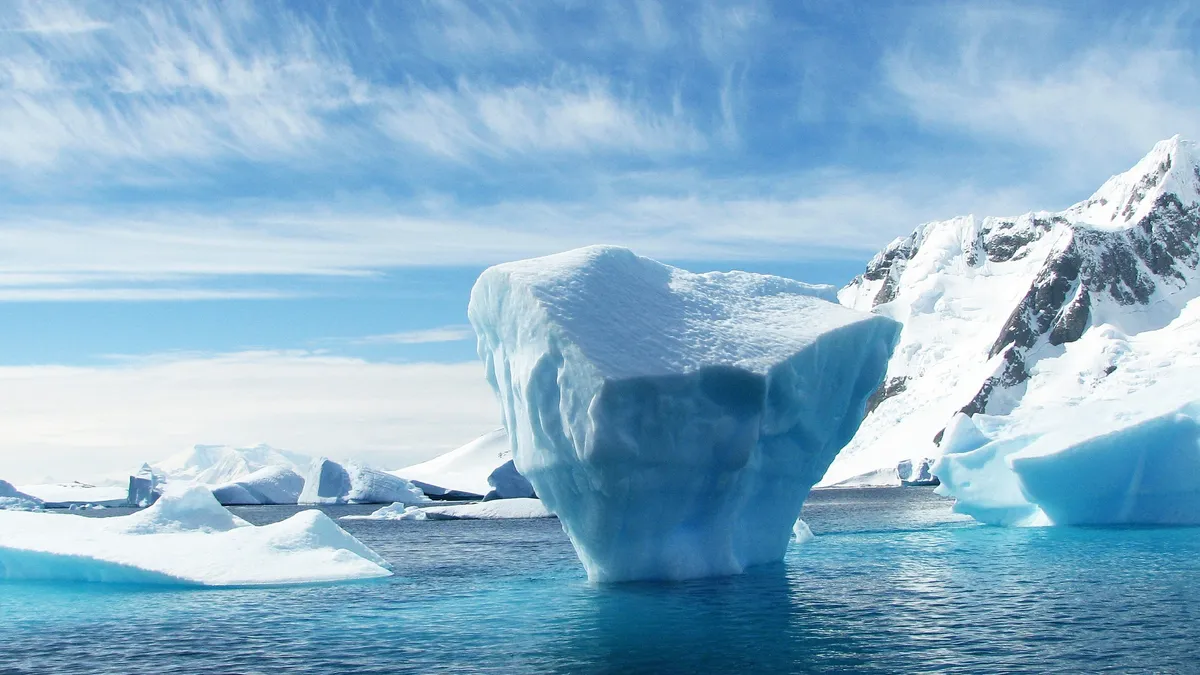
At the Davos Forum, climate and environmental experts issued a clear warning. The cryosphere, made up of the planet’s snow and ice, is losing surface area at a great speed.
This system reflects about 30% of the solar radiation. However, as the ice disappears, the Earth absorbs more heat and the warming accelerates.
As a consequence, for the first time a process of global dimming is recorded. This change alters the climatic balances and amplifies the impacts of climate change.
Planetary boundaries and energy transition
During the debate, the urgency of defining clear climate limits was highlighted. These margins would allow for economic development compatible with environmental stability.
At the same time, it was emphasized that regulations do not hinder progress. On the contrary, they can drive efficiency, innovation, and new productive opportunities.
In this context, the energy transition was pointed out as an immediate task. Reducing the dependence on oil, coal, and gas appears as a viable and necessary decision.
Fragile ecosystems and economic signals
The discussion also addressed the accumulated degradation of ecosystems. For decades, nature managed to absorb the impact of industrial societies.
However, that resilience margin has been exhausted. Today, many natural systems can no longer recover or sustain their productivity.
This fragility is beginning to affect the global economy. Sectors dependent on natural resources, such as cocoa, are showing sharp price increases.
Consumption, territory, and regional pressures
Another focus of the debate was the role of consumption patterns. Changing the diet and reducing the environmental impact is part of the solution.
However, it was also warned that some plant crops demand large tracts of land. The expansion of soy, for example, generates additional pressure on sensitive ecosystems.
In Latin America, the situation is particularly delicate. Authoritarian governments maintain economic models that increase pressure on the Amazon.
What is the Davos summit and what topics are debated?
The Davos Forum is an annual meeting organized in Switzerland. It brings together political, business, scientific, and social leaders from around the world.
Its objective is to discuss the great global challenges. Economy, climate change, energy, technology, and inequality are discussed there.
In recent years, the environment has gained centrality. The climate crisis, the protection of common goods, and environmental justice occupy a key place.
Common goods and a future in dispute
In Davos, it was also proposed to integrate the cryosphere into the global common goods. Like the oceans, the atmosphere, or Antarctica, it would be outside national jurisdictions.
This perspective seeks to protect essential systems for life. The final message was clear: the planet faces serious risks, but there is still room to act. Thus, Davos once again showed that the economy and ecology can no longer be thought of separately.



