



For 36 years, an abandoned uranium mine in the Sierras Grandes of Córdoba has kept tons of radioactive waste in the open air.
This poses a high risk of contamination less than five kilometers from a natural reserve that supplies water to 1.5 million people.
It is the Schlagintweit deposit, closed in 1989, which today is one of the most serious environmental liabilities in Argentina.
The toxic legacy of an uncontrolled industry
The Schlagintweit deposit operated between 1982 and 1989 in the Los Gigantes mountain ranges.
During those seven years, 207 tons of uranium were extracted and 2.4 million tons of mineral tailings were left abandoned.
In addition, 97,000 square meters of permanent spoil heap, one million tons of sterile material and dams with liquid effluents were also left.
The National Atomic Energy Commission (CNEA), responsible for this uranium mine in Córdoba, reports that the main dam contains 120,000 cubic meters of contaminated water, equivalent to 48 Olympic pools.
“They left a disaster”, says Juan Carlos Ferrero, doctor in geology and member of the Asociación de Amigos del Río San Antonio (Adarsa) in an interview with El País.
Córdoba: the immediate risk of the abandoned uranium mine for water supply
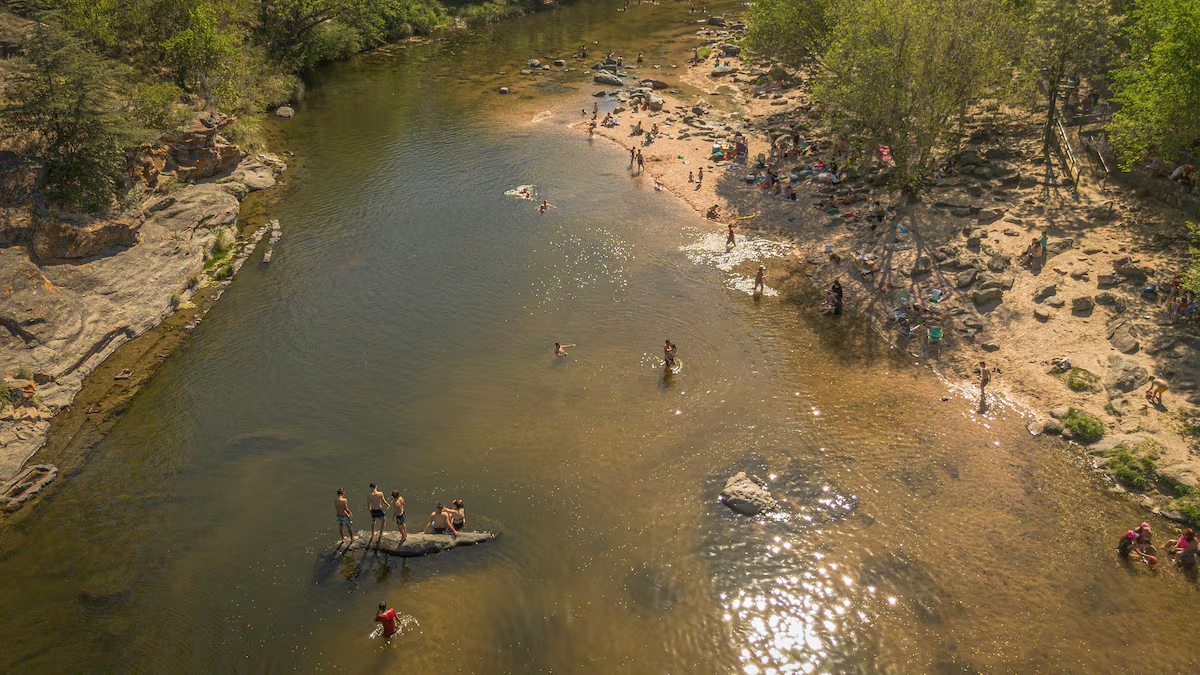
The site is located in the water basins of the San Antonio River, which supplies the San Roque reservoir.
This reservoir provides drinking water to 70% of the capital of Córdoba, where 1.5 million people live.
Here, the waste mountains have shifted over the years due to precipitation and winds.
In this scenario, Raúl Montenegro, biologist and Right Livelihood Award laureate, warns about the risk of a “massive collapse”.
“Our concern is that, with the global climate situation and thunderstorms, we have a high probability of atypical phenomena occurring and that mass of water dragging radioactive and toxic waste into the San Antonio River,” he stated to El País.
The incident silenced for years at the uranium mine in Córdoba
Last September, the rupture of a geomembrane of dam number 3, which occurred in 2021 due to winds of 100 kilometers per hour, was revealed.
Repair work was completed in 2024 and the CNEA denied that there were any leaks or environmental contamination, but the incident reignited concern.

The document of the Water Reserve Management Plan (2024-2029) indicates that there are “records of overflows and discharges of contaminated liquids from the mine that affect the San Antonio River basin”.
Montenegro recounts that, during the operation of this uranium mine in Córdoba, the company illegally discharged alkaline or acidic substances into the Cambuche stream.
Solutions to the abandonment of the uranium mine in Córdoba are still postponed
In 2017, the CNEA presented a Closure Plan for the Schlagintweit deposit to the Córdoba Mining Secretariat.
The file acknowledges that the components of the environmental liability “pose a risk of potential impacts on the health of the population, the surrounding ecosystem, and property“.
In response, the Córdoba Government did not reply to that request.
The remediation has an estimated cost of 66 million dollars.
According to journalist Cristian Basualdo from the Movimiento Antinuclear Argentina, 2,600 tons of uranium were extracted in Argentina between 1952 and 1997.
“To obtain one kilogram of uranium, one thousand kilograms of mineral had to be removed,” he emphasizes.
The national Law 25.018 on radioactive waste management stipulates the creation of a specific fund, but it is still unregulated.


