



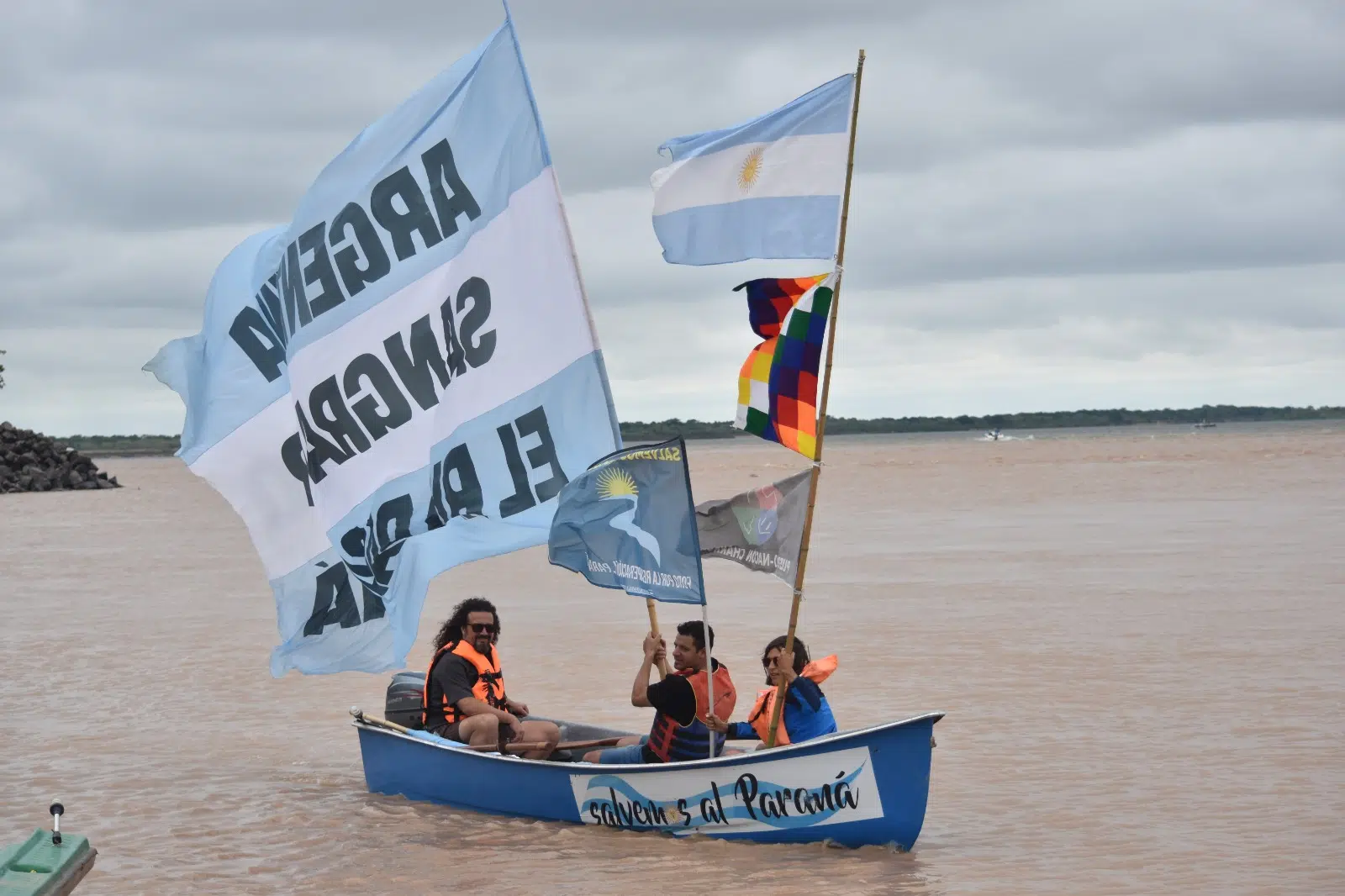
Hundreds of environmentalists, social organizations, and ecology advocates participated in the initiative “Save the Paraná and its wetlands”, a rowing event aimed at raising awareness about the risks faced by the Paraná River due to dredging projects and changes in the management of the river system.
The journey began at the kilometer 0 of the river, near Isla del Cerrito (Chaco), and will cover approximately 800 kilometers downstream over 14 days. The original starting point was Las Palmas, but weather conditions forced a change in departure to ensure the safety of the participants.
The environmental claim
The main concern of the organizations is the project to deepen the dredging of the Paraná to 44 feet to facilitate the entry of large cargo ships. Currently, the river is maintained at about 36 feet, but even at that depth, negative impacts have already been recorded:
- Blockage of water mouths.
- Reduction of lagoons and streams.
- Alteration of fish refuge and breeding areas.
The groups warn that deeper dredging could irreversibly alter the balance of the river ecosystem.
Strategic and economic importance
The Paraná River is vital for the province of Chaco and the region:
- Connectivity and international trade: through the Paraguay-Paraná Waterway, about 80% of Argentine exports flow, connecting with ports in Brazil, Bolivia, Paraguay, and Uruguay.
- Logistical sovereignty: control of this route is key to reducing transportation costs and ensuring agro-export competitiveness.
- Water resource: it constitutes one of the most important freshwater reserves on the planet, essential for human consumption and irrigation.
Environmental and social importance
The Paraná and its wetlands are one of the most significant ecological systems in South America:
- Biodiversity and fishing: it supports a rich fish fauna, vital for commercial and sport fishing.
- Tourism and culture: it is the axis of regional tourism development and a cultural resource that unites communities in the Littoral.
- Ecosystem regulation: its wetlands act as natural regulators against floods and are fundamental for climate stability.
A river in debate
The rowing event seeks to unite territories and strengthen the debate about the future of the Paraná. For the organizations, the challenge is to find a balance between the economic function of the river as a logistical corridor and its environmental role as a natural regulator and biodiversity reservoir.
The Paraná River is much more than a transport route: it is a natural, cultural, and strategic heritage. The rowing event “Save the Paraná and its wetlands” reminds us that any intervention must be evaluated responsibly, considering not only the economy but also the health of the ecosystems and the communities that depend on them.



