



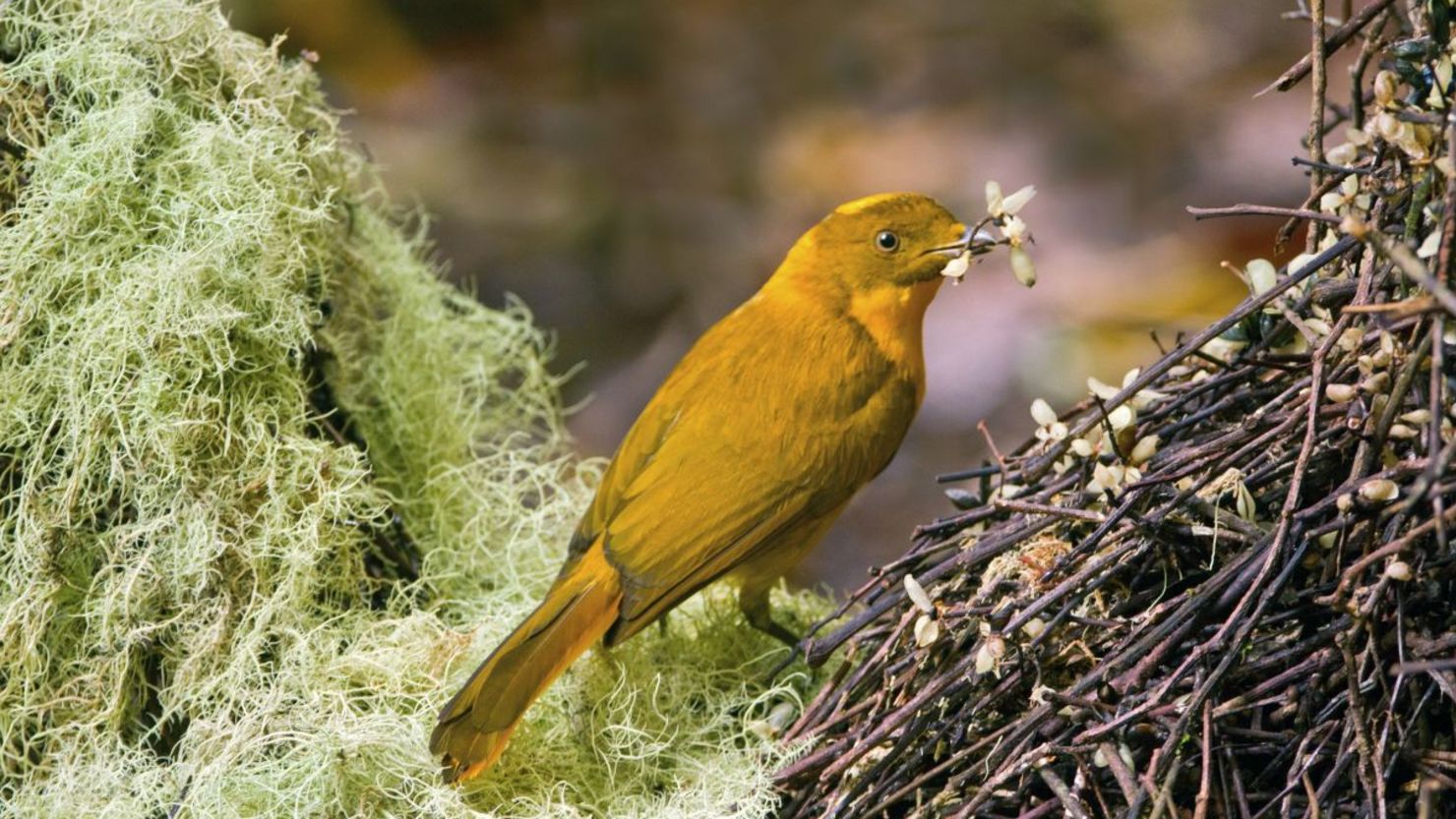
The **tropical rainforests**, which harbor around **72% of all bird species on the planet**, are witnessing an alarming **population decline**.
A new international study links the **increase in extreme heat days** —directly attributed to human action— with a 25 to 38% reduction in the abundance of **tropical birds** between 1950 and 2020.
## A pioneering approach in climate attribution
The analysis, led by **Maximilian Kotz** along with researchers from the **[Barcelona Supercomputing Center](https://www.bsc.es/)** (BSC), the **Potsdam Institute (PIK)**, and the **University of Queensland**, crossed **decades of population data** with daily climate records from the **ERA5** database.
Using a method of **climate attribution**, they managed to identify how much of the increase in extreme heat is **exclusively due to anthropogenic climate change**.
This approach marks a **methodological milestone**: it is the first time that climate attribution has been applied at a continental scale to **wildlife**.
## Ten times more extreme heat days: a constant pressure
The **tropics** are currently experiencing **ten times more days of extreme heat** than just a few decades ago. For birds, this represents a **constant physiological pressure**.
With **very narrow thermal margins**, their only immediate response is to **evaporate heat through accelerated respiration**, a mechanism that **consumes body water** and becomes ineffective in humid environments.
Even when they survive, the consequences accumulate: **less energy for reproduction**, **less success in the nest**, and **fewer chicks reaching maturity**. Year after year, the population decreases.
## Intact ecosystems, declining populations
In regions like **central Amazonia**, prolonged samplings show a **significant decrease in understory species**, with no evident habitat alterations.
An emblematic case is **Barro Colorado Island (Panama)**, where over a century of observations documents a **continuous decline in bird diversity**, despite being within a protected area.
These data reinforce the idea that **extreme heat** has become an **active threat**, even in **conserved ecosystems**.
## More than deforestation: heat as a dominant factor
The study does not downplay the seriousness of **deforestation**, **mining**, or **urbanization**, but it provides compelling evidence: **extreme heat has had a more destructive effect** on tropical birds than direct human pressure in recent decades.
Furthermore, it distinguishes between the **average temperature increase** and **extreme peaks**, with the latter **most affecting species**, which often **go unnoticed in conservation strategies**.
## New strategies for adaptive conservation
According to the latest **IPCC** report, climate change is already **seriously altering ecosystems**. Without a **drastic reduction in emissions**, losses will continue to accelerate. As researcher **Tatsuya Amano** points out, it is urgent to **develop specific strategies** for species **most vulnerable to heat**, in addition to protecting their habitats.
This implies **redefining conservation priorities**, incorporating **extreme thermal risk** into planning, and **adapting environmental policies** to a reality where climate is no longer a backdrop but a **key player in biodiversity loss**.
*Cover photo: Pixabay*



