



The commemoration of the 197th anniversary of the creation of the Political and Military Command of the Malvinas Islands once again brought the situation of the archipelago and its natural resources to the forefront of the debate. On this occasion, attention focused on the Sea Lion oil project, promoted in the North Malvinas Basin.
In this context, the Argentine government expressed its rejection of the development of hydrocarbon exploration and exploitation activities in an area whose sovereignty remains the subject of international dispute. Additionally, it reaffirmed its intention to resort to available diplomatic tools to challenge the advancement of these initiatives.
At the same time, the discussion transcends the political and legal sphere, as it also involves the conservation of one of the most valuable and sensitive marine ecosystems in the South Atlantic.
An oil project that generates controversy
The Sea Lion venture anticipates an initial investment of approximately 2.1 billion dollars for its first development stage. According to the plans announced by the involved companies, drilling would begin in 2027 and production would start in 2028.
On the other hand, recent estimates indicate that the deposit could contain more than 1 billion recoverable barrels, making it one of the most important offshore oil projects in the region.
However, environmental specialists warn that the expansion of hydrocarbon activity in marine ecosystems poses potential risks associated with spills, pollution, and biodiversity alterations, especially in areas of high ecological sensitivity.
The ecological value of the Malvinas Islands
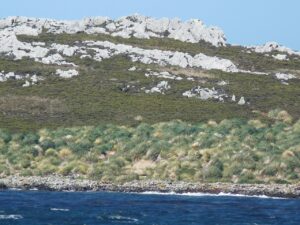
The Malvinas Islands constitute one of the most significant natural refuges in the South Atlantic. Their waters harbor an extraordinary biological richness that includes marine mammals, fish, birds, and numerous invertebrate species.
Furthermore, the archipelago serves as an important breeding and feeding site for various species of penguins, albatrosses, petrels, and sea lions. Many of these populations depend on the good health of ocean ecosystems to complete their life cycles.
Additionally, the marine currents surrounding the islands promote high biological productivity, supporting complex food chains. This condition makes the region a strategic area for the conservation of marine biodiversity on a global scale.
A dispute that continues on the international stage
Argentina’s position is supported by various international resolutions that recognize the existence of a sovereignty controversy and promote the search for a negotiated solution between the parties.
Meanwhile, the United Kingdom maintains its stance on the administration of the archipelago and supports the economic projects being developed in the area. This difference in criteria has prevented significant progress in negotiations over the past decades.
Meanwhile, environmental organizations are closely monitoring the evolution of extractive activities in the South Atlantic, considering that any large-scale transformation could impact ecosystems of enormous ecological value.
Conservation and development: a challenge for the future
The situation of the Malvinas Islands reflects one of the great contemporary environmental challenges: reconciling the utilization of natural resources with the protection of strategic ecosystems.
Therefore, various sectors argue that any exploitation project must include rigorous environmental assessments, permanent monitoring, and effective risk prevention mechanisms.
Consequently, the preservation of the South Atlantic’s marine biodiversity emerges as a priority that transcends borders and political debates, reaffirming the importance of protecting a fundamental natural heritage for present and future generations.



