



A recent report from the National University of Rosario (UNR) reveals an alarming situation. Over 30,000 hectares of wetlands in the Paraná Delta have been consumed by fire since the beginning of the year.
This is despite the climatic conditions that should limit the spread, such as high humidity and river levels. On the contrary, the increase in fires during the last quarter suggests a clear link to human activity.
Recently, a public hearing was held at the City Council of Rosario to present and discuss the wetlands situation.
Fires in the Paraná Delta: analysis and questions about the lack of public policies
The detailed study shows that the first two months of the year recorded nearly 13,000 burned hectares, a figure that decreased significantly in the following months, but skyrocketed again starting in July.
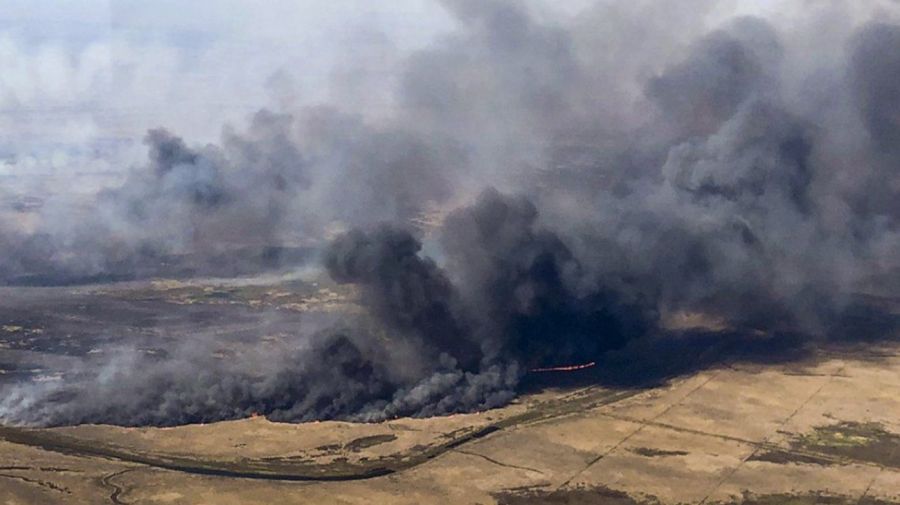 Fires in the Paraná Delta this year.
Only in September, more than 13,000 affected hectares were detected, setting off all alarms.
The UNR report not only focuses on environmental data but also points out the weakening of public policies for fire management.
Matías De Bueno, Secretary of Environmental Policy at UNR, expressed his frustration in a conversation with Rosario/12. “We have not been able to determine, over the last five years, who is starting the fires,” he said. This lack of answers highlights a persistent problem that affects one of the most important ecosystems in the country.
The elimination of the trust fund of the National Fire Management System (SNMF) and the under-execution of budgets since 2023 limit the response capacity, primarily as pointed out. This leaves the control strategy reduced to a late and ineffective reaction.
Rodolfo Martínez, from the Wetlands Multisectoral, emphasized the ongoing lack of state control and the absence of proactive management.
Public hearing and call for shared governance
In a historic public hearing convened at the City Council, the wetlands situation was discussed and urgent measures were demanded. Federal prosecutor Claudio Kishimoto spoke about the status of the judicial cases investigating those responsible, an “unprecedented” event according to Councilor Julián Ferrero, who chairs the Ecology Commission.
The day brought together various stakeholders, from officials and environmental organizations to representatives from the livestock sector, highlighting the complexity of the issue.
 The importance of wetlands.
Environmental organizations, which have been fighting for a wetlands law for years, pointed out that the situation has not improved and that fires will continue if effective controls and adequate resources are not implemented.
The report concludes that, given the interjurisdictional nature of wetlands, coordination between provinces and the national government is essential to ensure the protection of the ecosystem and local communities. Without shared governance and an adequate budget, destruction will continue.


