



In a global context marked by the urgency of climate change and the fight against deforestation, a concrete experience of forest restoration is making strong progress in the province of Misiones.
For almost eight years, the company Concept Nature Management SA has been developing a forest model that breaks away from the traditional scheme of exotic monocultures, opting for the restoration of native forests through sustainable practices and high-value native timber species.
### Technical diagnosis and ecological planning
Based in Leandro N. Alem and with presence in various areas of the province, the company – integrated by Argentine and German capitals – has already planted more than 200,000 native specimens, such as cañafístola, loro blanco, anchico, grapia, timbó, guatambú, cedro misionero, and cancharana, among others.
Many of these species are threatened or have fragmented populations, so their reintegration into the landscape represents a key action for genetic conservation.
The recovery of ecosystems is based on detailed technical diagnoses, which evaluate the state of the forest, the present biodiversity, and soil conditions. “Each decision is based on maps, inventories, and site analyses,” explained agricultural engineer Camila Candia, a member of the technical team in an interview with El Territorio newspaper.
### Forest restoration and selective management
The implemented model focuses on planting trees within the native forest, respecting its structure and biodiversity. Manual strips are used for planting, leaving intervention-free strips as ecological support. Additionally, when selective timber harvesting is carried out, reforestation is done on-site with 400 to 500 seedlings per hectare, achieving 200 hectares per year.
“The production of wood does not imply destroying the forest, but regenerating it,” said Michael Trapp, founder of the company. “Sustainability is methodology, not just rhetoric,” he added.
### Forest nursery and production of genetic quality
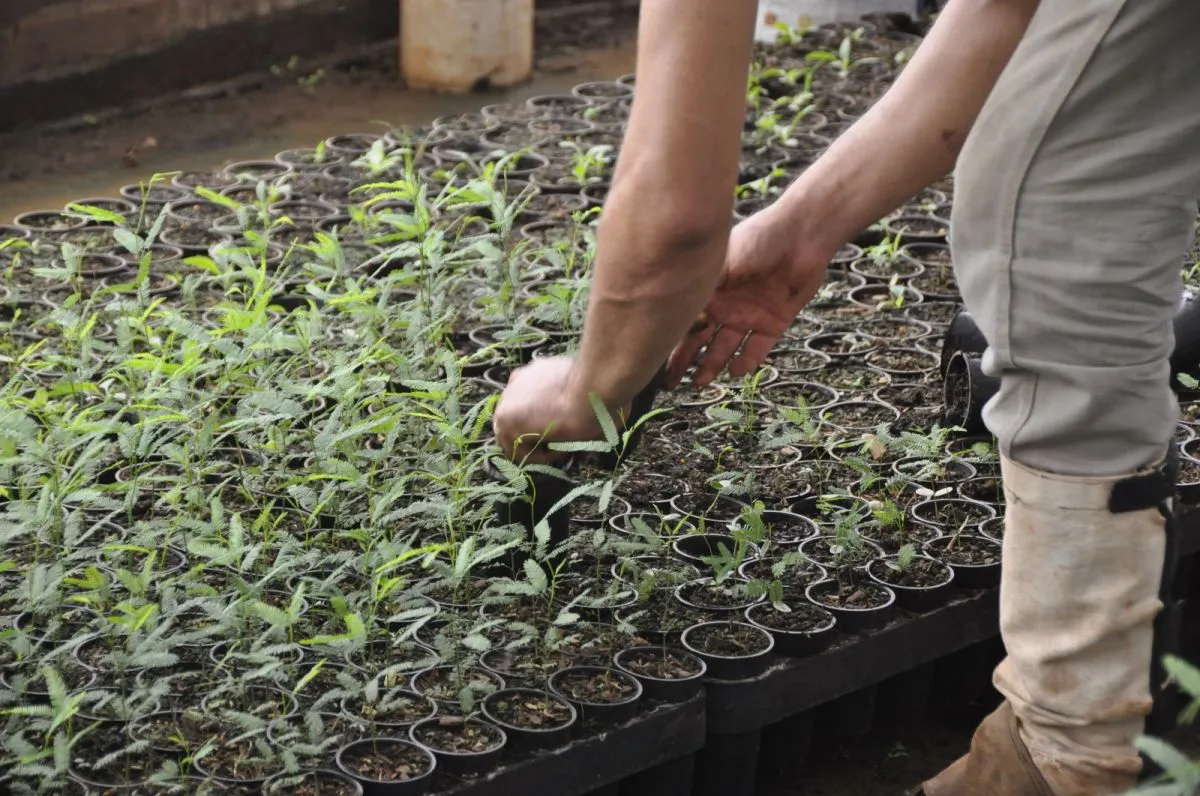
One of the pillars of the project is the forest nursery located in Lot 12, on Provincial Route 4. There, a wide variety of native species is produced from trees registered with INASE, ensuring genetic quality and local adaptation.
Each plant goes through a process of hardening and acclimatization, ensuring its survival in natural conditions.
The current structure allows for the production of 250,000 specimens per year, with a projection of reaching 450,000 in 2026 and reaching one million plants annually.
### Environmental monitoring and carbon credits
Reforestation actions are monitored annually to assess biomass growth, forest health, and carbon sequestration capacity.
These data allow for the projection of carbon credit generation under international standards, turning restored forests into marketable environmental assets.
“Reforestation with native species can be financially sustainable,” highlighted Trapp, who anticipated that the company is exploring opportunities in the carbon offset market.
### Social impact and territorial articulation
Since its inception, Concept Nature has incorporated a social perspective into its work, promoting training in labor rights, safety, and environmental conservation. Additionally, it articulates actions with the local community, strengthening territorial ties and respecting local knowledge.
In the southern region of Misiones, the company has 790 hectares certified under sustainable forest management (PEFC), distributed in the Buena Vista, La Mata, Cavallero Cué, and Caá Guazú fields, forming the “Sierra del Imán” Forest Management Unit.
Priority conservation sites have been identified there, such as the area adjacent to the Ing. Raúl Martínez Crovetto Provincial Park, where biodiversity is strictly protected.
### Visibility and projection: heading to the Argentine Forest Fair
With a consolidated territorial presence, ongoing international certification process, and rigorous technical approach, Concept Nature is preparing to participate for the first time in the Argentine Forest Fair, to be held from November 6 to 9 in Concordia, Entre Ríos.
“We will showcase our progress, management schemes, and products, demonstrating that native species, with proper management, have performance and profitability,” Trapp revealed. The stand will include seedlings, timber products, and substrates, in a key space for the exchange of experiences in the forestry sector.



