



In gardens and crops, the proliferation of weeds represents a constant challenge. To control them, the most common practice was to resort to chemical herbicides, products that, although effective, have serious consequences on the environment. However, new technologies are seeking more sustainable alternatives. One of them is GreenBeam, a robot designed to eradicate weeds using artificial intelligence and lasers, without a single drop of pesticides.
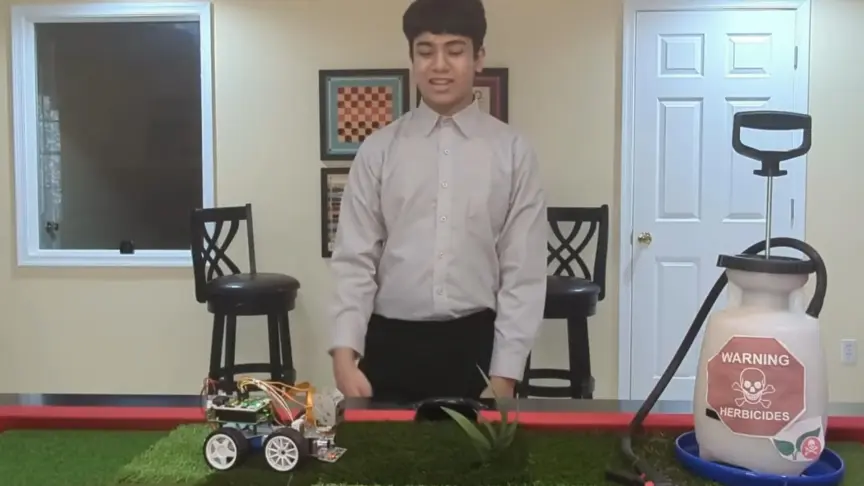
This invention was created by a 13-year-old student in Pennsylvania, who was inspired by the environmental impact that chemical products generate when absorbed by the soil and carried by rain to rivers and oceans. His vision led him to develop an autonomous system that operates on solar energy, capable of distinguishing between invasive weeds and cultivated plants, and eliminating them precisely.
The prototype, tested under laboratory conditions, uses computer vision to identify the weed and then applies a laser pulse that destroys its tissue in seconds. This solution is emerging as an economic, practical, and scalable alternative, with the potential to reach homes, urban gardens, and agricultural fields.
GreenBeam has already received international recognition for its ability to provide a real option against the dependence on herbicides. Its simple and sustainable design not only makes it an educational tool but also an example of how technological innovation can address current ecological challenges.

Towards a more environmentally friendly agriculture
The development of robots like GreenBeam opens the door to a transition towards more environmentally friendly agricultural models. By eliminating the need for pesticides, biodiversity is not only protected, but soil quality is improved, and water pollution is reduced. This technology represents another piece in the global search for solutions that promote clean and sustainable production.
Although it is still in the prototype phase, its potential to become an accessible and widespread tool is evident. If initiatives like this can be scaled up, the future of agriculture could be greener, with productive fields that no longer depend on harmful chemicals to keep weeds at bay.
The impact of pesticides on the environment
The use of pesticides and herbicides is one of the main factors contributing to the deterioration of ecosystems. These chemicals, when infiltrating the soils, contaminate groundwater and end up in rivers, lakes, and oceans. There, they affect aquatic fauna and disrupt the balance of marine ecosystems. The accumulation of toxic compounds can even favor the emergence of harmful algae that block sunlight and hinder the development of corals and underwater plants.
The effects also reach terrestrial biodiversity. Pollinators, such as bees and butterflies, are highly vulnerable to contact with pesticides, which directly impacts food production. In addition, birds and small mammals that feed on insects or contaminated plants incorporate these chemicals into the food chain.
Furthermore, pesticide residues accumulate over time and can remain active for decades. This not only poses a risk to wildlife and flora but also to human health, as they are present in the food and water consumed daily. The environmental and social cost of their intensive use is much greater than the immediate benefits they offer in controlling pests or weeds.



