



For decades we have heard that Amazonia is the “lung of the planet” and produces 20% of the Earth’s oxygen.
However, scientists debunk this popular belief: the net contribution of the Amazon to the oxygen we breathe is practically zero.
Is the Amazon the “lung of the planet”? The error behind the myth
“There are several reasons why one would want to keep the Amazon in place, and oxygen is not one of them,” notes Michael Coe, a terrestrial systems scientist at the Woods Hole Research Center in Massachusetts.
For Coe, the statement “simply doesn’t make any physical sense“.
This is because there is not enough carbon dioxide in the atmosphere for trees to produce one-fifth of the planet’s oxygen through photosynthesis.
The logic is simple: for every molecule of carbon dioxide that trees extract from the air, they release a comparable amount of oxygen molecules.
Since the atmosphere contains less than half a percent of carbon dioxide, but 21% of oxygen, it is impossible for the Amazon to be the “lung of the planet”.
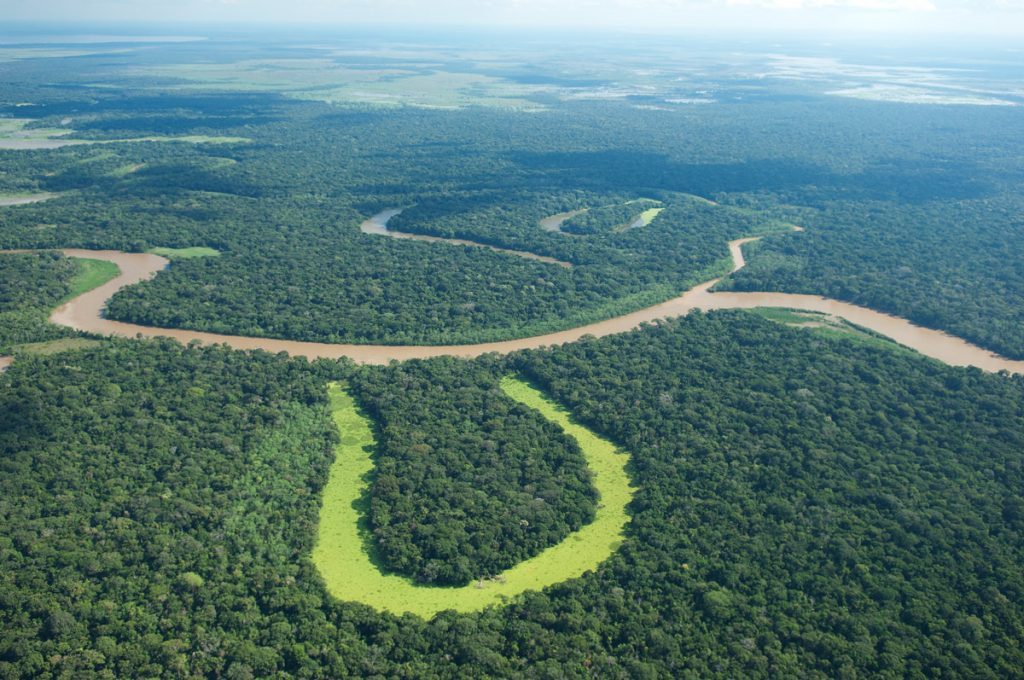
How much oxygen does the Amazon really produce?
To confirm this, Yadvinder Malhi, an ecosystem ecologist at the University of Oxford, conducted more precise calculations based on a 2010 study.
There, he found that tropical forests are responsible for about 34% of terrestrial photosynthesis.
Thus, considering its size, the Amazon would account for approximately half of that amount.
That is, it generates about 16% of the oxygen produced on land.
However, this percentage drops to 9% when including the oxygen produced by phytoplankton in the ocean.
Climate scientist Jonathan Foley, from the Drawdown Project, reached an even more conservative estimate of 6%.
This is because trees not only exhale oxygen, but also consume it.
They do this through cellular respiration, a process where they convert sugars into energy using oxygen.
So, during the night, when there is no sun for photosynthesis, they absorb oxygen.
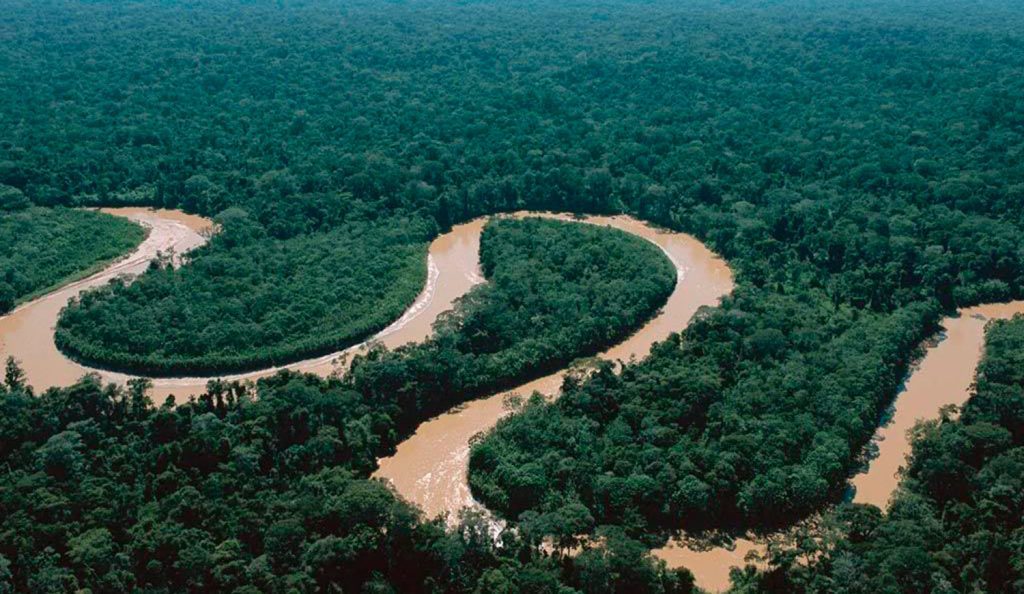
In particular, Malhi’s team estimates that trees inhale just over half of the oxygen they produce.
The rest is consumed by the countless microbes living in the Amazon, which inhale oxygen to break down the dead organic matter of the forest.
“The net [oxygen] effect of the Amazon, or indeed any other biome, is approximately zero”, assures Malhi.
So, where does the oxygen we breathe come from?
The oxygen we breathe is the legacy of oceanic phytoplankton that over billions of years accumulated oxygen steadily.
This is explained by Scott Denning, an atmospheric scientist at Colorado State University.
This oxygen could only accumulate because the plankton was trapped at the bottom of the ocean before decomposing.
Despite this, although it is not the lung of the planet, the Amazon contributes significantly to the extraction of tons of carbon dioxide from the atmosphere.
Coe compares it to a giant air conditioner that cools the planet.
“Very few people talk about biodiversity, but the Amazon is the terrestrial ecosystem with the greatest biodiversity, and climate change and deforestation are putting that wealth at risk,” indicates Carlos Nobre, a climate scientist at the Institute of Advanced Studies of the University of São Paulo.
Moreover, the Amazon may not be “the lung of the planet,” but it has much more relevant functions.
It also stabilizes the rain cycles in South America and is a crucial home for indigenous peoples and countless animal and plant species.


