



The Municipality of Luján announced the start of landscaping tasks on the west bank of the Luján River, with the planting of trees and shrubs that will shape a new linear park.
This initiative aims to consolidate a green corridor that integrates the river with the city, enhancing public space and promoting a more sustainable and accessible environment for the community.
First stage: reforestation with native species
The first phase of the project included the reforestation with native tree species of high landscape value, such as:
- Fumo bravo
- Laurel del río
- Ceibos
- Sauces criollos
- Jacarandás
- Lapachos
- Tipas
- Aguaribay
These are complemented by shrubs and ornamental species that provide a diversity of textures, foliage, and blooms throughout the year. The selection is based on environmental, landscape, and regulatory criteria, prioritizing biodiversity, adaptation to the riverbank environment, and strengthening the local ecosystem.
Environmental and social benefits
Reforestation is a central axis of the project because:
- Improves environmental quality and ecosystem health.
- Mitigates the heat island effect, reducing temperatures in urban areas.
- Creates public green spaces, promoting social interaction, recreation, and contact with nature.
Next stages
The plan will continue with:
- Sowing grass in common use areas.
- Progressive incorporation of herbaceous and grass species.
- Consolidation of the landscape and reinforcement of the ecological character of the linear park.
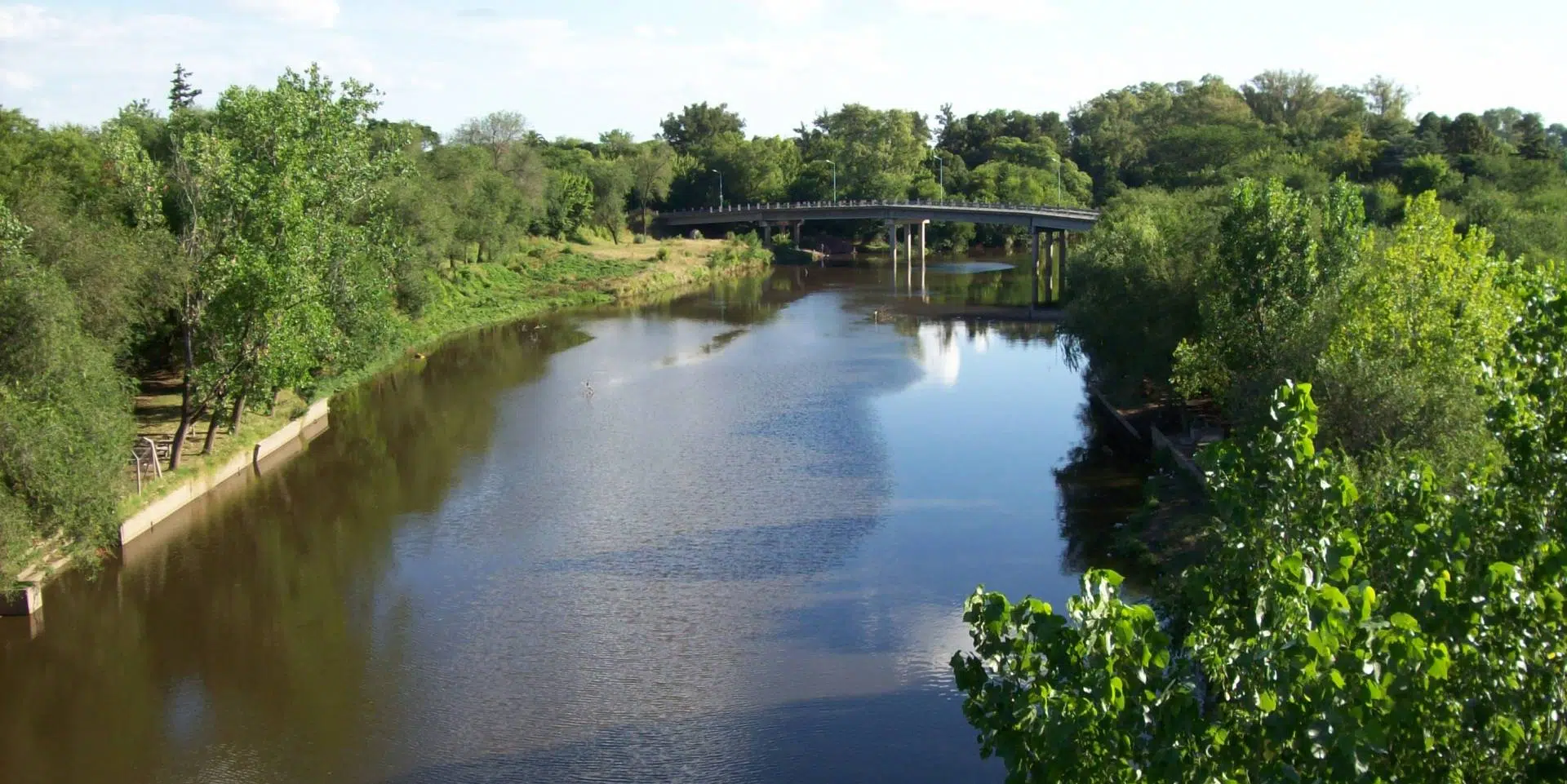
The strategic value of the Luján River
The Luján River is vital for the northeast of Buenos Aires and fulfills multiple functions:
- Ecosystem and biodiversity: its wetlands and banks host rich flora and fauna, regulating water in the rolling pampas.
- Water management: as a plain river, it requires basin management works to reduce frequent flooding.
- Identity and culture: inseparable from the city of Luján and the Virgin of Luján, it is a historical and religious reference.
- Economic and recreational use: it crosses agricultural and urban areas, offering recreational spaces and contributing to economic development.
- Connectivity: it flows into the Río de la Plata and connects with the Paraná Delta, giving it strategic geographical importance.
Pending challenges
Despite its relevance, the river faces pollution problems and the need for comprehensive flood management, which requires sustainable policies and coordination between municipalities, province, and nation.
The comprehensive tree planting and landscaping plan for the Luján River represents a key step towards building a green corridor that strengthens the relationship between city and nature.
With native species, ecological criteria, and a sustainability approach, the project seeks to improve environmental quality, enhance biodiversity, and offer quality public spaces, while advancing in the management of the basin’s water and environmental challenges.



