



A recent report by the organizations LINGO and Engenera estimates that remedying the environmental liabilities of Pemex would cost more than 532 billion dollars.
This amount reflects the abandonment of infrastructure and the cleanup of contaminated areas from more than a century of oil activity in the country.
Sources of Pollution
The study titled “Pemex’s Environmental Debt” indicates that the impacts go beyond crude oil spills:
- Congenital water: liquid associated with oil extracted in drilling.
- Oil waste: sludge, heavy metals, and radioactive elements.
- Wells and pipelines: more than 29,000 wells in 22 states and 6,777 pipelines totaling 68,800 km, equivalent to 1.7 laps around the Earth.
Lack of Transparency
The report’s author, Diana Papoulias, warns about the difficulty of accessing accurate information. There are even contradictions between Pemex data and the records of the Semarnat.
- Pemex reports 1,385 contaminated hectares.
- University studies indicate more than 7,200 hectares just in Tabasco.
This suggests a systematic underestimation and lack of consistency in spill reporting.
Remediation Costs
- 1,385 hectares: would require 11 billion pesos (640 million dollars).
- 40 contaminated dams: would demand 3.5 billion pesos (203 million dollars).
The dams were historically used to deposit oil cuttings and drilling sludge, complicating their cleanup.
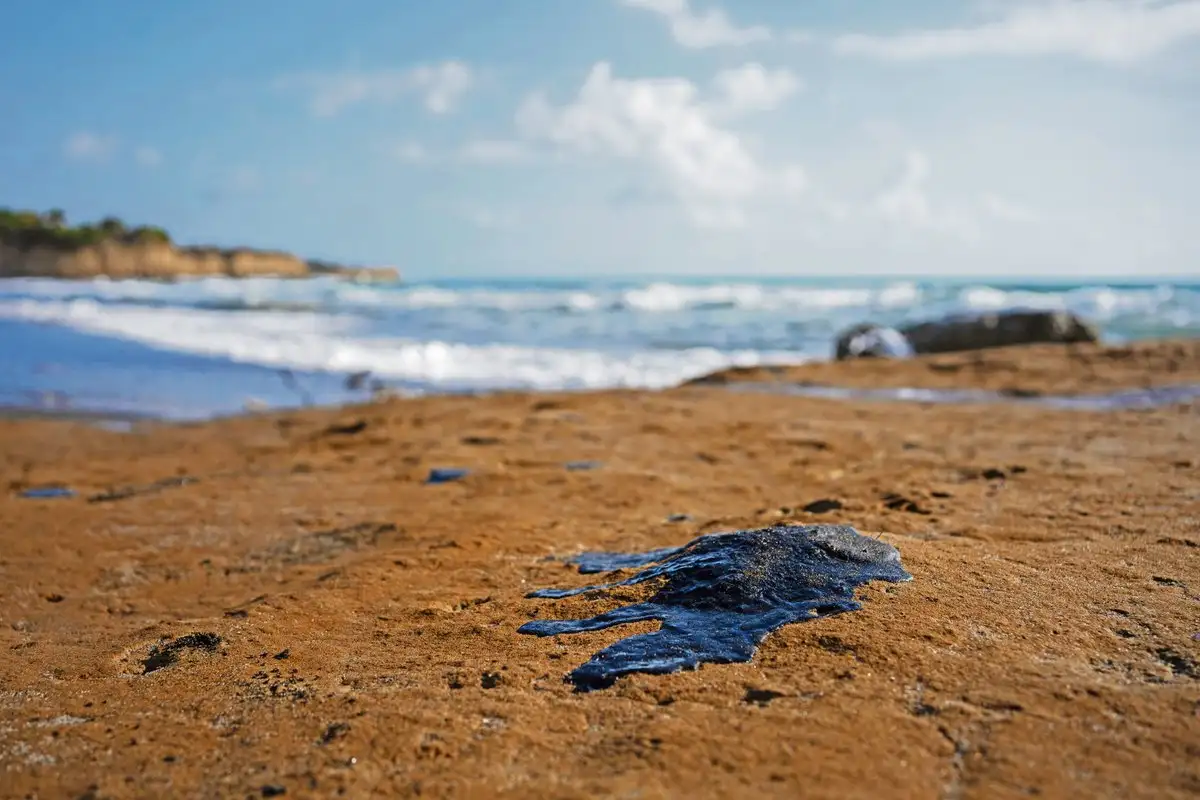
Types of Crude and Cleanup Difficulty
The report explains that:
- Light crude is more toxic but evaporates quickly and floats on water.
- Heavy crude adheres to soils and vegetation, making remediation difficult.
The lack of information on the type of spilled hydrocarbon limits the ability to design adequate cleanup strategies.
Impacts on Ecosystems and Communities
The contaminated sites are located in agricultural soils of Tabasco and Veracruz, where the combination of hydrocarbons with pesticides and fertilizers creates highly harmful mixtures. Additionally, offshore exploitation presents greater risks due to the difficulty of supervision and remediation.
Between 1997 and 2022, Pemex reported 1,083 spills. Although the events decreased compared to the year 2000 (1,518 cases), between 2018 and 2021 they surged, exceeding 1,000 incidents annually.
Public Policy Proposal
The report suggests that Mexico should strengthen its remediation policy, taking the Superfund program in the United States as a reference, which establishes funding, public inventories, and environmental responsibility mechanisms.
Pemex’s environmental liabilities are a monumental challenge that combines historical pollution, lack of transparency, and multi-billion-dollar remediation costs. Solving it requires clear policies, solid funding, and a real commitment to protecting affected ecosystems and communities.



