



At the end of April, the **Argentine Navy** completed operation “Mare Nostrum III,” a surveillance and control deployment in maritime spaces. They detected the presence of 400 [vessels near the Exclusive Economic Zone (EEZ)](https://noticiasambientales.com/medio-ambiente/cancilleria-rechazo-el-ingreso-del-barco-britanico-que-buscaba-investigar-en-el-mar-argentino/).
Specifically, in the area ranging from the side of **Viedma to the Falkland Islands**.
## Detected vessels in the Exclusive Economic Zone: the operation
The oceanic patrol vessel **ARA Storni**, belonging to the Maritime Patrol Division, set sail on April 16 from the Mar del Plata Naval Base and headed towards the EEZ boundary.
The objective was to “exercise surveillance and control over concentrations of foreign fishing vessels in the area adjacent to the EEZ,” as reported by the force.
During this stage of the operation, particular attention was paid from the side of the city of Viedma, in the province of Río Negro, to the side of the Falkland Islands, as reported.
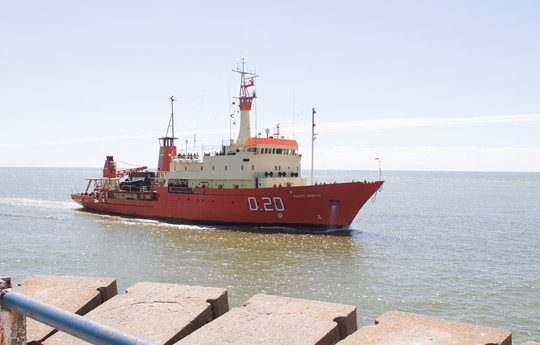
To reinforce these tasks, the operation included two flights of a Beechcraft B-200 M aircraft from the **Naval Air Surveillance Squadron**, based in Punta Indio, Buenos Aires.
From the **Maritime Joint Command**, [based in Buenos Aires](https://noticiasambientales.com/), all operations deployed in the EEZ were monitored.
As explained, the presence of the patrol vessel and the aircraft forces foreign trawlers to stay out of national jurisdiction waters.
## The controversy with the English vessel in the Argentine Sea
A few months ago, another controversy related to foreign vessels occurred at the diplomatic level. The Foreign Ministry rejected the [entry of the British ship](https://noticiasambientales.com/medio-ambiente/cancilleria-rechazo-el-ingreso-del-barco-britanico-que-buscaba-investigar-en-el-mar-argentino/) that sought to carry out research in the Argentine Sea in December.
The denial, led by Vice Chancellor **Eduardo Bustamante**, was based on strategic and environmental considerations, despite technical sectors of the Government initially approving the project.
The **James Cook vessel** requested entry into local waters to collect oceanographic, biological, chemical, and physical data. It will also study ocean currents.
Although the **Federal Fisheries Council (CFP)** confirmed that there were no impediments or alerts for illegal fishing, actors from the sector and civil society quickly expressed their opposition.


