



Despite the world producing enough food to feed all its inhabitants, 673 million people continue to suffer from hunger.
Simultaneously, obesity and food waste are on the rise. On the occasion of this global day, the leader of the United Nations urges solidarity to ensure adequate and healthy nutrition for all people.
“Currently, 673 million people around the world still go to bed with hunger every night. Day after day, many more do not know if they will receive their next meal,” were the words of lament expressed this Thursday by the Secretary-General of the UN.
In his message issued on World Food Day, commemorated every October 16, António Guterres recalled that eighty years ago, various nations joined forces to triumph in the battle against hunger on a planet devastated by war.
He assured that, although significant progress has been made since then, recent crises highlight the need to remain vigilant to avoid a setback.
New challenges on nutrition
Guterres emphasized that over the decades, new challenges have emerged, ranging from the increase in obesity to climate disruptions that pose a direct threat to food security.
“It is shameful that hunger is being used as a weapon; the appalling reality is that in conflict situations, the population faces conditions of starvation and famine,” he deplored.
The Secretary-General continued by pointing out that, despite these serious difficulties, the world already has the tools, knowledge, and resources needed to eradicate hunger and provide adequate and healthy nutrition to every individual.
“What we need is unity,” Guterres stated, calling for solidarity and action to build food systems capable of nourishing the population and, at the same time, protecting the planet.
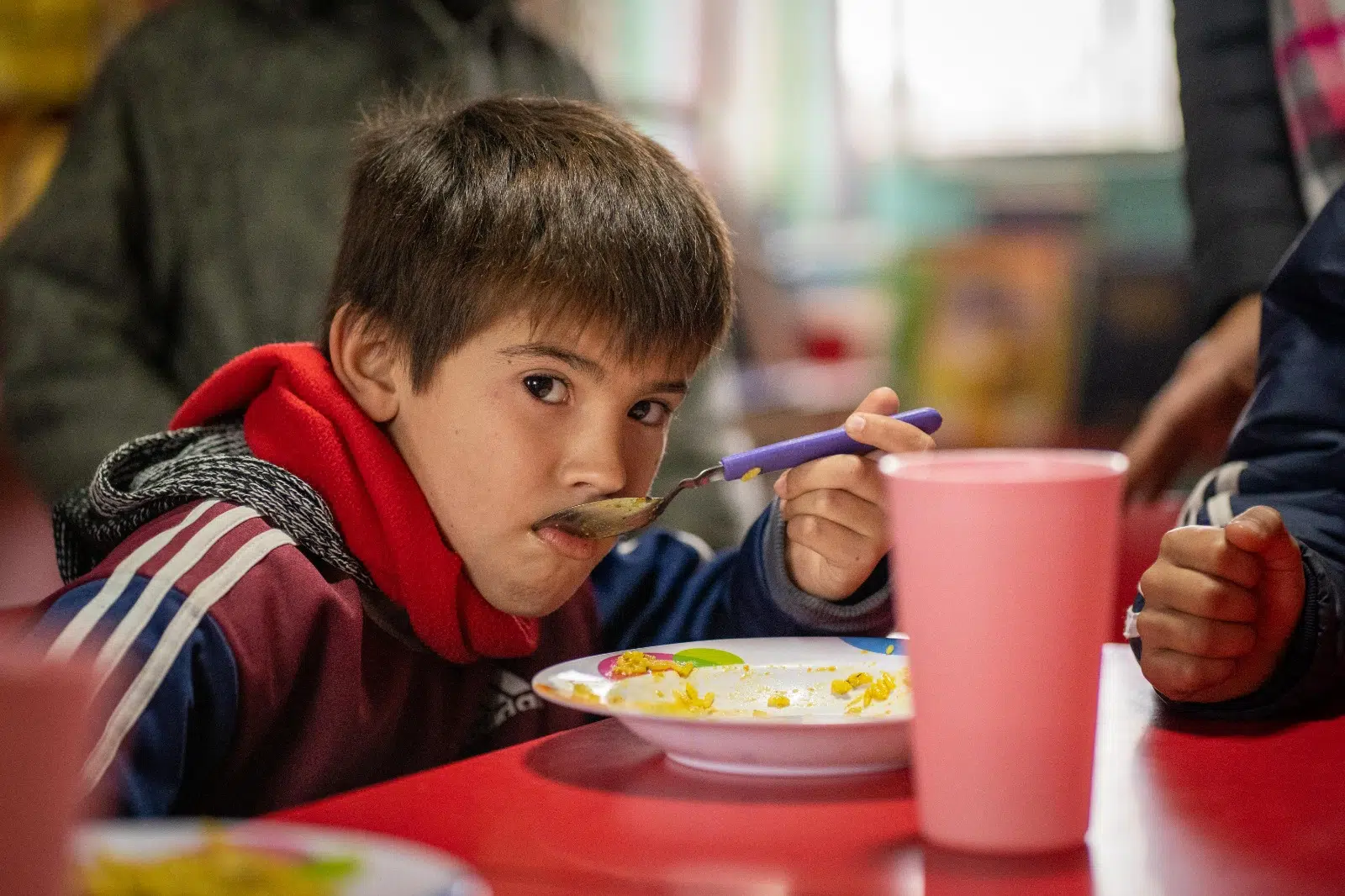
An unbalanced system of abundance and scarcity
The celebration of World Food Day coincides with the founding date of the Food and Agriculture Organization of the United Nations (FAO). This agency, which is celebrating its 80th anniversary this year, warns of the imbalance prevailing in the current food system, where plenty and lack coexist, often side by side.
The FAO pointed out that while 673 million people suffer from hunger and food insecurity is a overwhelming reality in certain parts of the world, in other locations, there is a continued increase in obesity rates and widespread food waste.
Data provided by the FAO indicates that one-third of all food is lost or wasted. This breakdown shows that 13% is lost during harvest and transport, and 19% is discarded at the retail and consumption stages.
In stark contrast, the 673 million people suffering from hunger oppose the 900 million individuals living with obesity and the 35.5 million children under five years old who are overweight.
The right to food is a human right
Faced with this situation, the Director-General of the FAO, Qu Dongyu, echoed the voice of the UN Secretary-General in demanding unified action.
“World leaders and people worldwide must come together in our collective conviction that the right to food is a fundamental human right and that peace is a prerequisite for food security,” declared Qu Dongyu.
Ending hunger contributes to the cause of peace
During the commemorative event for the 80th anniversary of the FAO, held at the organization’s headquarters in Rome, Pope León XIV established a direct link between the fight against hunger and the achievement of peace.
Pointing out that the lack of resources is often a trigger for conflicts, the Pope argued that defeating hunger would lay the essential foundations for the common good.
“We cannot aspire to a better world, to a bright and peaceful future, if we are not willing to share what we ourselves have received,” he emphasized.
The Pope was emphatic in stating that “the international community cannot look the other way” in the face of the magnitude of global suffering.
“We cannot aspire to a more just social life if we are not willing to rid ourselves of the apathy that justifies hunger as background music to which we have become accustomed to an unsolvable problem, or simply the responsibility of others,” pointed out the highest leader of the Catholic Church.
Combating hunger is everyone’s task
During his speech, León XIV referred to the use of hunger as a weapon of war, categorically condemning such practice.
“Why is there no immediate end to the wars that destroy our fields and also our cities, generating scenes unworthy of the human condition, where people’s lives, especially those of children, instead of being valued, fade into nothingness when they venture to find something to eat?” he questioned.
The pontiff maintained that the fight against hunger “is a battle that concerns us all.” Furthermore, he expressed strong support for international action aimed at countering malnutrition, food waste, unsustainable economies, and at restoring the dignity of all individuals, ensuring that each has enough to eat.
Stories of work and hope
Despite the formidable challenges of ensuring healthy and sustainable nutrition for all, there are numerous communities in the world that are contributing through projects and work methods that inspire with their resilience and innovation.
The FAO explains that these are stories of hope that narrate the recovery of lands, the conservation of biodiversity, and the protection of the oceans. They are examples of collaboration that strengthen communities and a form of nutrition that provides dignity and resilience.
At the core of these stories are farmers, fishermen, innovators, and communities that are discovering sustainable ways to cultivate, process, and share food. With their actions, they are facing challenges with determination, managing to combine tradition with innovation and thus paving the way towards a better future.
The Andean chakra
Among these stories of hope, the FAO highlighted the case of the “Andean chakra,” an initiative led by indigenous women who are actively working to preserve agrobiodiversity in the highlands of Ecuador.
“For centuries, the Kichwa women and their ancestral knowledge of agriculture have maintained food security and self-suff


