



The problem of plastic on the plate: we eat, drink, and even breathe particles every day without realizing it. Recent studies reveal that an average person ingests the equivalent of a credit card in microplastics each week.
This environmental crisis is no longer limited to contaminated beaches or marine fauna: it has become a public health problem that directly impacts our bodies.
The effects of microplastics on human health
A global report by WWF, conducted in collaboration with the University of Birmingham and represented in Argentina by Vida Silvestre Foundation, analyzed almost 200 scientific studies and found concerning links between exposure to microplastics. The main ones:
-
Hormonal alterations
-
Hormone-related cancers
-
Reproductive problems and infertility
-
Chronic respiratory diseases
“Plastics already contaminate all natural environments and have become part of the food chain of many species, including humans,” warns Diego Albareda, coordinator of Coastal-Marine Landscapes at Vida Silvestre.
As explained, through food and drinks, we incorporate invisible plastic particles that distribute and accumulate in the body.
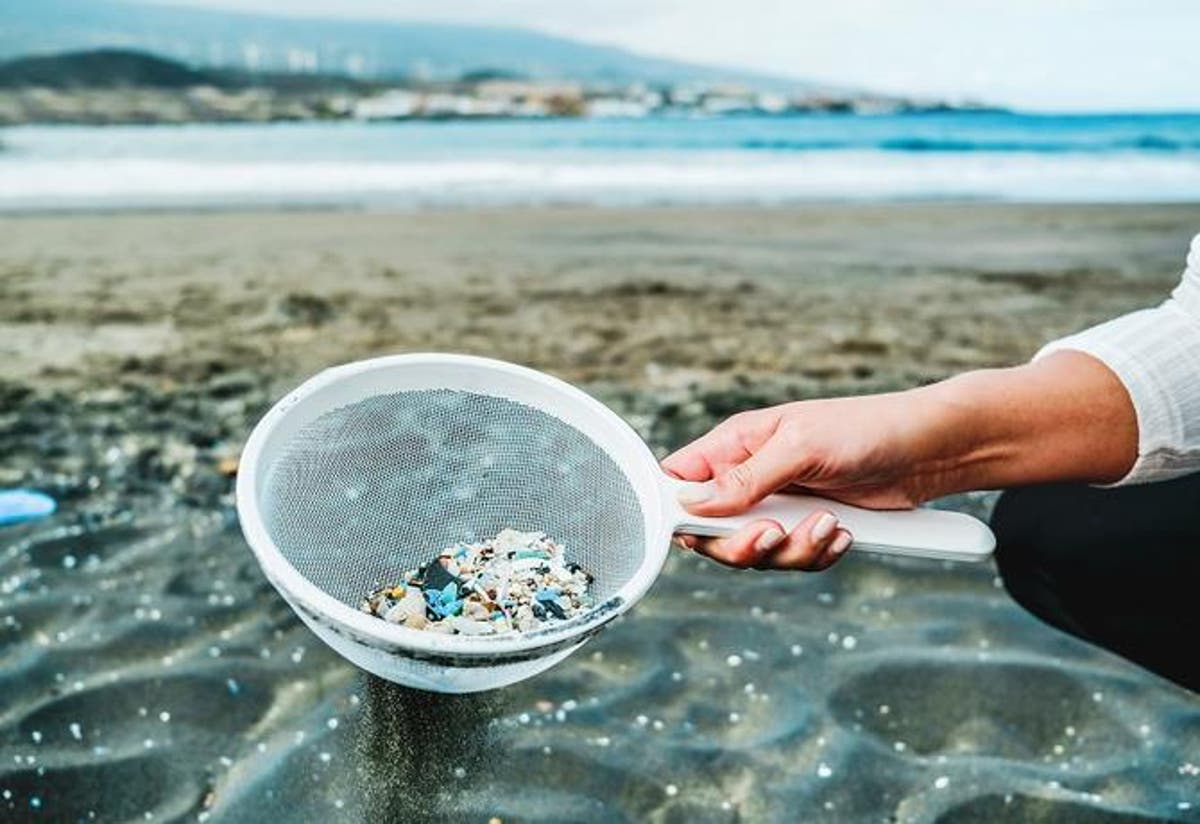 Plastic in oceans and humans.
Diagnosis in Argentina: invaded beaches and the equivalent of a credit card
In Argentina, the situation is critical. The Provincial Census of Coastal Marine Garbage revealed that more than 70% of waste on Buenos Aires beaches is plastic.
This type of pollution not only affects marine fauna and destroys habitats: it also damages key sectors such as fishing, tourism, and navigation, with a strong economic impact, as well as health-related consequences.
The comparison is clear: on average, we ingest the equivalent of a credit card in microplastics every week. These particles are present in drinking water, fish, seafood, salt, and even in the air we breathe.
Once they enter the body, they are not eliminated, but accumulate and generate long-term effects.
Experts agree that the solution lies in adopting the concept of “One Health”, which recognizes that human, animal, and environmental health are interconnected. Combating plastic pollution is not just about cleaning beaches: it is about protecting the health of people and the planet.
Every disposable bottle, plastic wrap, or single-use bag we consume can come back to us in the form of invisible microplastics.
Global treaty against plastic pollution: negotiations suspended
 The problem of plastic pollution.
The international push to reach an agreement on a legally binding treaty to end plastic pollution turned out to be beyond the reach of the States gathered in Geneva on Friday, agreeing to resume discussions at a future date.
“After 10 days of arduous negotiations in a context of geopolitical complexities, economic challenges, and multilateral tensions,” said the Executive Director of the United Nations Environment Programme (UNEP).
Speaking to the media at the end of the Intergovernmental Negotiating Committee talks at the UN headquarters in the Swiss city, Andersen emphasized how countries expressed a clear desire to continue participating in the process, acknowledging their significant differences regarding plastic pollution.
“Although we did not reach an agreement on the treaty text we had hoped for, at UNEP we will continue working against plastic pollution – pollution that is in our groundwater, in our soils, in our rivers, in our oceans, and yes, also in our bodies,” she said.



