



The contamination of the Paraná River is becoming increasingly worrying. In general, it is one of the major ecological problems on the planet, and this basin is not exempt.
It receives all the sewage effluents from the cities settled on its banks, chemical waste from the industry, and from the agricultural sector that affect the quality of its waters.
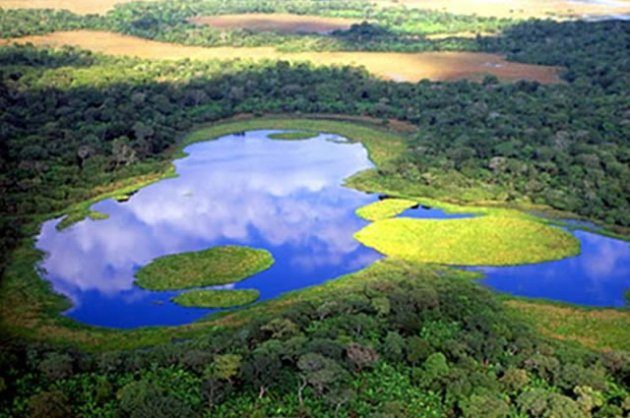
Faced with this, nature has a solution that works at no cost: the macrosystem of wetlands in the Paraná river corridor that acts as a natural filter to retain and purify the polluting particles.
### Contamination of the Paraná River: what happens in the basin
“The Paraná, with its average flow of 16 thousand cubic meters per second, has a high dilution potential. And the wetlands of its floodplain add numerous physicochemical processes that contribute to purifying water contaminants,” warned Nadia Boscarol, a biologist and coordinator of Fundación Humedales/Wetlands International.
“But that potential is not infinite, and pollution levels in some of its associated basins are highly alarming,” she warned.
### The key role of wetlands, nature’s “kidneys”
Wetlands have a natural capacity to purify water through physical, chemical, and biological processes that facilitate the retention, transformation, and elimination of contaminants and excess nutrients.
That is why the Paraná Delta acts as a natural filter or “kidney” of the water in the La Plata Basin, the second largest in South America.
According to Jezabel Primost, a PhD in Exact Sciences and author of the work “Planet’s Kidneys. Wetlands: the natural water purifiers,” within the landscape of the Paraná wetlands, “there are undervalued processes that improve human life like the natural water purification.
“These ecosystems are living filters, natural machines that continuously process substances for free and perfectly. To do so, they must be in good condition,” she described.
“Just as forests are considered the lungs of the planet, wetlands are the kidneys, organs that we only pay attention to when they start to fail,” detailed Boscarol.
### What are the main pollutants
Pollution, the global problem that has escalated to worrying levels, is also present in the Paraná. The nearly 30 million people living around the La Plata Basin in Brazil, Paraguay, and Argentina depend on this water for human consumption and productive uses.
However, the main coastal cities of the Paraná do not have sewage treatment plants, and in most cases, they discharge them into the river after simple filtering.
The agrochemicals used in the field, industrial waste and hydrocarbons, as well as plastics and microplastics, also end up in the river.
Moreover, the ashes from fires on the islands and their wetlands pollute the air and leave organic matter converted into ashes that add to water pollutants.
A recent publication by Rafael Lajmanovich, a scientist from CONICET and the National University of the Litoral, showed that the Las Conchas stream basin, a tributary of the Paraná, hosts critical levels of contamination from agro-industrial pollutants.

“The highest concentration of glyphosate in South America was detected in the sediments of this stream, highlighting the serious environmental consequences of agricultural runoff in the region,” the research points out.
The frequent appearance of algae with cyanobacteria in the basin is another example of pollution, more evident in periods of water deficit.
### The urgency of protecting wetlands
The natural water purification that occurs in wetlands is a function of nature that contributes to human well-being. But, as specialists have indicated, this capacity is not infinite.
Its proper functioning depends on the conservation status and resilience capacity against human actions.
The cost of damaging this natural function and replacing it with artificial procedures is high. This is because purification plants use settling or filtration processes and add chemicals for potabilization.

“The effort and cost of artificial purification are proportional to the quality of the water entering the intake. Wetlands help reduce these costs,” argued Boscarol.


