



The coral reefs in the Seychelles are facing increasing pressure from global warming, pollution, and ocean acidification.
After decades of degradation and mass bleaching events, scientists and conservationists have launched a pioneering project aimed at restoring these ecosystems through sexual reproduction of corals, instead of traditional cloning.
Coral reefs: rainforests of the sea
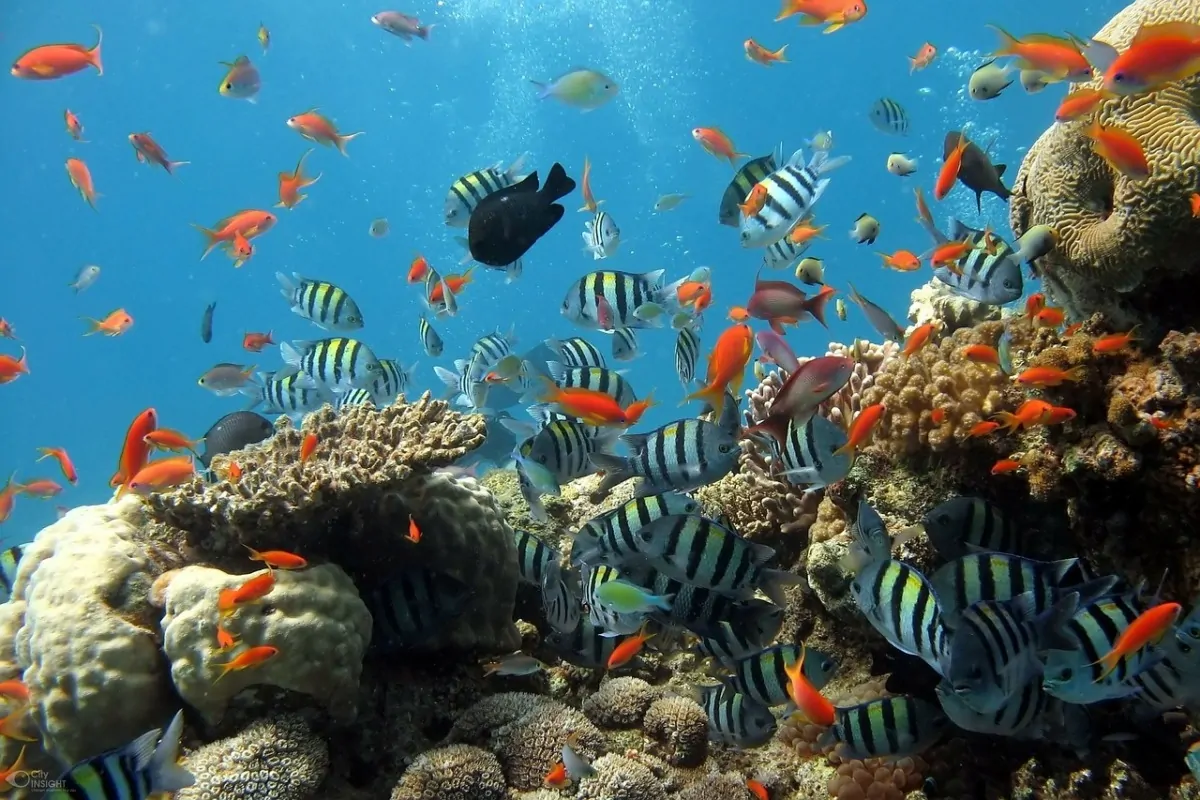
- They host around 25% of marine biodiversity, despite covering less than 1% of the ocean floor.
- They are essential for the feeding, reproduction, and shelter of thousands of species.
- More than half of the world’s coral populations have already disappeared, becoming one of the most threatened habitats on the planet.
Limitations of “coral gardening”
Until now, restoration in Seychelles relied on cloned fragments of living corals raised in nurseries.
Although this technique helps in the short term, it creates genetically identical reefs, lacking sufficient diversity to withstand bleaching and other environmental impacts.
The new approach: sexual reproduction
Coral sexual reproduction is a complex process that occurs in nature during the annual spawning, when polyps release eggs and sperm synchronized with light, temperature, and tides. After fertilization, larvae (planulae) float until they settle and form new colonies.
The Coral Spawning Lab (CSL) has been researching how to induce this process in the laboratory for over a decade. Now, together with the NGO Nature Seychelles and the company Canon, they have created the first land-based coral breeding lab in the western Indian Ocean, integrated into the ARC (Assisted Recovery of Corals) program.
Advanced imaging technology
Scientific photography plays a key role in the project:
- Photomicrography, macrophotography, and time-lapse allow for recording spawning and embryological stages with unprecedented detail.
- Photogrammetry and high-resolution video generate precise models to measure the growth of polyps and coral structures.
- These objective data help assess the effectiveness of sexual reproduction compared to conventional methods.
A genetic bank of resilient corals
The project aims to create a diverse genetic bank of corals capable of better resisting the impacts of climate change. “To build truly resilient reefs, we must consider genuine diversity,” says Nirmal Shah, director of Nature Seychelles.
Even the so-called super corals, which had survived previous events, are dying in the most recent bleaching. Therefore, the goal is to reproduce a wide variety of species and discover which can best adapt to an increasingly warm ocean.
The initiative in Seychelles represents a paradigm shift: moving from cloning to sexual reproduction to build strong, diverse, and adaptable reefs. With the support of science and advanced imaging technology, this project offers concrete hope for preserving one of the planet’s most valuable and threatened ecosystems.


