



Rural education in Chile has historically been a logistical and social challenge. However, in the Coquimbo Region, specifically in the commune of Monte Patria, this challenge has turned into a golden opportunity for environmental regeneration. The multigrade school, where students of different years share the same roof and teacher, is consolidating as the perfect laboratory for a teaching model that the modern world seems to have forgotten: the intrinsic connection with the territory.
Eduardo Jaime Muñoz, a teacher with over 16 years of experience in the Limarí province, is the face of this change. His project of Nature and Outdoor-Based Education is not just a pedagogical methodology; it is an act of cultural and environmental resistance that integrates local knowledge, traditional agriculture, and community identity as the pillars of learning.
The territory as a textbook
For Muñoz, the traditional four-walled classroom falls short when it comes to forming citizens aware of their environment. His proposal focuses on local knowledge rooted in the land, integrating agricultural and livestock practices that have sustained the communities of Coquimbo for generations.
“It is essential to continue promoting environmental education practices in multigrade schools because they allow students to link the curriculum with the care of natural resources,” Muñoz states to the Eco América portal.
This pedagogical articulation achieves something that standardized education often overlooks: identity. By connecting the child’s personal history with the history of their land, learning ceases to be abstract and becomes meaningful. Children do not just study photosynthesis; they study how their own family has survived thanks to the management of water and soil.
The garden: A laboratory of biodiversity and heritage
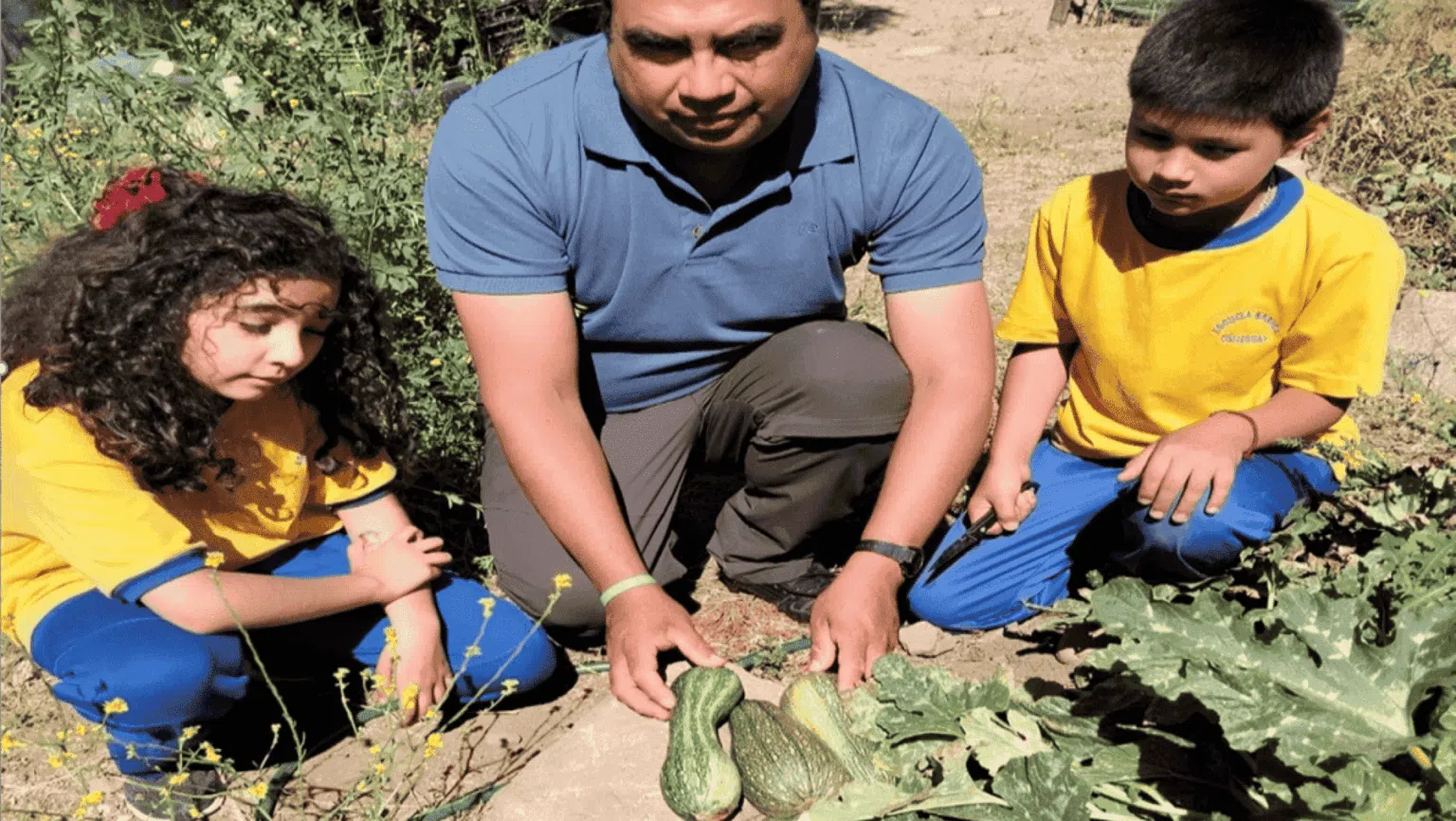
One of the most powerful pillars of this initiative is the school garden. Far from being a merely recreational space, the garden is the operations center where cultivation systems dating back centuries, such as the Milpa, are rescued.
The Milpa is an ancestral agricultural system originating from Mesoamerica, but with deep roots throughout Latin America, consisting of the polyculture of species that benefit each other.
In this miniature ecosystem, children apply planting techniques inherited from their grandparents. This not only guarantees small-scale food security but also validates the farmer’s knowledge against academic knowledge, eliminating the gap between “what is known at home” and “what is learned at school”.
Emotion and wonder: The engines of change
Muñoz emphasizes that environmental education should not be based solely on catastrophic data about climate change, but on wonder. Field trips allow students to observe nature directly, awakening emotions such as joy and happiness.
“Wonder is essential for comprehensive education,” the teacher notes. When a child marvels at the cycle of a seed, they develop a natural empathy towards the environment. They do not care for nature because they “must” do it, but because they understand it and feel part of it.
The future of the multigrade school
Looking ahead, Professor Muñoz envisions an educational model where the rural school is the central node of the community’s sustainable development. In this scheme, the teacher is not the only source of knowledge; local specialists, herders, and farmers become co-educators who enrich the formative process.
The multigrade school of the future in Chile does not seek to resemble the urban school of Santiago; it seeks to deepen its own essence. Through collaborative and contextualized learning, these small establishments in Limarí are demonstrating that the path to global sustainability begins, literally, under our feet.



