



The ozone layer, a natural shield that protects Earth from ultraviolet (UV) radiation, is undergoing a process of sustained recovery, according to the Ozone Bulletin 2024 published by the World Meteorological Organization (WMO).
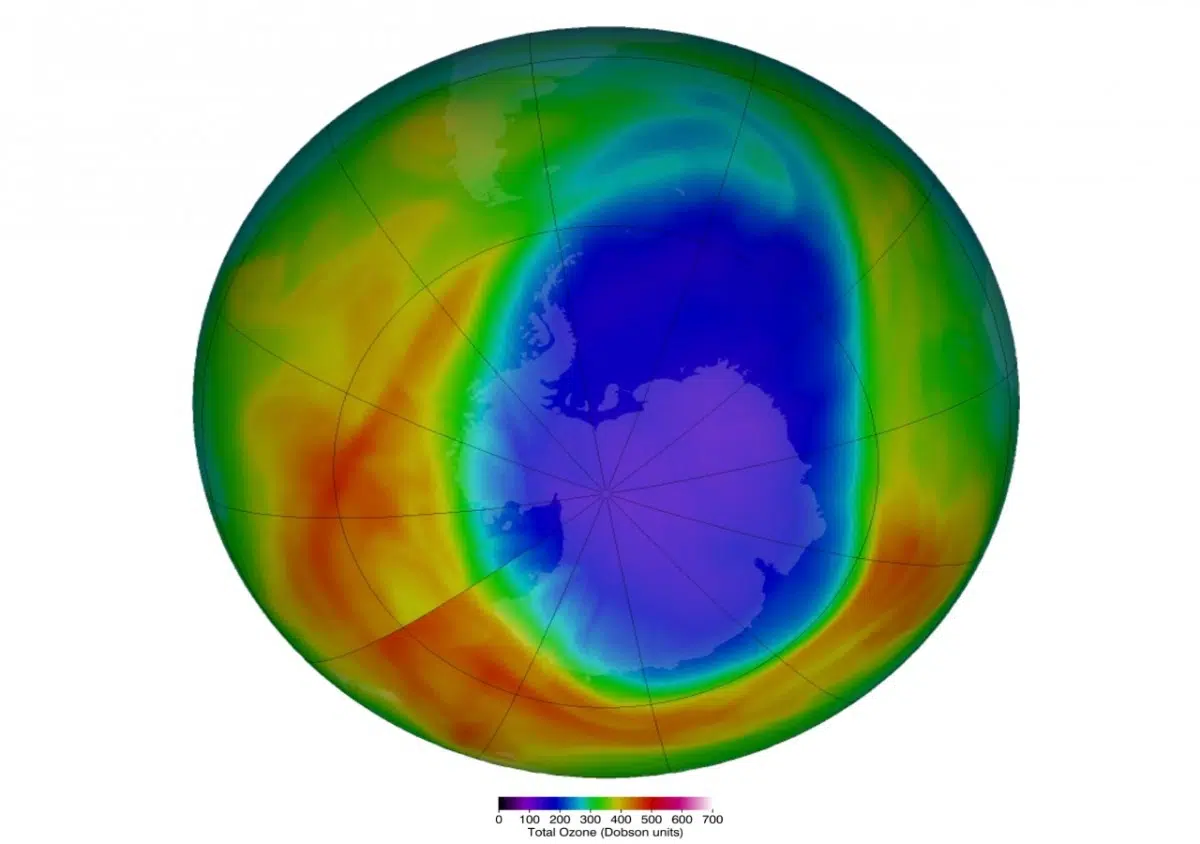
The report, presented on the occasion of the World Ozone Day and the 40th anniversary of the Vienna Convention, highlights that the hole over Antarctica was smaller in 2024 than in previous years, which represents good news for human health and the environment.
An environmental achievement with global impact
The elimination of 99% of harmful substances marks a turning point in climate policy.
Since the signing of the Montreal Protocol in 1987, more than 99% of the production and consumption of ozone-depleting substances such as CFCs used in refrigeration, aerosols, and air conditioning have been eliminated.
This agreement, considered one of the most successful in environmental history, has allowed the ozone layer to be on track to recover to 1980 levels by mid-century.
“This achievement reminds us that when nations listen to science, progress is possible,” celebrated Antonio Guterres, Secretary-General of the UN.
Positive indicators from Antarctica
The WMO bulletin recorded a maximum ozone mass deficit of 46.1 million tonnes on September 29, 2024, below the 1990-2020 average.
A late depletion followed by accelerated recovery was observed, which is interpreted as a solid indication of initial recovery of the Antarctic ozone hole.
The Arctic also deserves attention
Although less severe, depletion in the north poses risks to health and ecosystems.
Historically, the Arctic has shown less vulnerability due to its warmer temperatures and more variable atmospheric dynamics, but events like the one in 2020, with unprecedented depletion levels, demonstrate that the region is not exempt from risks.
High UV radiation can affect sensitive ecosystems and increase diseases such as skin cancer and cataracts.
Environmental, social, and health benefits
Ozone recovery improves quality of life and protects biodiversity.
- Filters UV-B radiation, the most harmful to living organisms
- Prevents diseases in humans and animals
- Protects terrestrial and aquatic ecosystems
- Preserves natural resources and promotes climatic balance
Next steps: stay on course and strengthen commitments
Scientific assessment continues and projects a full recovery by 2066 in Antarctica.
The WMO and the United Nations Environment Programme conduct assessments every four years.
The most recent one, in 2022, projects that if current policies are maintained, the ozone layer will fully recover by:
- 2040 worldwide
- 2045 in the Arctic
- 2066 in Antarctica



