



The Forum for the Conservation of the Patagonian Sea organized two meetings at the Ecopark of the City of Buenos Aires—one with the press and another open to the public—with the aim of positioning the Patagonian Sea as a key ecosystem for biodiversity, climate, and productivity of the Southern Cone.
Andrea Michelson, coordinator of the Forum, summarized it clearly:
“The Patagonian Sea is an interconnected system that recognizes no borders. What happens in its waters affects our lives and the climate.”
MaRes Project: Concrete Data on Conservation
During the event, results from the MaRes Project, funded by the European Union and executed together with the Province of Chubut and the National Parks Administration, were shared:
- Plastic Pollution: in 7 coastal cleanups, almost 600 bags of plastics (20 tons) were removed from 60 km of coastline.
- Bycatch: a fleet of 20 vessels could impact 13,500 black-browed albatrosses without mitigation measures. With monitoring on 4 trawlers, an 80% reduction in incidental capture of seabirds was achieved.
- Marine Protected Areas: Argentina has 73 protected areas, covering more than 9% of the Argentine Sea (140,000 km²), essential for biodiversity and carbon sequestration.
Alejandro Vila, president of the Forum, highlighted:
“The marine protected areas offer opportunities for nature to recover, communities to strengthen their economies, and people to reconnect with the sea through respect and care.”
Voices and Institutional Participation
The meeting was attended by representatives of the European Union, authorities from Chubut, and representatives from WCS Argentina. Valeria Falabella, a member of the Forum’s Steering Group, emphasized:
“We are going through an environmental crisis that is also a crisis of values. Education and communication are essential to make visible the importance of conserving a healthy sea.”
“The Sea in the City”: Science and Art for the Whole Family
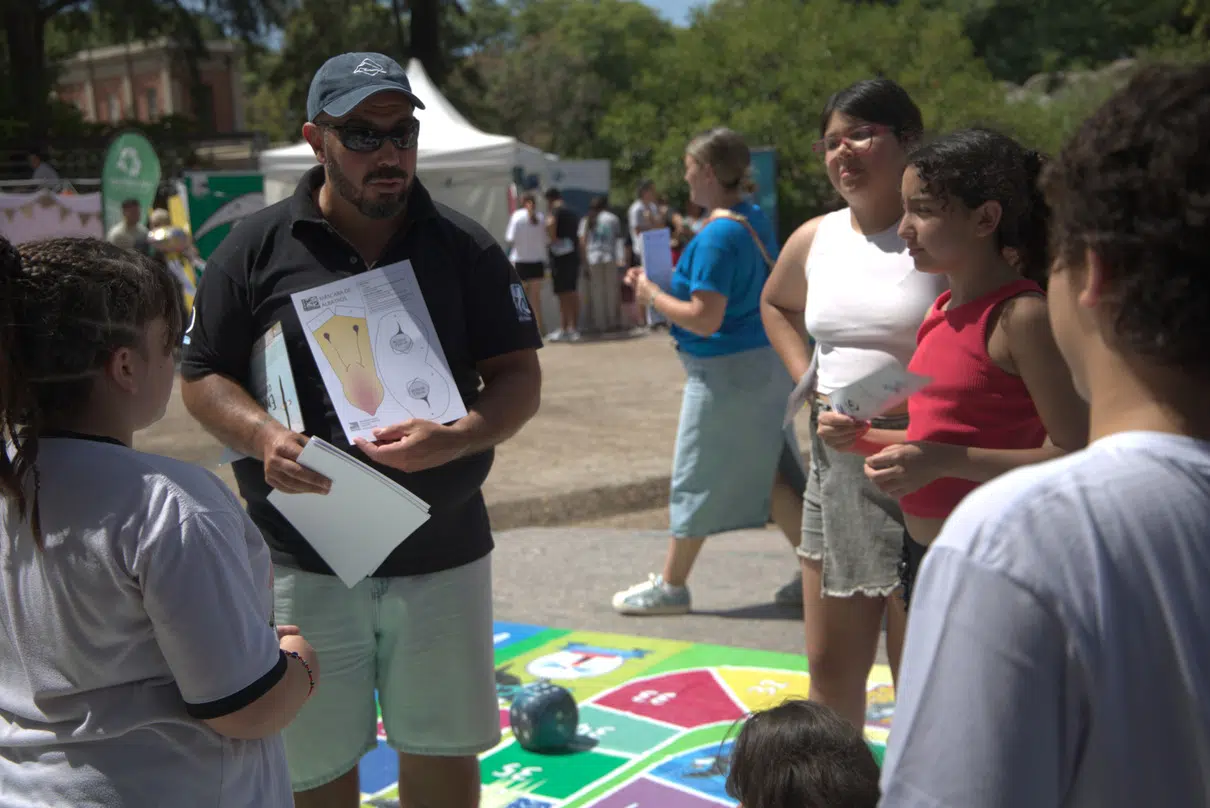
The second day, open to the public, was titled “The Sea in the City” and brought together organizations, scientists, and families at the Ecopark.
- There were educational spaces, activities for children, real conservation stories, and an artistic closing with the Recycled Circus.
- Ana Cabria Mellace, vice president of the Forum, noted:
“The collaboration between science, communities, and public policies working together is the key to caring for the sea.”
Organizations such as AquaMarina, Aves Argentinas, Whale Conservation Institute, Azara Foundation, FARN, Wildlife Foundation, Temaikèn Foundation, as well as the National Parks Administration and the Province of Chubut, participated with the support of the European Union and the French embassy.
The Forum for the Conservation of the Patagonian Sea managed to bring to the city the importance of an ecosystem that sustains biodiversity, employment, and food, and also regulates the global climate. The initiative reinforces the idea that marine conservation is not only a scientific issue but also a social, economic, and cultural one. Caring for the Patagonian Sea is caring for the future of the Southern Cone and the planet.



