



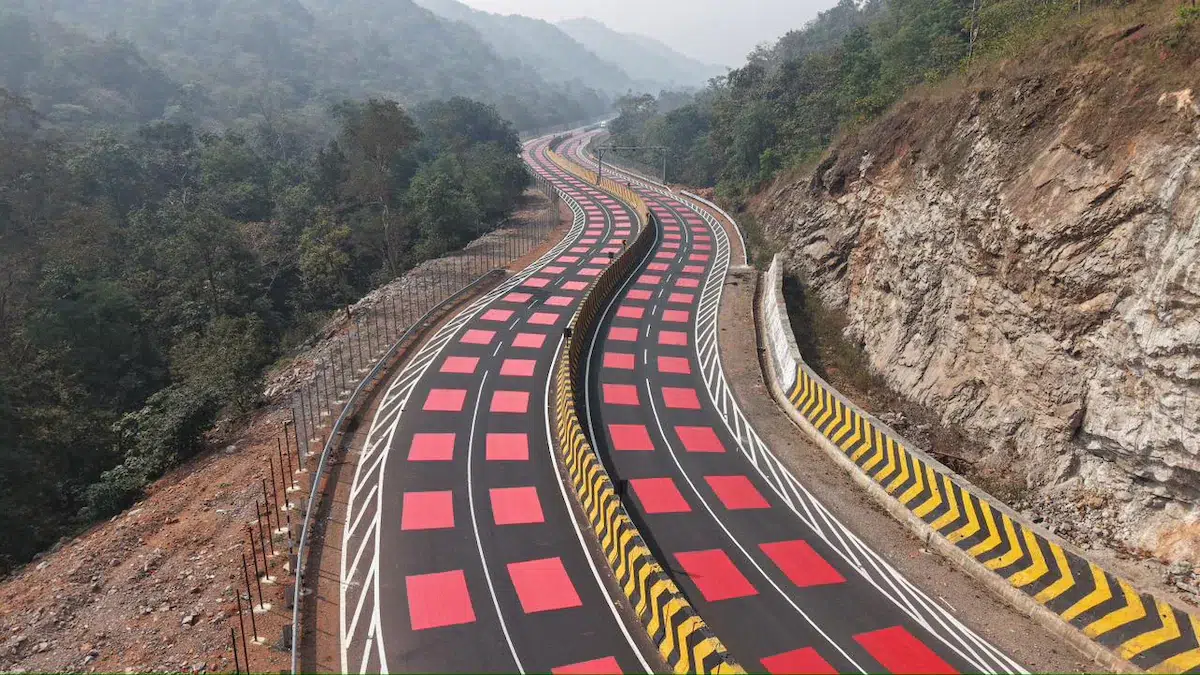
In December 2025, the state of Madhya Pradesh inaugurated India’s first road designed to reduce wildlife collisions. The so-called “red highway”, located on the national route NH-45 connecting Bhopal with Jabalpur, passes through areas near the Veerangana Durgavati and Nauradehi wildlife sanctuaries, critical biological corridors where deer, wild boars, sambar, and other large animals roam.
The project, initiated in 2024 as a pilot plan by the National Highways Authority of India, seeks to demonstrate that road infrastructure can coexist with environmental conservation.
Innovative Design to Save Lives
The highway gets its name from the intense red pigment applied on the road surface, accompanied by a table-top texture. This combination creates a visual contrast that alerts the driver and induces them to reduce speed without the need for traffic lights or permanent controls.
The intervention also includes:
- 25 underground wildlife crossings, allowing animals to cross without being exposed to traffic.
- Side fences up to eight feet high, guiding animals towards safe crossings.
- Solar monitoring cameras, recording both vehicular behavior and the use of crossings by wildlife.
Initial Results
Although there are no consolidated official statistics yet, initial reports show:
- A clear reduction in average speed in the marked areas.
- An effective use of underground crossings by local wildlife.
The section is under permanent monitoring, and complete technical data on the reduction of collisions is expected within a year.
A Replicable Model
The Indian government presented the experience as a model within the national program “Green Highways”, which seeks to apply sustainability criteria on routes crossing forests and natural reserves.
The red highway demonstrates that infrastructure can be designed to minimize habitat fragmentation and reduce wildlife mortality.
Environmental and Social Benefits
The sustainable approach applied in Madhya Pradesh offers multiple benefits:
- Biodiversity conservation: prevents habitat fragmentation and reduces deaths from collisions.
- Reduction of environmental impact: minimizes soil erosion and compaction.
- Tourism management: promotes conscious tourism that benefits the local economy without depleting natural resources.
- Education and health: promotes ecological awareness and wellness spaces that strengthen the connection between people and nature.
- Citizen responsibility: encourages practices like the Leave No Trace principle, essential for preserving fragile ecosystems.
The red highway in Madhya Pradesh sets a precedent in the integration of infrastructure and conservation. With concrete design decisions, a road ceases to be a deadly trap and becomes a space for coexistence between human traffic and wildlife.
This model shows that respecting nature when traveling routes is key to conserving invisible but essential ecosystem services, ensuring their enjoyment for future generations.



