



A Japanese scientist has developed a revolutionary technology to combat the growing issue of space debris.
It is a new method that uses a plasma thruster to remove waste without the need for physical contact. This reduces the risk of collision and facilitates its deorbiting.
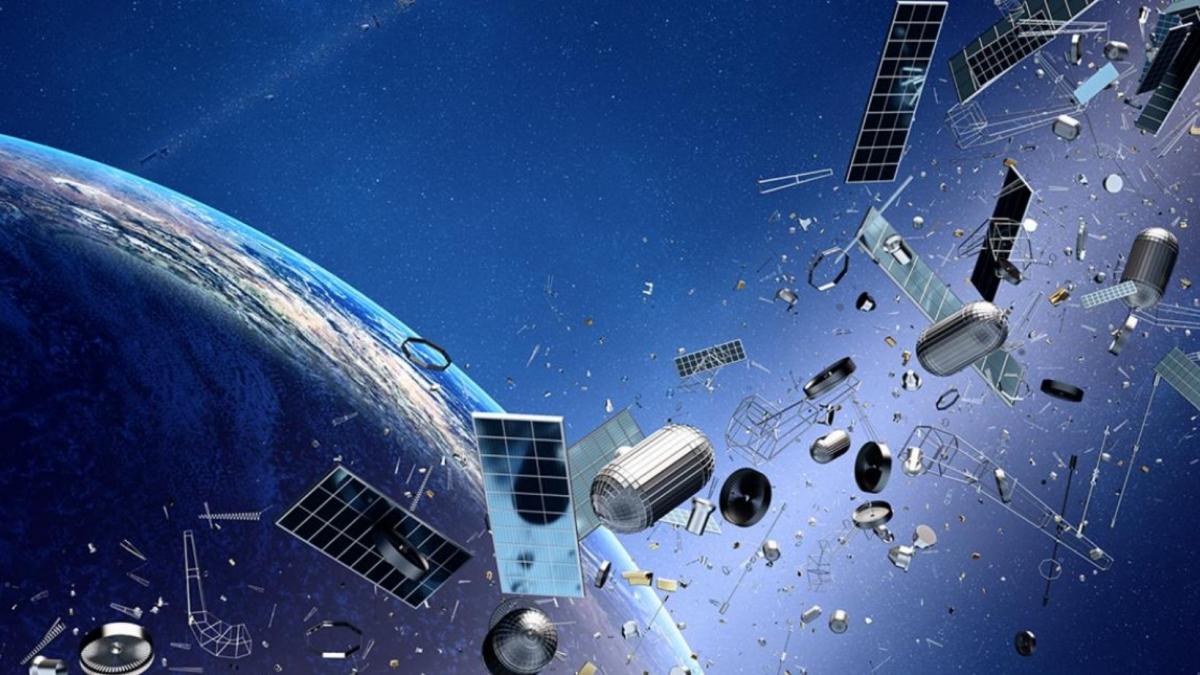
Space debris, composed of satellites, rockets, and fragments orbiting Earth at high speeds, poses an increasing danger to active missions and satellites.
In this case, unlike direct contact methods that can be risky, the thruster slows down the debris from a distance for it to fall and burn up in the atmosphere.
How does the plasma thruster work against electronic waste?
Dr. Kazunori Takahashi, from Tohoku University, designed a “two-jet electrode-less plasma ejection thruster”.
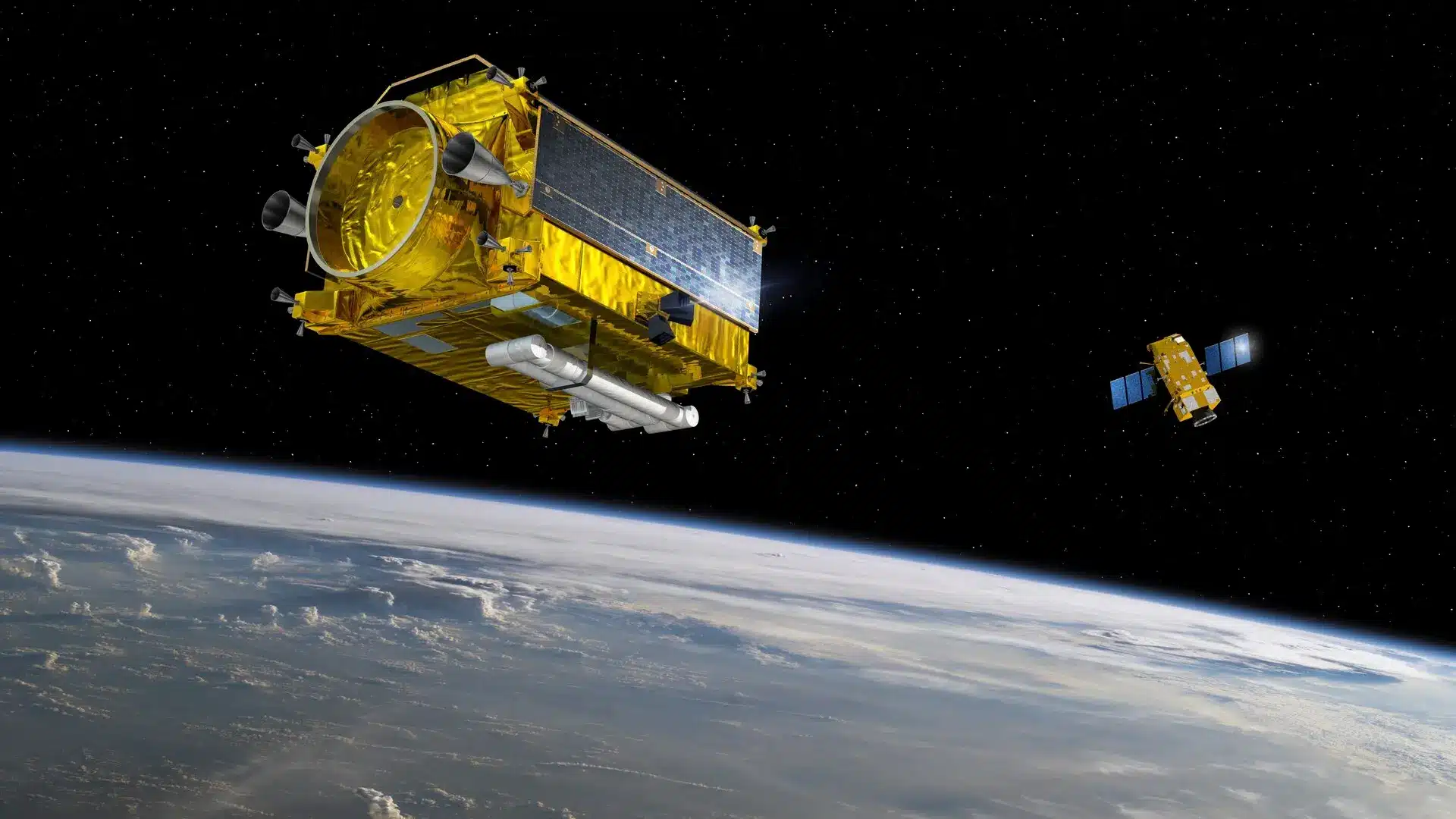
This unique system launches two plasma jets simultaneously: one towards the space object to slow it down and another in the opposite direction to stabilize the cleaning satellite.
According to Takahashi, this design allows applying a deceleration force to the object without generating excessive thrust back to the thruster. Additionally, the technology incorporates a special magnetic field, known as “cusp”, that concentrates the plasma and significantly increases the deceleration force.
Essentially, the cusp contains the plasma through a magnetic field, so it remains relatively contained in the thrust direction instead of dispersing.
As reported in Scientific Reports, lab tests showed that this configuration not only balances the engine but triples the deceleration force, allowing space debris to fall out of orbit much faster.
This advancement is even more promising as the system can operate with argon, a more economical and abundant gas than traditional thrusters.
Dr. Takahashi assures that this achievement represents a crucial step in developing a safe and efficient solution for space waste management.
What is space debris and what dangers does it pose?
Space activity has a lot to do with people’s lives. For example, communications and the internet, marine and terrestrial observation, and weather forecasting rely on various satellites orbiting Earth.
 What happens with space debris.
But what happens when the lifespan of these devices ends? Where do they end up? The vast majority remain in space, giving rise to what is known as “space debris.” Any object in orbit that was man-made and is no longer operational is considered space debris.
Since the beginning of space exploration in 1957, 6,380 vessels have been launched into orbit, placing over 15,000 satellites in orbit, of which only around 7,000 are operational. Initially, it was unknown what to do with them once they ceased to function, so they stayed in space and more objects with a limited lifespan were added.
The main danger is that these non-operational objects may collide with other bodies and cause explosions leading to new debris.



