



In the capital of Ghana, urban expansion exceeds the capacity for formal construction, leading to a severe housing shortage and waste accumulation. In response to this challenge, a local company implemented a project that converts recycled plastics into bricks to build more affordable and sustainable houses.
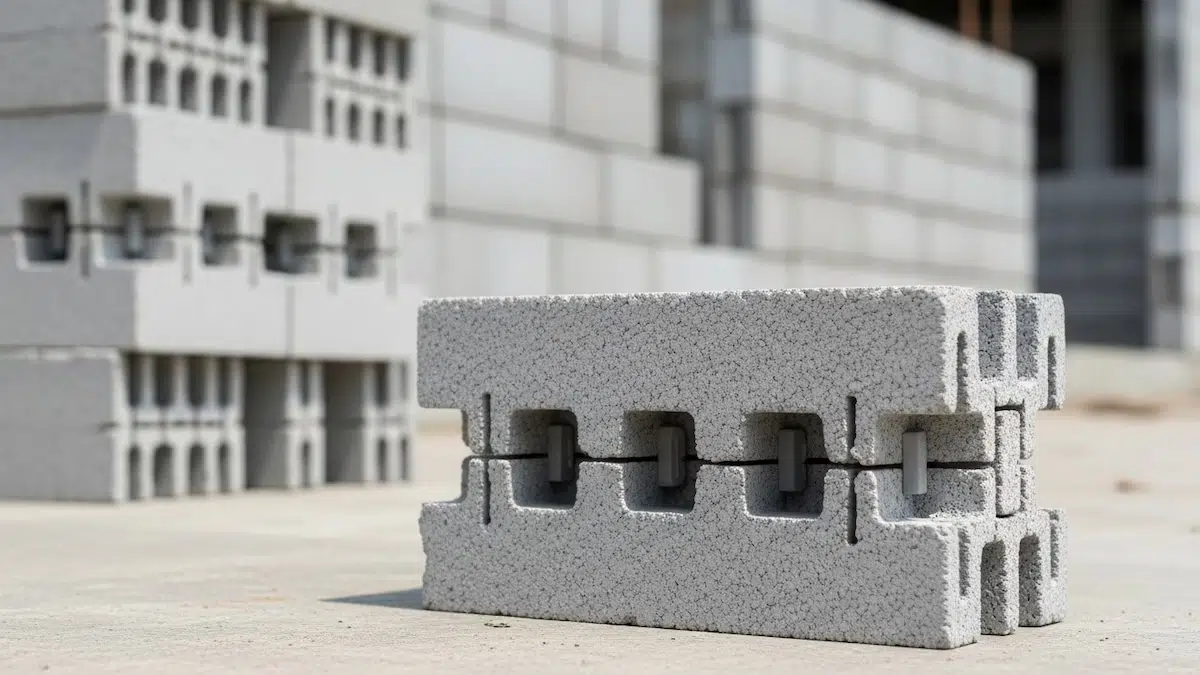
The process involves collecting, cleaning, and melting plastic waste, mixing it with sand, and molding it into solid blocks. Each brick contains approximately one-third recycled plastic, and up to 25 units per hour are produced.
Social and Economic Impact
The project employs more than 300 people in the collection and sorting of plastics, generating income in vulnerable neighborhoods like Nima. Payment per kilogram of collected plastic incentivizes urban cleanliness and improves sanitary conditions.
Houses built with these bricks can cost up to one-third less than traditional ones, thanks to reduced dependence on cement and the use of recycled raw materials. This allows more families to access decent housing and promotes the circular economy.
Environmental Benefits
The initiative provides solutions to two critical problems:
- Reduction of plastic waste: each brick represents waste removed from the urban environment.
- Less use of cement: cement production is one of the main sources of CO₂ worldwide; partially replacing it with recycled plastic reduces emissions.
- Thermal insulation: the design of the bricks enhances energy efficiency in warm climates.
Additionally, the project contributes to improving public health, as reducing plastics in streets and canals decreases the proliferation of pests and the contamination of water sources.
Limitations and Challenges
Although the project has had initial success, it faces difficulties in scaling up:
- Each house requires thousands of plastic blocks.
- The current production capacity is insufficient for the growing demand.
- Investments in infrastructure and additional equipment are needed to expand the reach.
International interest is growing, but large-scale viability will depend on productive expansion and logistics to distribute the bricks.
A Replicable Model
The experience in Accra opens the possibility of replicating this model in other African cities and around the world facing similar housing and waste management issues. Countries like Kenya and Nigeria are already exploring similar initiatives, demonstrating that recycling can become a real tool for the housing model without sacrificing strength or quality.
The transformation of plastic waste into bricks for housing in Ghana represents an innovative alternative to the housing shortage and waste accumulation. The model combines environmental sustainability, social inclusion, and cost reduction, demonstrating that recycling can become a real tool to tackle urban challenges.



