



As cities face more intense rains that cause overflowing sewers and pollution, a solution is gaining ground: green infrastructure.
This includes rain gardens and other urban green systems that absorb water where it falls.
This strategy is more effective than sending it directly to underground pipes.
In this regard, a recent study by Ohio State University confirmed the benefits of this proposal.
It was discovered, for example, that green infrastructure reduces heavy metals in local streams and decreases the peak flow during storms.
The research, within the framework of the Blueprint Columbus project, analyzed neighborhoods in Ohio’s capital for three and a half years, comparing them with areas without green systems.
After this period, researchers detected significant reductions of cadmium, copper, nickel, and zinc in the waters flowing into the streams.

At the same time, peak flows during storms significantly decreased in areas with rain gardens, bioswales, and mini-wetlands.
“Humans cause many environmental alterations. That’s why things like rain gardens allow nature to function as it should,” explained Joseph Smith, the study’s lead author.
The key to success lies in implementing these “at-source” systems, right where the rain falls.
This seems to be better than relying solely on underground pipes that end up saturated during extreme weather events.
The benefits of green infrastructure, beyond flood control
The study included a control watershed that allowed for ruling out natural climatic variations.
The documented benefits followed directly from the green improvements installed as part of the Blueprint Columbus project, a 30-year program to modernize streets.
In the analysis, neighborhoods with green infrastructure showed signs of cooler microclimates, changes in local biodiversity, and improvements in quality of life.
Smith emphasized that the goal goes beyond water management.
“Green infrastructure not only improves water quality but also helps cities become cooler because it adds more green spaces,” noted the researcher.
Green infrastructure: connected design and community participation
The research revealed that connected networks of gardens, not individual planters, provide the greatest benefits.
Integrated design and proper maintenance are fundamental to the success of these systems.
“What made our study really special was that we were able to observe the changes occurring at the pipe level leading to the stream,” stated Smith.
Public acceptance represents another important factor.
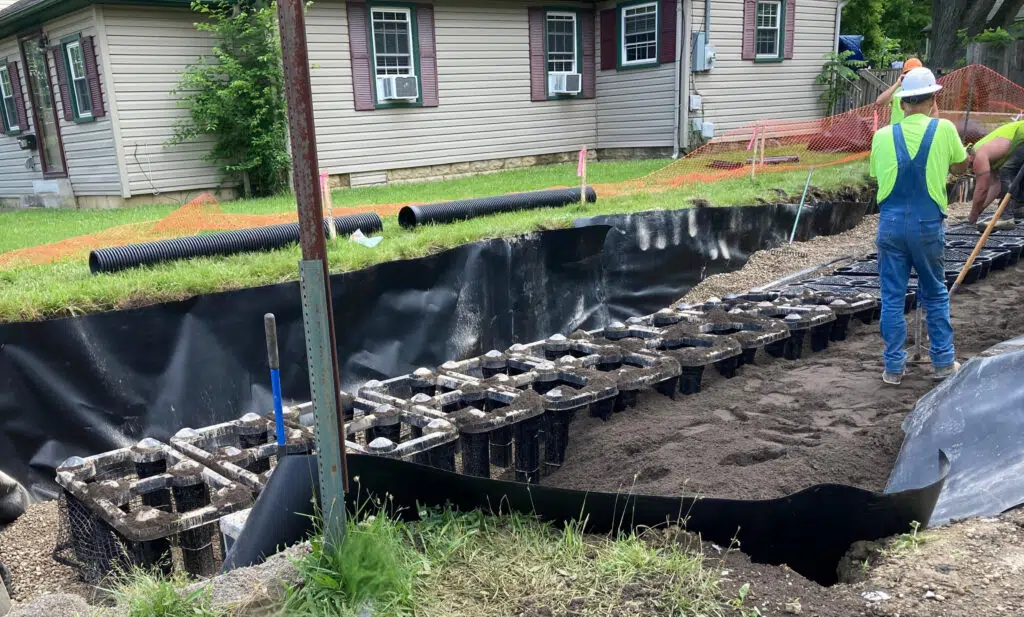
Although some residents expressed concerns about safety or maintenance, researchers found that clearer communication significantly improves receptivity.
“Participating in this watershed-scale rain garden project has made me realize that while there are many benefits for the community, we can also do more to explain how these projects help those who live there,” acknowledged Smith.
The Blueprint Columbus project will continue until 2043, with hundreds of rain gardens already built and a growing base of scientific evidence supporting their effectiveness.
“Columbus is becoming a leader and model for other municipalities facing similar issues,” added Smith.
The ultimate goal is to design spaces where people want to walk and enjoy an attractive environment while experiencing the numerous ecosystem services that green infrastructure provides in the urban landscape.



