



Three young Italian engineers developed an incredible device to generate clean energy. It obtains hydrogen from traffic vehicles.
Although it may seem impossible, what it does is, based on the kinetic energy generated by vehicles passing over speed bumps, produce green hydrogen, a source of clean and renewable energy.
This invention, called Hydrocult, aims to harness the energy that is typically wasted.
Hydrogen from Traffic: How Hydrocult Works
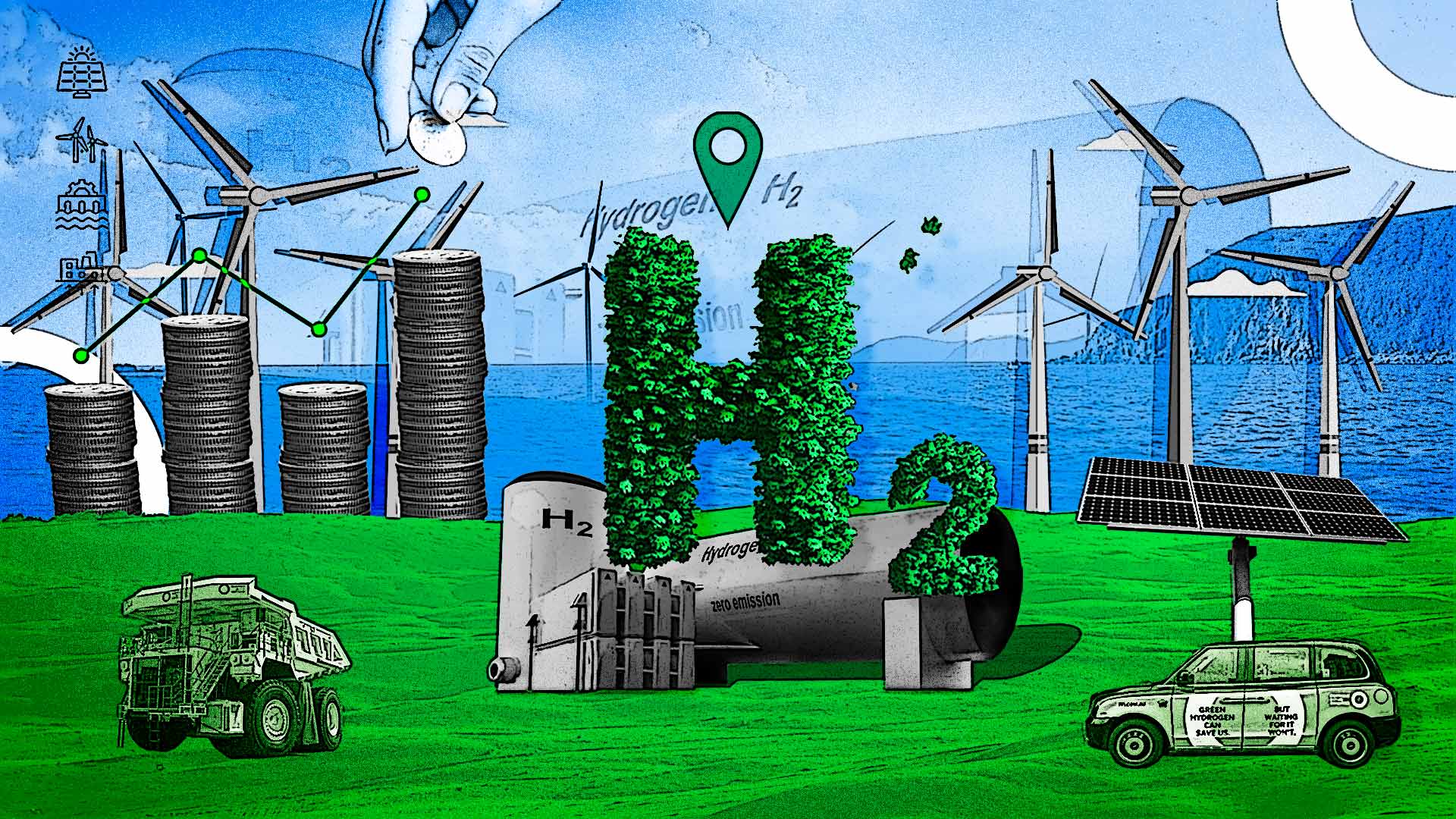 The benefits of green hydrogen.
Hydrocult is a system that captures the kinetic energy of vehicles passing over speed bumps, devices designed to reduce traffic speed.
This energy is converted into hydrogen through an innovative process that does not require high pressures or extreme temperatures, facilitating its storage and transportation.
As explained by the development team, “the system is based on the recovery of kinetic energy produced by cars passing over speed bumps to convert it into hydrogen,” as detailed by the newspaper El Español.
Who are the creators of the project
The device was conceived by three students from the State Industrial Technical Institute “A. Volta” in Alessandria, Italy.
They are Francesco Petralia, Tommaso De Santa, and Paul Ples Vasile. Their project was selected to be presented at the International Science and Engineering Fair (ISEF) 2025, to be held in Columbus, Ohio, United States.
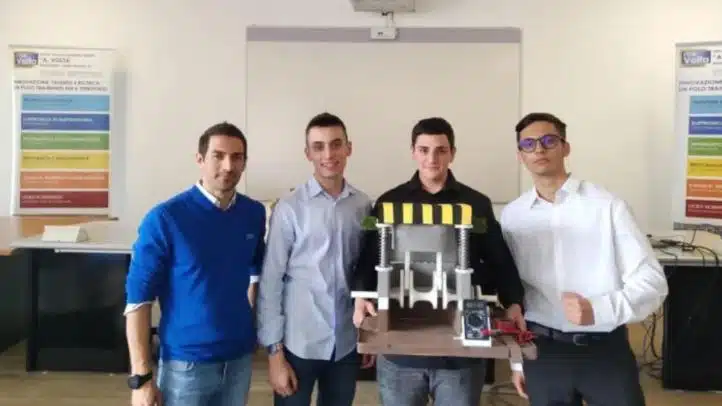 The engineers behind Hydrocult. (Photo: ITIS Alessandria).
The Importance of Green Hydrogen for Energy Transition
Green hydrogen is considered one of the most promising alternatives to reduce greenhouse gas emissions and combat climate change.
Currently, Spain stands out as one of the leading countries in the production and use of green hydrogen, currently concentrating 20% of the announced green hydrogen production projects globally.
These types of initiatives not only contribute to energy transition but also promote innovation and the development of sustainable technological solutions.



