



Last week, the International Society of Socio-Ecological Systems (SocSES, for its acronym in English) was officially presented.
This is a new organization that emerges to strengthen and articulate research, education, and action around the complex challenges of the relationships between people and nature.
SocSES is established as a global platform for researchers, professionals, institutions, and networks. All of them work from various disciplines and territories in the study and management of socio-ecological systems.
What are the objectives of the International Society of Socio-Ecological Systems
Its objective is to provide an “institutional home” for a community that, despite its growing relevance, was until now dispersed and dependent on temporary networks and fragmented financing.
Initially, the International Society of Socio-Ecological Systems published the paper “Welcome home! Introducing SocSES: a society for inclusive and impactful social-ecological research“.
 How the organization will work. (Photo: Adobe Stock).
This article highlights that research on socio-ecological systems (SES) emerged as a critical field to address the challenges of the Anthropocene. Characterized by a multi-scale approach, inter- and transdisciplinary approaches, and a strong emphasis on placed-based work.
The study points out that, despite the progress made thanks to various networks and institutes, research in SES faces persistent challenges.
These include conceptual and methodological fragmentation, the difficulty of scaling localized knowledge to global frameworks (and vice versa), and capturing connections and multi-scale processes while maintaining contextual relevance.
Furthermore, the document highlights that inclusivity remains a critical issue, with regional, indigenous, and local contributions often underrepresented, and a continued dependence on short-term and unequally distributed funding.
Collaborating Institutions
Among the collaborating institutions of SocSES, two representatives from Chile stand out:
- Milenio Institute on Coastal Socio-Ecology (SECOS)
- School of Forest Sciences and Nature Conservation at the University of Chile, who will contribute their experiences in coastal research, collaborative work with local communities, and development of interdisciplinary approaches to address sustainability.
“The creation of this network is a unique opportunity to articulate a global community that understands that socio-ecological challenges have no boundaries,” pointed out Stefan Gelcich, UC academic, director of SECOS, and one of the contributors to SocSES.
“From Chile and the Global South, we have a lot to contribute to building solutions that are not only sustainable but also fair and culturally relevant,” he emphasized.
Additionally, he added: “Addressing the complex problems of our relationship with ecosystems requires creating spaces for collaboration among researchers, communities, and decision-makers.”
In this way, SocSES does not seek to replace existing networks but to become a space for connection and synthesis.
“The work we do at SECOS coupled with the networks associated with SocSES will help build those bridges inclusively, diversely, and committed to change at multiple scales,” Gelcich concluded.
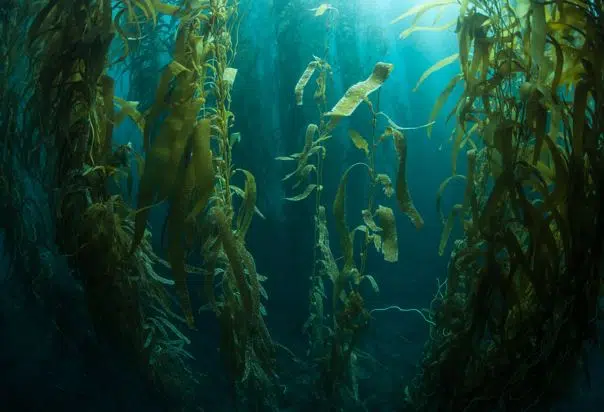 What are the purposes of the organization.
The aim is to amplify global efforts, with the goal of fostering understanding of the complex dynamics of socio-ecological systems; strengthening collaboration among researchers and professionals; supporting new generations of sustainability leaders; and enhancing the influence of research on public policies and decision-makers.



