



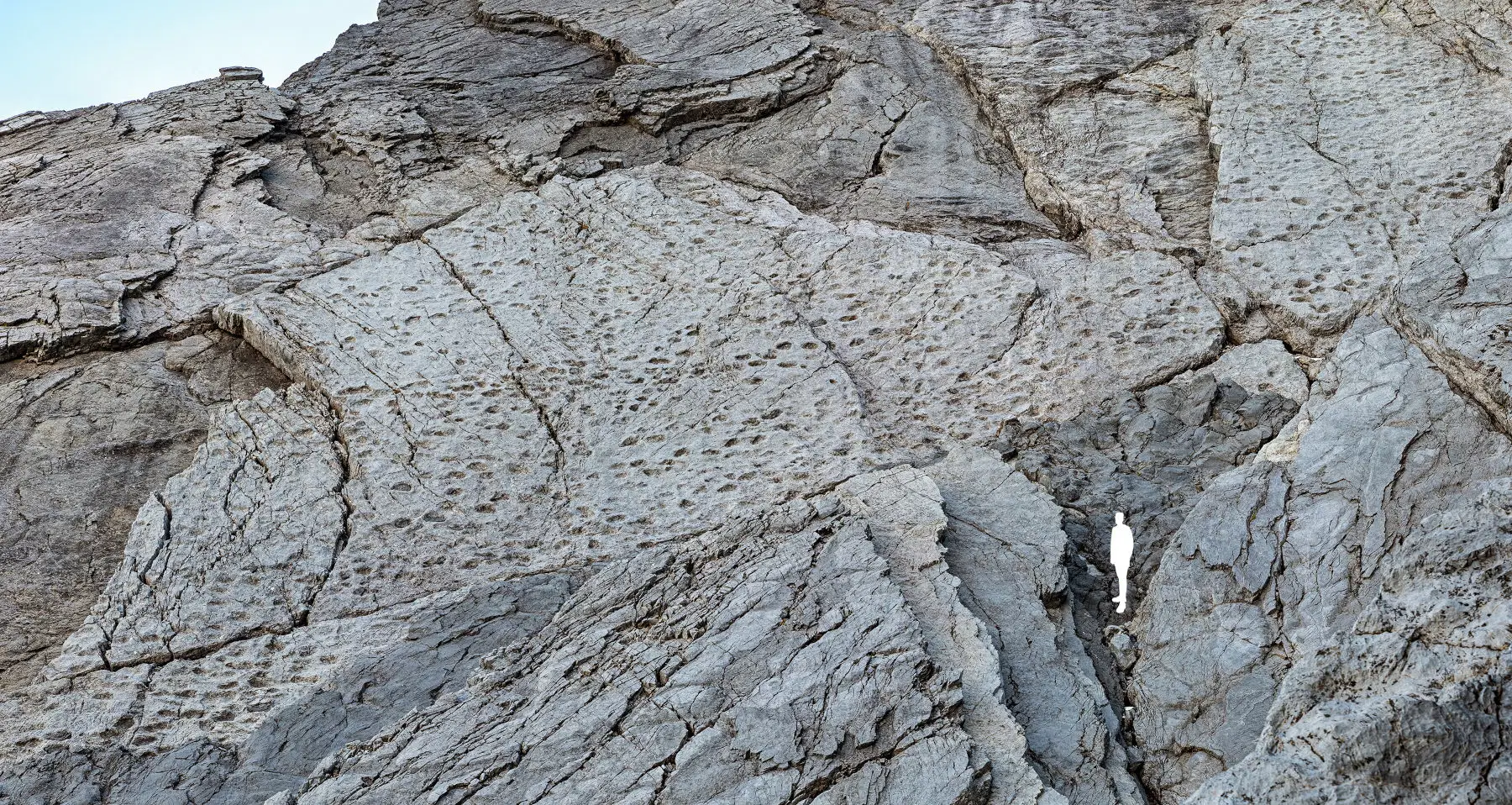
On an almost vertical slope of the Stelvio National Park, in the Italian Alps, a vast set of dinosaur footprints came to light. The discovery occurred in an area currently dominated by snow and rock, but which was once an ancient tropical wetland.
The marks extend for hundreds of meters and constitute one of the largest records of ichnites in Europe. Their state of preservation allows for reading movements, encounters, and collective routes of prehistoric animals.
The finding reinforces the scientific value of the Alps as a natural archive of Earth’s history. It also revalues protected areas that combine conservation, research, and environmental education.
Footprints that tell stories of group life
The footprints show parallel trajectories and circular concentrations, suggesting group movements and complex social behaviors. Some marks reach 40 centimeters in diameter.
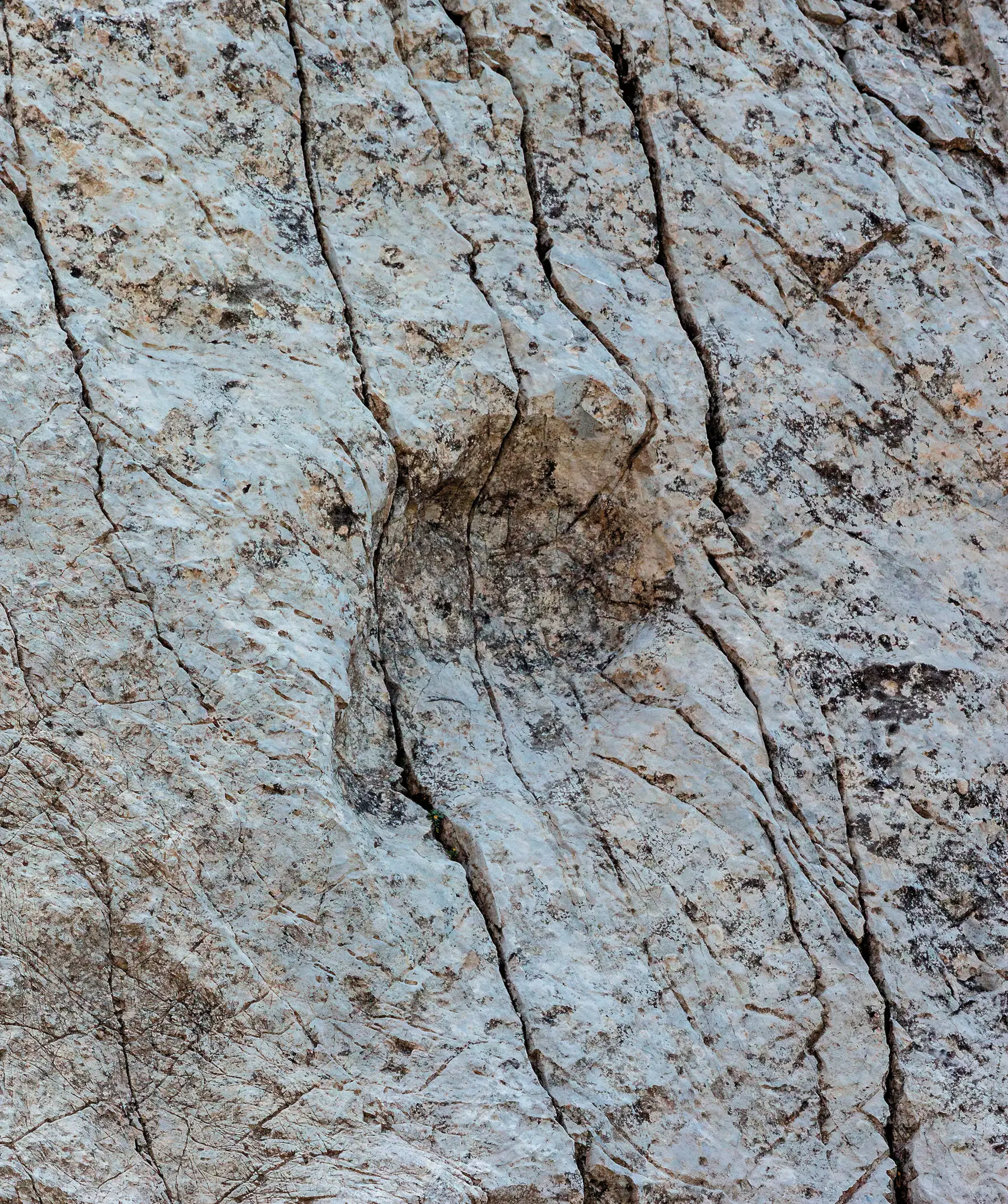
Most belong to bipedal herbivorous dinosaurs, probably prosauropods with long necks. The footprints preserve up to four well-defined toes, a key detail for their identification.
This record allows for the reconstruction of everyday scenes from over 200 million years ago. Walking, feeding, and protecting themselves were imprinted in the mud that later turned into rock.
From tropical marshes to the Italian Alps
When these footprints were formed, the region was an extensive swampy area with a warm climate. Over millions of years, sediments covered and preserved them.
The uplift of the Alpine chain and subsequent erosion re-exposed these fossil marks. Today they appear on a steep slope, like open pages of a geological book.
This contrast highlights the magnitude of the planet’s climatic and tectonic changes. The Alps are not just mountains; they are also a deep memory of ancient ecosystems.
Environmental benefits of such findings
Discoveries like this strengthen the protection of sensitive natural areas. By increasing their scientific value, arguments to limit extractive or invasive activities are reinforced.
They also promote environmental education and responsible tourism. Understanding the remote past helps to comprehend the fragility of current ecosystems and the need to care for them.
Additionally, these records provide key data for studying the evolution of climate and biodiversity. Understanding ancient environments allows for better anticipation of the effects of current climate change.
A natural heritage looking to the future
The footprints remain covered by snow for much of the year, which contributes to their preservation. Studies will continue gradually and with minimal impact criteria.
The challenge is to balance research, conservation, and dissemination. Protecting this fossil heritage also means protecting the environment that shelters it.
Silently, the Alpine mountains continue to tell ancient stories. Listening to them is a way to learn to inhabit the planet more responsibly.


