



The research vessel Falkor (too), in collaboration with scientists from the University of the Republic (Udelar), is exploring the seabed in Uruguayan waters.
At more than 3000 meters below the surface, the robotic vehicle SuBastian operates in extreme low-temperature conditions (1.7°C) and high pressure to reveal a little-known ecosystem.
So far, the findings are dazzling scientists and viewers: from octopuses to sea cucumbers and unknown life forms.
Fascinating Life and Formations on the Seabed: What Uruguay found Sub200
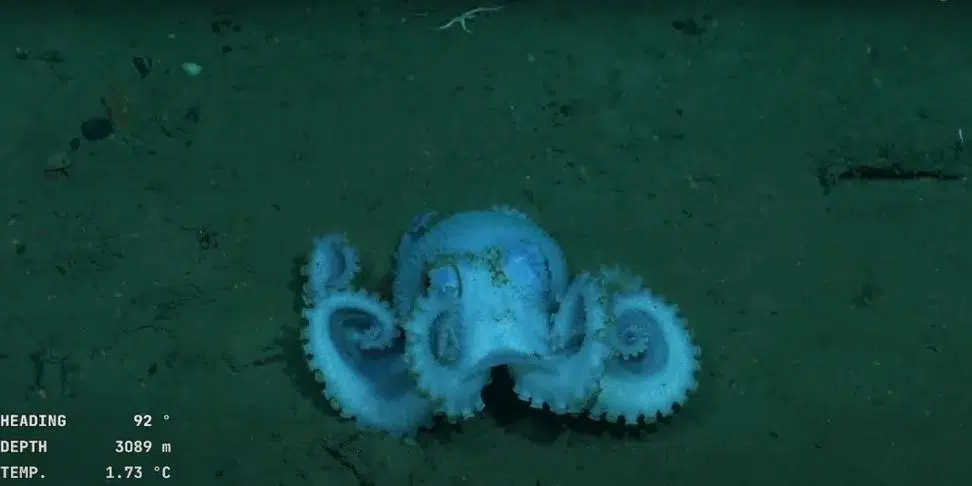 The life forms they found. (Photo: capture- Uruguay Sub200).
The robot SuBastian transmitted images of a sandy seabed inhabited by a variety of creatures. Sea cucumbers have been documented, distant relatives of starfish, with elongated and rounded shapes.
Furthermore, the seabed shows surprising spiral traces, identified as the trail of the acorn worm, which buries itself in the sand, creating unique patterns. They also spotted sunburst-shaped traces, the result of a type of worm that feeds by extending its proboscis in different directions.
Exploring Submarine Craters and Unique Species
The mission focused on a pockmark, a large underwater crater. These geological formations originate from the release of gases and also provide valuable information about ocean currents. One researcher compared the precision required to explore these areas to the difficulty of “landing on the moon.”
Among the most outstanding findings is a deep-sea crab, similar to a small lobster, and marine feathers, organisms that grow anchored to the seabed. One of the most memorable moments was the sighting of a Cirroteuthis octopus that offered a natural “show” for the cameras.
The expedition focuses on documenting and mapping the organisms and formations of interest, advancing towards key points on the seabed for detailed analysis.
How Uruguay Sub200 Continues
From Friday August 22 to September 20, Uruguay is carrying out its exploration of the seabed. A team of scientists leads “Uruguay Sub200: Journey into the Unknown”.
They will study the marine fauna and geological structures of the Uruguayan continental margin.
The mission, which will take place aboard a ship from the Schmidt Ocean Institute of the United States, equipped with cutting-edge technology, promises to provide unprecedented knowledge about deep-sea biodiversity and ecosystems.
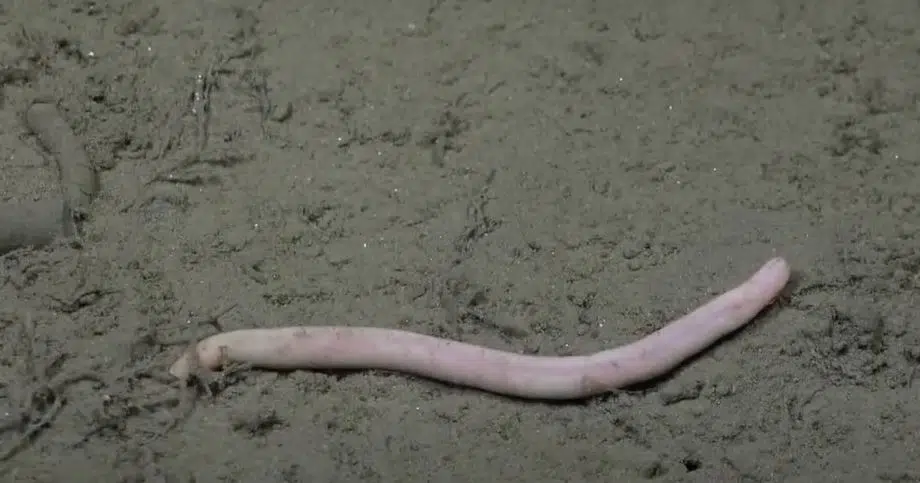 Life forms in extreme conditions. (Photo: capture- Uruguay Sub200).
Like the Argentinian CONICET mission in the Mar del Plata canyon, it promises to be impressive.
As explained by Leticia Burone, a doctor in Marine Geology and professor at the Faculty of Sciences of the University of the Republic, the fieldwork will generate information that will allow for research to be developed for “many years.”
The broadcast can be followed live from YouTube.



