



A recent study conducted in Brazil revealed that various birds incorporate plastics into their nests. Thus, the phenomenon highlights the growing environmental pollution.
The research was developed by the Federal University of Pará. Additionally, it covered both the Amazon region and coastal areas.
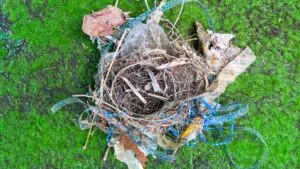
Furthermore, the use of synthetic fibers, bags, and fishing nets was detected. Therefore, birds replace natural materials with human waste.
The japu and a visible transformation of the habitat
One of the most representative cases is that of the japu. Consequently, their nests present bluish hues due to the use of plastics.
Moreover, these materials mainly come from discarded nets. Thus, the environment conditions the behavior of the birds.
However, this adaptation does not imply ecological benefits. On the contrary, it responds to the abundance of waste in the environment.
Additionally, scientists identified that many nests contain plastic. In some areas, these materials even predominate.
Risks for wildlife
The use of plastics poses significant risks for birds. Firstly, it can lead to accidental ingestion of microplastics.
Additionally, synthetic fibers cause entanglements. Consequently, they affect the mobility and survival of the specimens.
On the other hand, these materials release toxic substances. Therefore, they can harm the health and development of the chicks.
Furthermore, the problem extends to multiple ecosystems. Contamination has even been detected in protected areas.
Adaptation of animals to environmental pollution
The birds demonstrate a remarkable ability to adapt to degraded environments. In this sense, they use the materials available to ensure their survival.
However, this adaptation is forced by the alteration of the habitat. Therefore, it does not imply an improvement in their living conditions.
Moreover, these changes can modify natural behaviors. Consequently, they affect ecological dynamics in the long term.
Furthermore, adaptation does not eliminate the associated risks. Thus, the species survive, but in more vulnerable conditions.

A call to improve waste management
The study reinforces the need to optimize waste management. Indeed, the presence of plastics in nature is increasingly evident.
Moreover, it drives the implementation of more effective public policies. Therefore, it becomes essential to reduce pollution.
Additionally, social awareness is crucial. Consequently, environmental education can reduce the human impact.
On the other hand, scientific data allow for the design of conservation strategies. In this way, the protection of biodiversity is strengthened.
A global challenge that demands urgent responses
Plastic pollution is one of the main environmental problems of the 21st century. Consequently, it affects multiple ecosystems.
Furthermore, its impact is observed both in oceans and terrestrial environments. Therefore, it compromises global biodiversity. However, the case of Brazil is not isolated. Studies in different regions show similar patterns.
Moreover, the accumulated evidence demands immediate actions. Thus, waste reduction becomes a priority.
In short, the birds that use plastic in their nests reveal an alarming reality. Thus, nature reflects the extent of human intervention.



