



The story of the desert beetles, beetles of the genus Gyriosomus, is also a story of evolutionary resilience.
Belonging to the family Tenebrionidae, these beetles have colonized various sectors of northern Chile, from coastal areas to inland valleys, adapting to the extreme aridity and flowering events that transform the landscape during the phenomenon of the Desert in Bloom.
The Desert in Bloom: a synchronized explosion of life
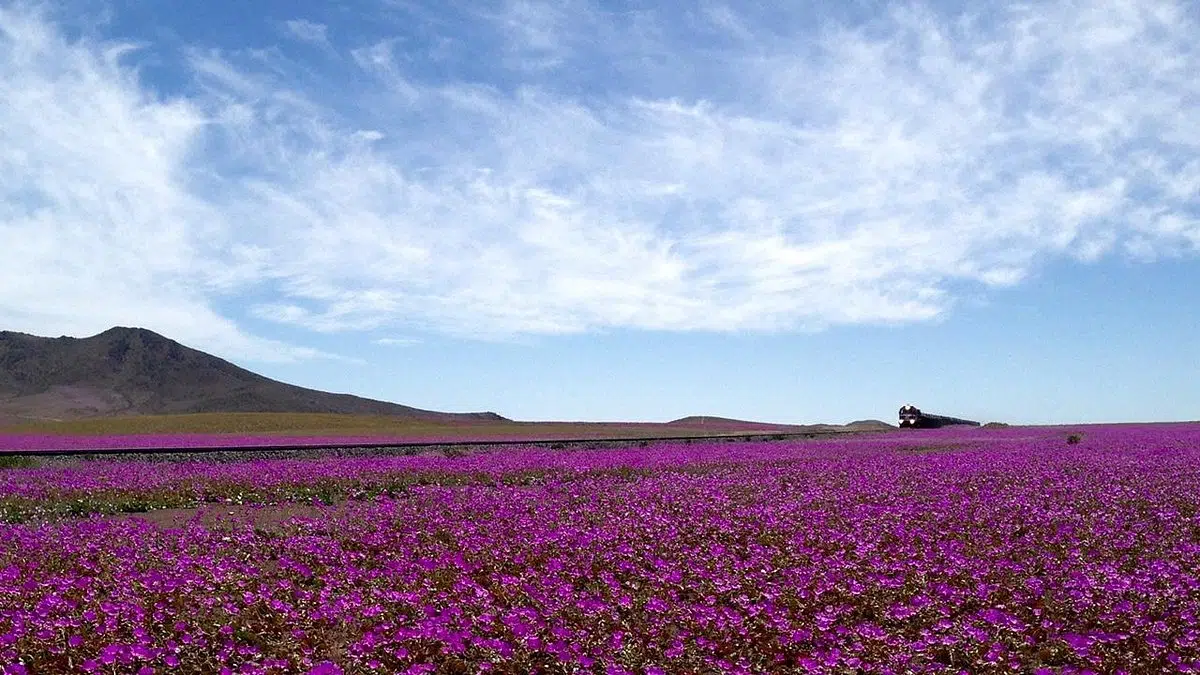
When exceptional rains —linked to El Niño or local pulses during La Niña— exceed certain thresholds, thousands of latent plant species break their dormancy. This blooming triggers a biotic pulse that activates invertebrates, vertebrates, and ecosystem processes.
What seems like an explosion of colors is actually a simultaneous reactivation of multiple trophic levels, where the desert beetles play a multifaceted role.
Life cycle and ecological synchrony
The beetles emerge massively between September and November, coinciding with the flowering of annual species and the transient increase in vegetation cover.
This environment stimulates their feeding, mating, and oviposition. During the rest of the year, they remain in a subterranean state, reducing their metabolism to avoid desiccation.
Ecological functions: more than plant consumers
- Pollination: Although they feed on petals and stems, they transport pollen between flowers, benefiting cacti and other species
- Food source: They are consumed by birds, reptiles, and small mammals, integrating into the food chain
- Decomposition and recycling: By consuming organic matter, they accelerate decomposition and nutrient recycling
- Indicators of ecosystem health: Their presence reflects the integrity of floral patches and the quality of the soil
- Seed dispersal: They accidentally contribute to the dispersal of seeds of the plants they consume
Diversity and microendemism: a hidden wealth
The genus Gyriosomus includes at least 44 species, grouped into nine clades, many still in a candidate species state. Lacking functional wings, their dispersion is terrestrial and limited, which, combined with the fragmented desert topography, generates patterns of microendemism.
- Species like G. elongatus, G. gebieni, or G. kingi inhabit dunes, with elongated and hairy bodies
- Species like G. laevigatus, G. atacamensis, or G. camanchaca live in compact soils, with small bodies and reduced hairiness
Without them, the desert in bloom would be less enduring
The desert beetles not only consume resources: they transform organic matter, interact with other invertebrates and vertebrates, and sustain the productivity of a fleeting ecosystem.
They are key pieces of a natural mechanism that allows the transient abundance of the Desert in Bloom to translate into real benefits for the soil and biodiversity.
In times of climate change and habitat loss, knowing and valuing the role of species like the desert beetles is essential to protect ecological balances and recognize the sophistication of life in the most extreme landscapes on the planet.


