



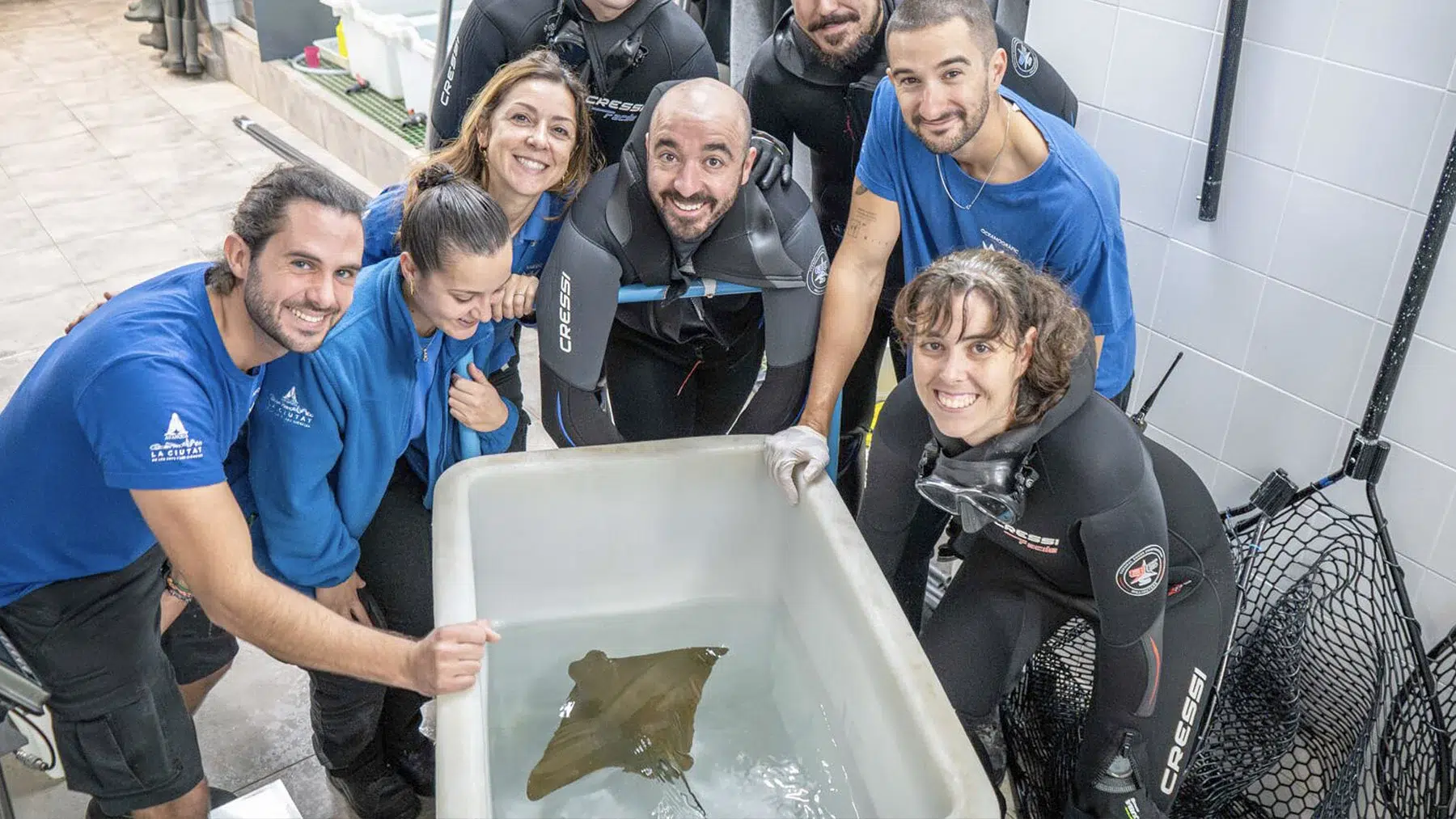
Spain has positioned itself at the center of the conservation debate following an unprecedented event: the first captive birth of a cownose ray (Rhinoptera marginata), recorded at the Oceanogràfic of Valencia. The calf, a female weighing 1,450 grams and with a disc length of 47 centimeters, was born without incidents and is under constant observation in the Oceans area.
This event reinforces the relevance of the conservation programs developed in the country and opens new lines of research on a species classified as critically endangered by the IUCN.
A species on the brink of disappearance
The Rhinoptera marginata, also known as the cownose ray, inhabits the temperate waters of the eastern Atlantic and the Mediterranean. Its presence has drastically reduced in recent decades due to:
- Overfishing and accidental captures.
- Habitat degradation.
- Loss of coastal areas necessary for its development.
Since February 2024, the species has been included in the appendices of the Convention on the Conservation of Migratory Species, which strengthens its level of protection in the Mediterranean.
Reproductive biology and vulnerability
One of the factors aggravating its situation is its low reproductive rate:
- It is ovoviviparous, with a single birth per gestation.
- The gestation period lasts approximately one year.
- The embryos develop first from the yolk and then receive additional nutrients from the mother, resulting in large-sized offspring.
This limited reproductive cycle reduces the recovery capacity of natural populations and explains why each birth is so significant.
Value of aquarium programs
The birth in Valencia demonstrates the importance of scientific programs in aquariums and specialized centers, which allow for:
- Genetic studies and veterinary controls.
- Reproduction projects unfeasible in the natural environment.
- Environmental education and awareness about the fragility of marine ecosystems.
According to Marga Ardao, head of the Oceans Department, “each birth represents a unique opportunity to advance in the knowledge of the species and reinforce efforts to ensure its long-term survival.”
Future expectations
The Oceanogràfic team expects the arrival of a second specimen in the coming days, which would consolidate this advance in marine conservation. The institution works with dozens of threatened species, integrated into international scientific networks, reinforcing Spain’s role in biodiversity protection.
The birth of the cownose ray in Valencia is a milestone that demonstrates how science and conservation can offer hope in the face of the marine biodiversity crisis. This event not only guarantees new research opportunities but also acts as a symbol of the urgent need to protect the ecosystems of the Mediterranean and eastern Atlantic.


