



The humpback whales once again surprised the scientific community after an international study confirmed movements of more than 14,000 kilometers between Brazil and Australia, an unprecedented distance recorded through photographic sightings.
The research revealed that two specimens of Megaptera novaeangliae were identified on both ends of the ocean thanks to an image recognition system based on photographs provided by scientists and citizens.
The study analyzed more than 19,000 records obtained between 1984 and 2025 through the platform Happywhale, dedicated to the collaborative monitoring of cetaceans in different oceans of the planet.
Additionally, specialists believe that these exceptional movements could be related to environmental changes in the Southern Ocean and changes in traditional migratory routes.
An extraordinary journey between Brazil and Australia
One of the specimens was initially observed in Hervey Bay, Australia, during 2007 and 2013. Years later, in 2019, it was photographed again off the coast of São Paulo, Brazil.
The minimum distance between both areas exceeds 14,200 kilometers, equivalent to a journey similar to Sydney and London. However, researchers believe the actual route may have been even longer.
The second documented case was even more striking. The whale had been first seen in 2003 in Abrolhos Bank, off the coast of Bahia, one of the main breeding areas in Brazil.
Twenty-two years later, the same specimen appeared in Hervey Bay, Australia, after completing an estimated journey of 15,100 kilometers, the longest confirmed journey so far for this species.
Researchers highlighted that these crossings are extremely rare, as only two individuals exhibited this behavior among nearly 20,000 whales analyzed over more than four decades.
How they manage to identify each whale in different oceans
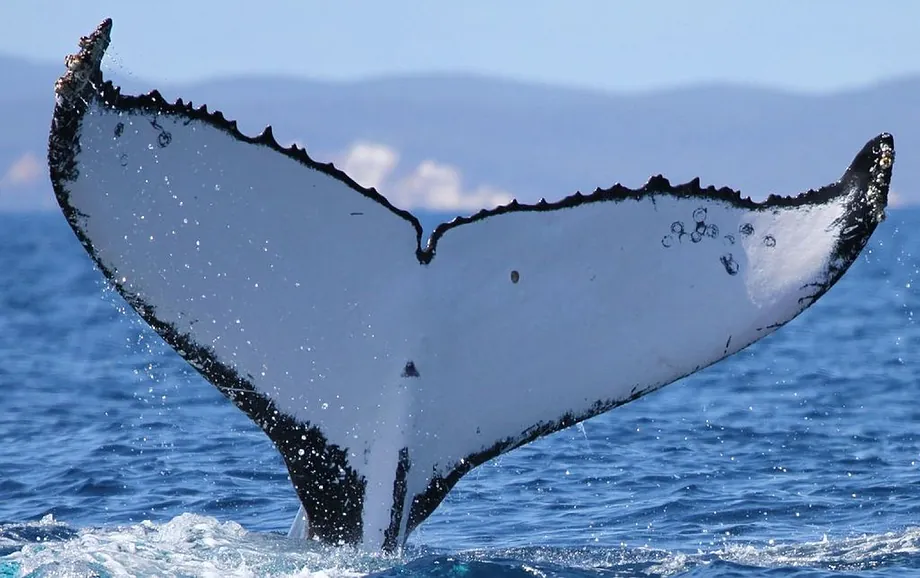
The study relied on an identification system based on the humpback whales’ tail fluke, considered a kind of natural fingerprint. Each specimen has unique patterns of pigmentation, scars, and shapes on the underside of the tail, allowing individual differentiation even after many years.
Through automated algorithms and subsequent manual reviews, scientists compared thousands of images obtained in Latin America and eastern Australia.
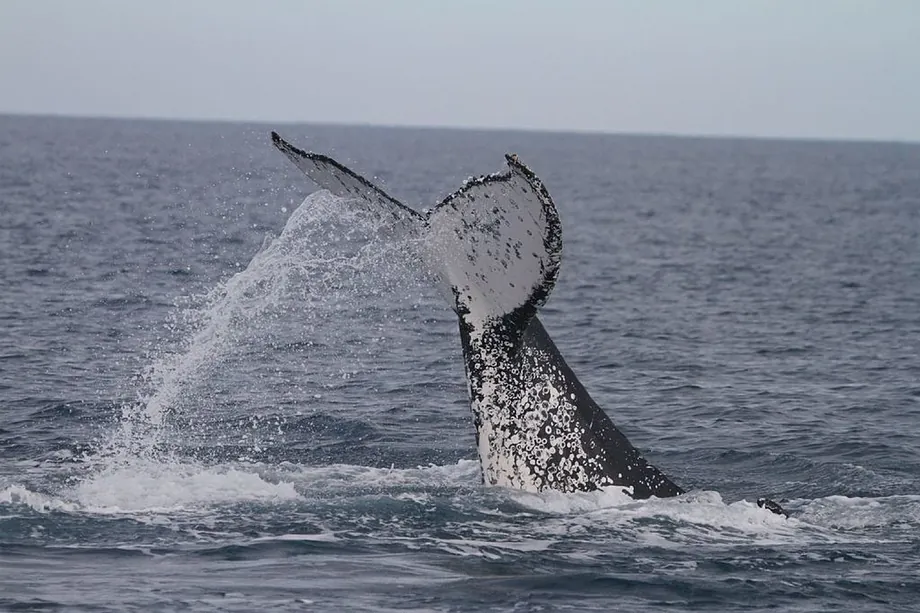
The ease of recording photographs is due to the surface behavior of this species, known for its breaches out of the water and visible fin slaps from long distances.
Additionally, researchers argue that these movements could favor genetic exchange between different populations and contribute to the cultural propagation of their characteristic songs.
The migratory journey of whales and their ecological importance
During this time of year, humpback whales undertake extensive migrations between feeding and breeding areas, one of the most impressive natural movements on the planet.
In general, they spend the summer in cold waters near Antarctica, where they mainly feed on Antarctic krill and small fish to accumulate energy reserves. Subsequently, they embark on journeys to tropical and subtropical regions, such as Brazil or Australia, where they breed and give birth in warmer and calmer waters.
These journeys are essential for the balance of marine ecosystems, as whales contribute to the transport of nutrients between oceans and promote marine biological productivity.
However, climate change, the modification of sea ice, and the alteration in krill distribution could be transforming the traditional migratory routes and increasing the frequency of unusual movements between different oceanic populations.



