



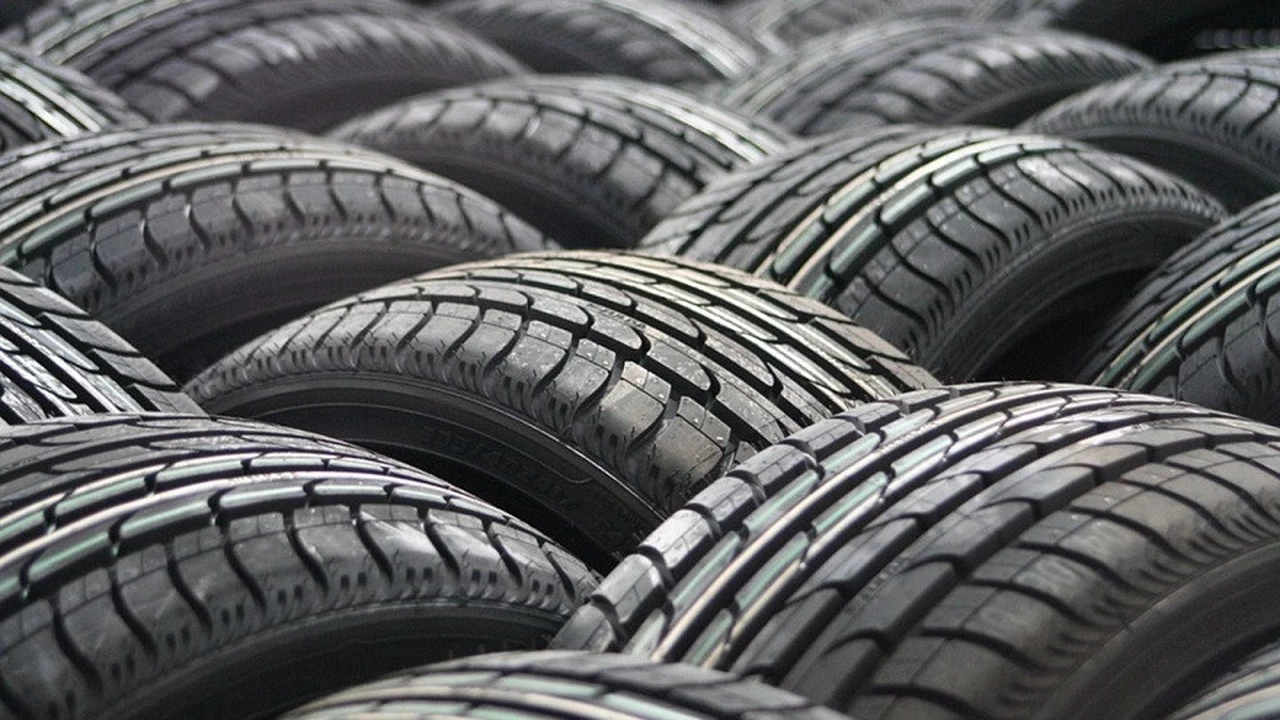
The wear of tires has become one of the main sources of microplastics in urban air. Indeed, recent studies indicate that a large part of these particles comes from the constant friction between the tires and the asphalt.
Moreover, unlike exhaust emissions, this type of pollution has not been strictly regulated. Therefore, its presence has expanded uncontrollably in highly trafficked urban environments.
In parallel, technological advances have managed to reduce traditional pollutants. However, non-exhaust particles, such as those generated by brakes and tires, remain at elevated levels.

How particles are generated and dispersed in cities
The process begins with constant friction during circulation. As a result, microscopic cracks form in the tires that release tiny fragments into the environment.
Likewise, these particles, many within the PM10 range, easily disperse in the air. Thus, they end up accumulating both on streets and in residential areas.
On the other hand, factors such as speed and vehicle weight increase emission. Even, brake wear contributes a significant proportion of particles mixed with metals and resins.
Scientific evidence in different urban environments
Various investigations have confirmed the magnitude of the phenomenon. For example, studies in cities with high traffic have detected chemical compounds associated with tires in almost all air samples.
In turn, measurements made with lichens have shown high concentrations of microplastics near highways. Although these decrease with distance, their presence persists in distant areas.
Meanwhile, urban models estimate that tons of particles are released annually in densely populated cities. This reinforces the idea that the problem surpasses traditional emissions.
Microplastics: risks to health and the environment
Microplastics represent a growing risk to human health. In particular, the finest particles can penetrate deeply into the respiratory system.
Additionally, continuous exposure is linked to cardiovascular and pulmonary diseases. An increase in asthma cases has even been observed in areas near high-traffic roads.
From an environmental perspective, these pollutants affect soil, water, and living organisms. Consequently, they can enter the food chain and generate long-term impacts.
Furthermore, their persistence makes natural elimination difficult. This turns microplastics into a cumulative pollutant that exacerbates the degradation of urban ecosystems.
Innovation, regulation, and changes in mobility
In response to this scenario, some regulatory frameworks are beginning to incorporate these emissions. In Europe, new regulations are promoting improvements in tire materials and labeling.
On the other hand, the industry is experimenting with technologies to reduce abrasion. However, the increase in electric vehicles poses new challenges due to their greater weight.
Finally, specialists recommend daily practices to reduce impact. Among them, maintaining tires in good condition and adopting a more efficient driving style.
In conclusion, tire wear reveals a less visible dimension of urban pollution. Addressing it will require comprehensive policies that combine innovation, regulation, and environmental awareness.



