



The recording of a jaguar in Formosa, obtained through camera traps in the Patiño Department, strengthens preservation strategies for this critically endangered species in the Gran Chaco.
Recent environmental monitoring in the province of Formosa has confirmed the presence of a male jaguar (Panthera onca).
The sighting took place in a strategic biological corridor of the Patiño Department, consolidating the fundamental value of these connectivity zones for the survival of the largest feline in the American continent.
The Ministry of Production and Environment (MPyA) of the province reported that the images were captured by photo-trapping stations distributed in conservation areas and adjacent zones.
Although the visual records date from the last days of August, the official confirmation came after the technical processing of the data carried out during the last equipment review at the end of November.
This discovery allows specialists to assess whether it is an individual not previously identified in the region’s population censuses.
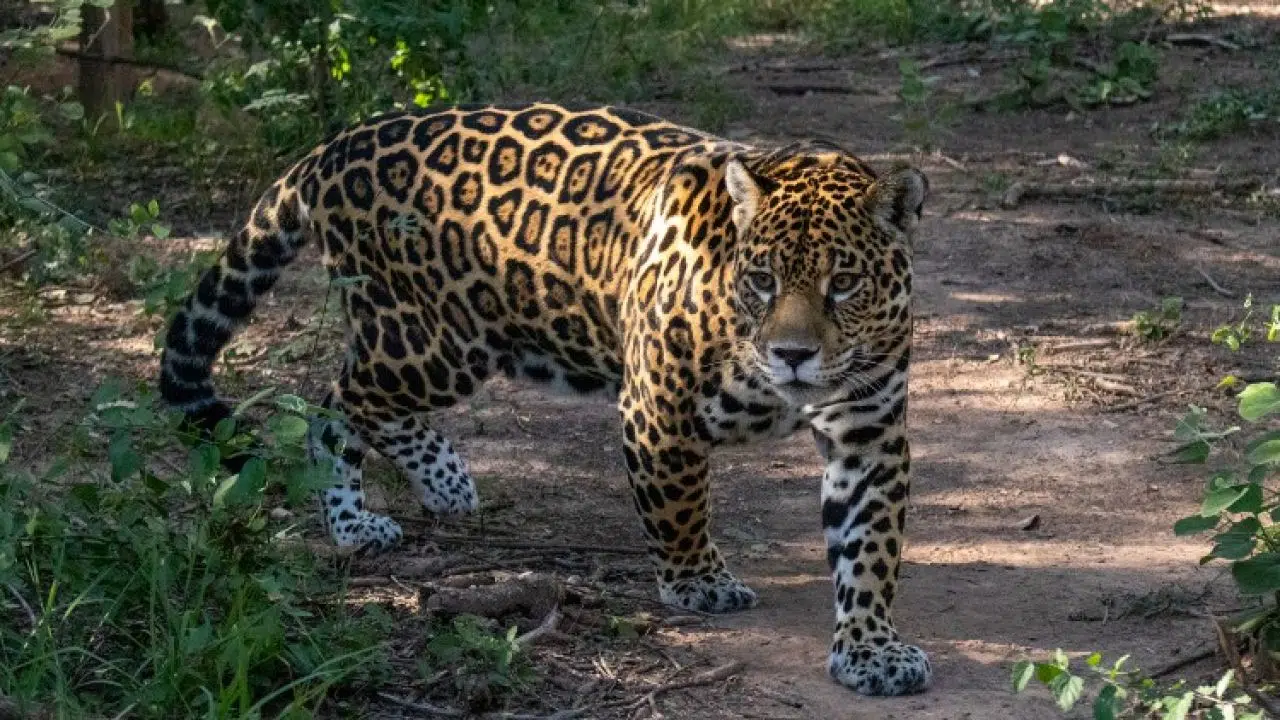
The appearance of this jaguar in Formosa is not an isolated event, but acts as a bioindicator of the optimal state of conservation of local ecosystems.
The province, which maintains about 60% of its territory with native forest cover, applies the Territorial Planning Program (Law 1660), a regulation that establishes environmental protection standards that exceed national requirements, favoring the habitat of threatened species.
In response to this biological milestone, provincial authorities formalized Disposition No. 117/25. This measure establishes rigorous protocols for action and registration upon detection of these felines, with the aim of systematizing scientific knowledge and improving institutional response capabilities in the territory.
The document highlights that these instruments are vital for deepening the understanding of the “tiger” behavior and transit in northern Argentina.
It is worth remembering that the jaguar holds the maximum legal protection as it is declared a Natural Monument both at the Provincial level (Law 1,673) and National level (Law 25,463).
Currently, the species is at critical risk of extinction in the country, according to the classification of the Argentine Society for the Study of Mammals (SAREM).
Therefore, strengthening biodiversity corridors in Formosa is a key piece to avoid habitat fragmentation and ensure the reproduction of the species in the wild.



