



For years, the idea of obtaining and producing water from the air was a limited promise. However, a development in Norway poses a significant change.
The research was driven by the Norwegian University of Science and Technology along with SINTEF. In this way, it seeks to solve one of the major environmental challenges today.
Additionally, the proposal is inspired by natural mechanisms. Therefore, it revisits strategies present in species adapted to extreme climates.
Limitations of traditional technologies
Current systems often cool the air to condense moisture. Consequently, they demand high energy levels.
Furthermore, they lose efficiency in dry environments. Therefore, they are less useful in areas where water is scarcer.
Likewise, their implementation requires complex infrastructure. Consequently, their access is limited in vulnerable regions.
However, the need for alternative solutions continues to grow. In this way, it drives the search for more sustainable technologies.
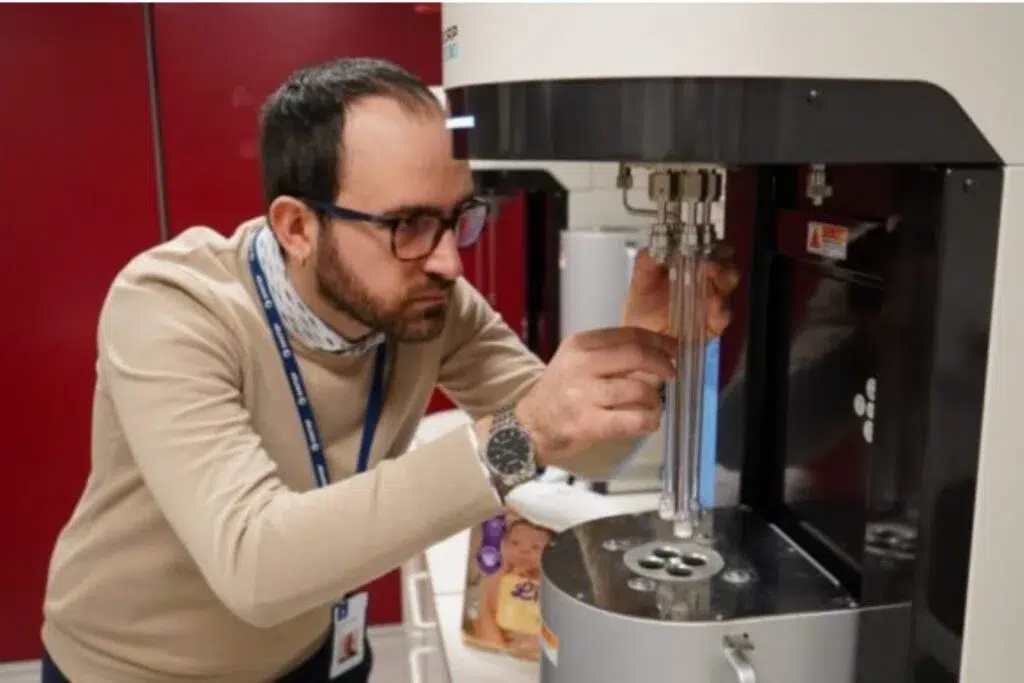
A material that “traps” water from the environment
The new development is based on an innovative polymeric material. In this sense, it combines a flexible elastomer with a superabsorbent polymer.
Additionally, it features internal microstructures that capture water molecules. Therefore, it improves efficiency in adverse conditions.
Likewise, the system allows water to be released through heat. Consequently, it separates the capture and extraction processes.
In this way, the constant use of intensive energy is avoided. Thus, the overall system performance is optimized.
Efficiency in extreme conditions
One of the main advances lies in its operation in low humidity. Indeed, it maintains efficacy below 50%.
Furthermore, this makes it viable in arid and semi-arid areas. Therefore, it expands the reach of the technology.
Likewise, it can be applied in humanitarian or domestic contexts. Consequently, it promotes decentralized access to water.
On the other hand, the material demonstrated durability in continuous use. In this way, it positions itself as a reliable alternative.

The benefits of this technological initiative
The development offers multiple environmental and social advantages. Firstly, it reduces the dependency on traditional infrastructures.
Additionally, it decreases energy consumption compared to other systems. Therefore, it contributes to sustainability.
Likewise, it can be manufactured with accessible materials and even biomass. Consequently, it reduces its ecological impact. On the other hand, its versatility allows for different applications. In this way, it adapts to various needs.
Finally, it promotes access to water in vulnerable communities. Thus, it becomes a key tool in facing the water crisis.
Towards a new paradigm in water access
The advancement of these materials redefines the relationship with water resources. Consequently, it introduces new decentralized solutions.
Additionally, it complements traditional infrastructures. Therefore, it expands supply strategies.
However, it still faces scalability challenges. In this sense, it will be necessary to optimize costs and production.
Likewise, the interest of emerging companies marks a step towards its implementation. In this way, innovation begins to leave the laboratory.
In short, capturing water from the air is no longer an experimental idea. Thus, it is projected as a real alternative in the face of global scarcity.



