



A team of researchers from the Universidad Peruana Cayetano Heredia and the Universidad Nacional Mayor de San Marcos (UNMSM) identified fossils of a new species of sea lion. It is believed to have inhabited the Peruvian coast between 2.7 and 1.4 million years ago, during the Pliocene-Pleistocene.
The species was named Otaria josefinae and was discovered in the desert of Sacaco, north of Arequipa, a key site for studying the geological and biological history of the southeastern Pacific.
An Exceptional Fossil Record
The discovery includes four skulls and jaws of adult males, as well as postcranial bones such as femur, astragalus, and vertebrae. All the material is preserved in the Collection of the Laboratory of Paleontology and Vertebrate Evolution of Cayetano Heredia.
According to paleontologist Rodolfo Salas-Gismondi, it is the best-preserved and most complete fossil record of sea lions in the Southern Hemisphere to date.
Evolutionary Importance
Paleontologist Leonardo Hostos-Olivera explained that before this discovery, only two fossil species of sea lions were known in the entire southern hemisphere, and the record of Otaria was limited to fragments from the late Pleistocene (about 100,000 years ago).
These fossils change the landscape by providing solid evidence of how sea lions colonized and diversified in the southern part of the planet.
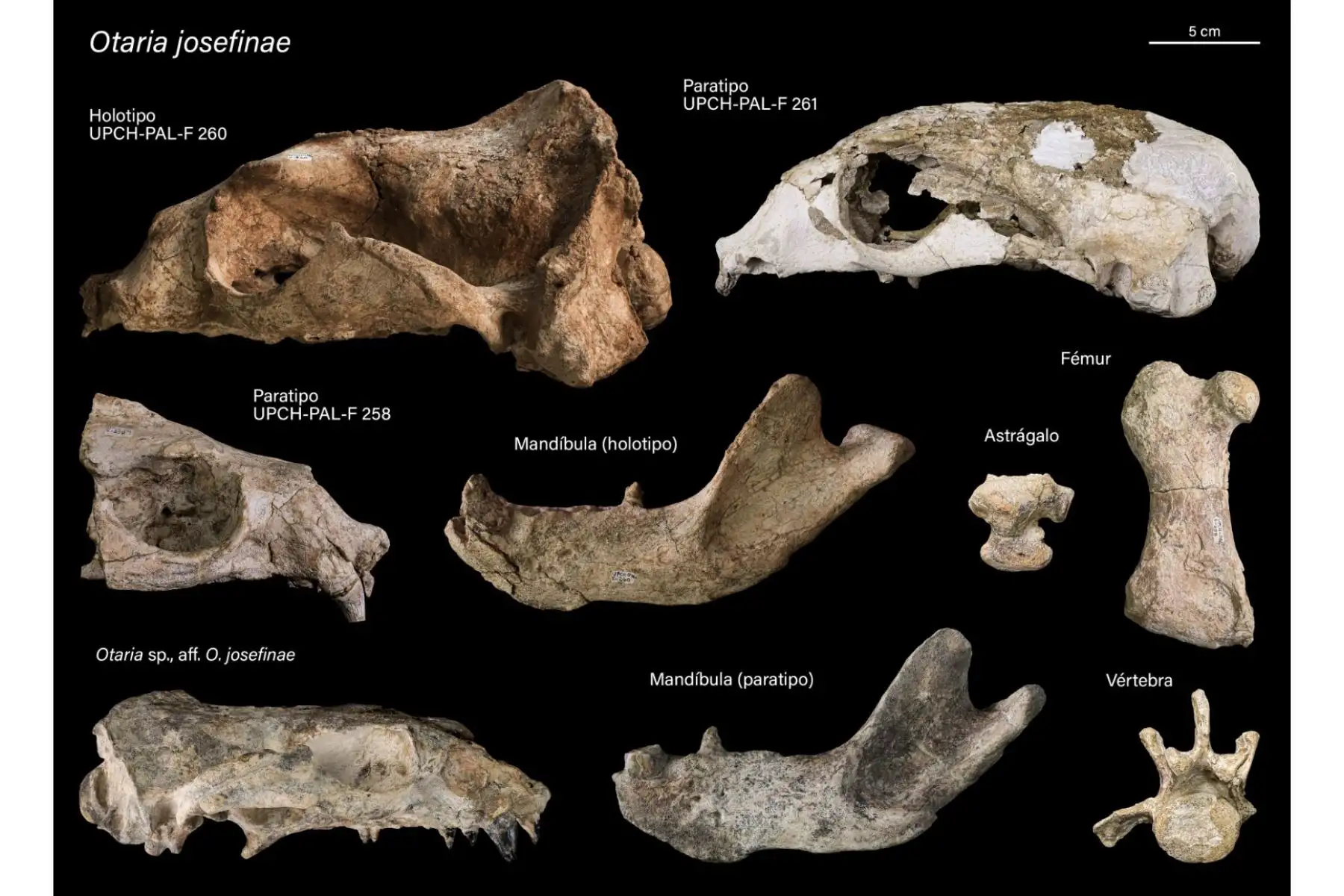
Researchers point out that Otaria josefinae is the sister species of the current South American sea lion (Otaria byronia), and along with other Peruvian fossils, it forms the lineage Australotariia, originated after the migration of sea lions from the northern hemisphere about 4 million years ago.
Tribute to Josefina Rojas
The name of the new species honors Josefina Rojas, who for more than four decades has protected the paleontological heritage of the Sacaco desert, alerting about threats and collaborating with national and international researchers. Without her work, many fossils would have been lost.
Geological Context
The fossils come from the Caracoles and Pongo formations, sedimentary units of the Pliocene-Pleistocene that outcrop in Sacaco. The oldest specimens date back about 2 million years, while the most recent ones are about 1.6 million years old.
The discovery of Otaria josefinae expands knowledge about the evolution of marine mammals. It also reaffirms the importance of Sacaco as a key site for understanding the history of marine-coastal ecosystems of the southeastern Pacific. Additionally, it underscores the need to protect Peru’s paleontological heritage, which continues to reveal fundamental pieces of the continent’s natural history.



