



Science continues discovering life in ecosystems that are increasingly under pressure. During 2025, almost 200 new plants and fungi were described for science. However, many of these species already face environmental threats.
This scenario reflects a growing tension between knowledge and destruction. While the planet’s biological record expands, habitats are shrinking. Therefore, identifying species is also a call for conservation.
The list of highlighted species seeks to make visible what remains hidden. Naming is the first step to protecting and understanding biodiversity. Thus, each discovery acquires a strategic ecological value.
Classify to conserve ecosystems
Taxonomy allows us to recognize unique organisms and their natural functions. Without classification, many species would be left out of protection policies. Consequently, science plays a key role in environmental defense.
Each new species reveals invisible links between plants, fungi, and animals. These relationships sustain soils, forests, and entire food chains. When one is lost, the ecological balance weakens.
Investing in biological knowledge is investing in planetary resilience. Biodiversity supports essential services for human life. Therefore, discovery also implies collective responsibility.
Some of the most striking discovered species
- Blood-spotted Orchid (Telipogon cruentilabrum)
This flower inhabits the high Andean forests of Ecuador and grows on daisy trees, mimicking female flies to attract pollinators. However, mining and agriculture severely threaten its habitat. - Spider-killing Fungus (Purpureocillium atlanticum)
It lives in the Atlantic forest of Brazil and parasitizes underground spiders. To do this, it covers their bodies with mycelium before releasing spores. Additionally, it reveals extreme interactions within the ecosystem. - Fire Demon Flower (Aphelandra calciferi)
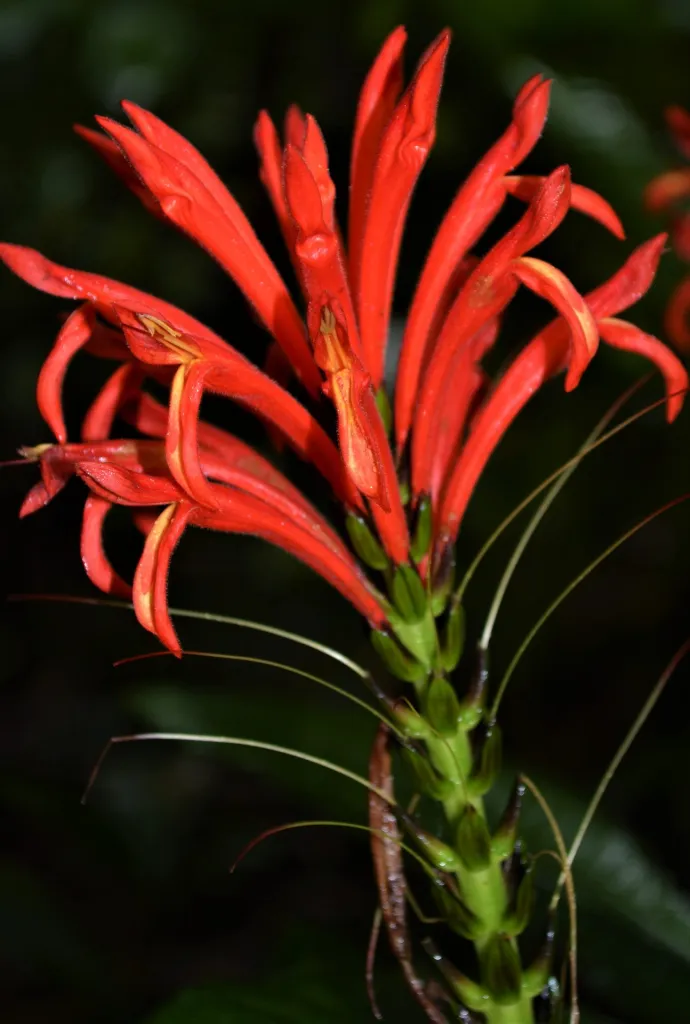
This is a forest shrub from Peru with intense orange and yellow flowers, possessing high ornamental potential. Its natural environment is fragile and poorly protected. - Christmas Palm (Adonidia zibabaoa)
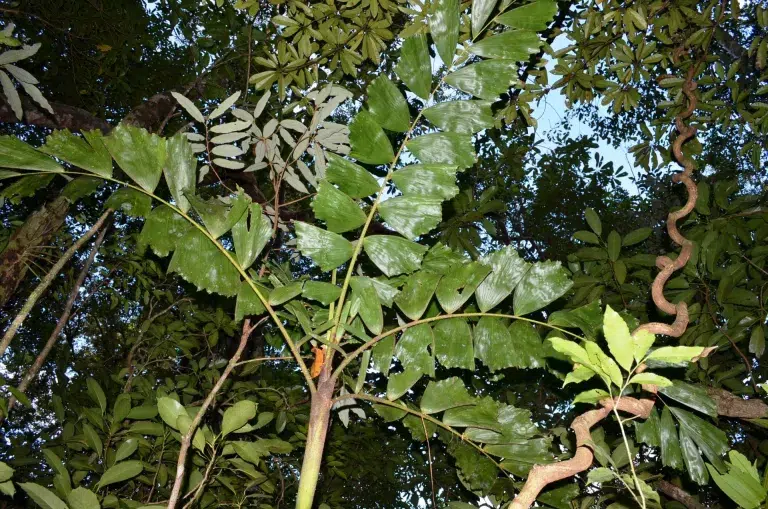
It grows on limestone ridges of the island of Samar, in the Philippines, and is characterized by producing red fruits and reaching up to 15 meters in height. Its limited distribution makes it vulnerable. - Living Stone (Lithops gracilidelineata subsp. mopane)
This succulent camouflages as a rock in southern Africa and grows in wetter areas than other lithops. Illegal collection threatens its survival. - Subalpine Snowdrop (Galanthus subalpinus)
Native to subalpine meadows of North Macedonia and Kosovo, it faces overgrazing, fires, and horticultural trade, activities that have led it to a critical conservation status. - Caterpillar Orchid (Dendrobium eruciforme)
This is a tiny species from Indonesia that grows on trunks and its shape resembles caterpillar colonies. Its habitat depends on well-preserved forests. - Grass Root Fungus (Magnaporthiopsis stipae)
This species lives hidden in roots and soils, influencing the health of plants and agricultural ecosystems, representing invisible biodiversity. - Banana and Guava-flavored Fruit Tree (Eugenia venteri)
Native to Papua New Guinea, its seeds are dispersed by giant terrestrial rats and serves as an example of coevolution between flora and fauna. - Detarioid Leguminous Tree (Plagiosiphon intermedium)
This forest giant from Cameroon has a limited distribution and depends on symbiotic fungi to grow, lacking formal protection.
The advantages of discovering exotic species
Each new species expands knowledge about life on Earth. It allows us to understand complex evolutionary and ecological processes. Additionally, it provides key information for conservation.
These discoveries also benefit society. They can inspire advances in medicine, agriculture, and biotechnology. Biodiversity is a source of yet unknown solutions.
Finally, making exotic species visible strengthens environmental awareness. It helps to protect fragile ecosystems before they disappear. Discovering is, ultimately, an act of caring for the planet.



