



The city of Santa Fe is facing a silent yet urgent environmental problem: the toxic waste generated by its landfill. In response to this situation, a research team from the National University of Litoral (UNL) and Conicet has launched a sustainable solution based on nature.
Since 2021, they have been developing a project that uses plants and microorganisms to decontaminate sludge and biosolids from wastewater treatment. These residues contain heavy metals and dangerous organic compounds that threaten human health and ecosystems.
The work is part of the CAI+D line of the UNL, focused on social and productive issues. In its final stage of execution, the project aims to reduce the environmental impact of the landfill and improve the management of municipal solid waste.
The strategy combines bioremediation, using beneficial bacteria, and phytoremediation, which employs plants capable of absorbing or transforming toxic substances. This approach allows for treating the waste without generating new contaminants.
 Researchers will use plants and microorganisms to stop landfill contamination.
A Regional Impact Solution
Santa Fe’s landfill contains contaminated sludge with chromium, lead, nickel, and arsenic. Until now, these materials lacked effective treatment methods and safe final disposal strategies.
The progress made allows for adapting specific purification technologies and designing new protocols to minimize the environmental risk. Furthermore, the experience can be replicated in other cities facing similar challenges.
The project is also the result of collaboration with the private sector. The company Milicic S.A., responsible for the landfill operation, collaborates with samples, physicochemical analysis, and field personnel, while the scientific team provides specialized knowledge.
This partnership enables the creation of technologies applicable at the municipal and industrial levels, thus expanding the impact beyond the academic sphere. The idea is for science to respond to real needs, improving the quality of life in the territories.
Consequences of the Landfill for Health and the Environment
Mismanaged waste not only affects the natural environment. Landfills are sources of soil, groundwater, and air contamination. In the case of Santa Fe, contaminated sludge contains heavy metals that can leak into the environment and reach living organisms.
Prolonged contact with arsenic, lead, or chromium can lead to respiratory diseases, neurological damage, cancer, and immune system alterations. These compounds do not degrade easily and can accumulate in the food chain.
On an environmental level, leachates (liquids generated by waste decomposition) can infiltrate aquifers and water bodies. Native vegetation, animals, and soil microorganisms are also affected by these toxic elements.
Faced with this scenario, bioremediation technologies emerge as an ecological and low-impact alternative. They reduce the need for transportation and final disposal in other areas, avoiding new pollution sources.
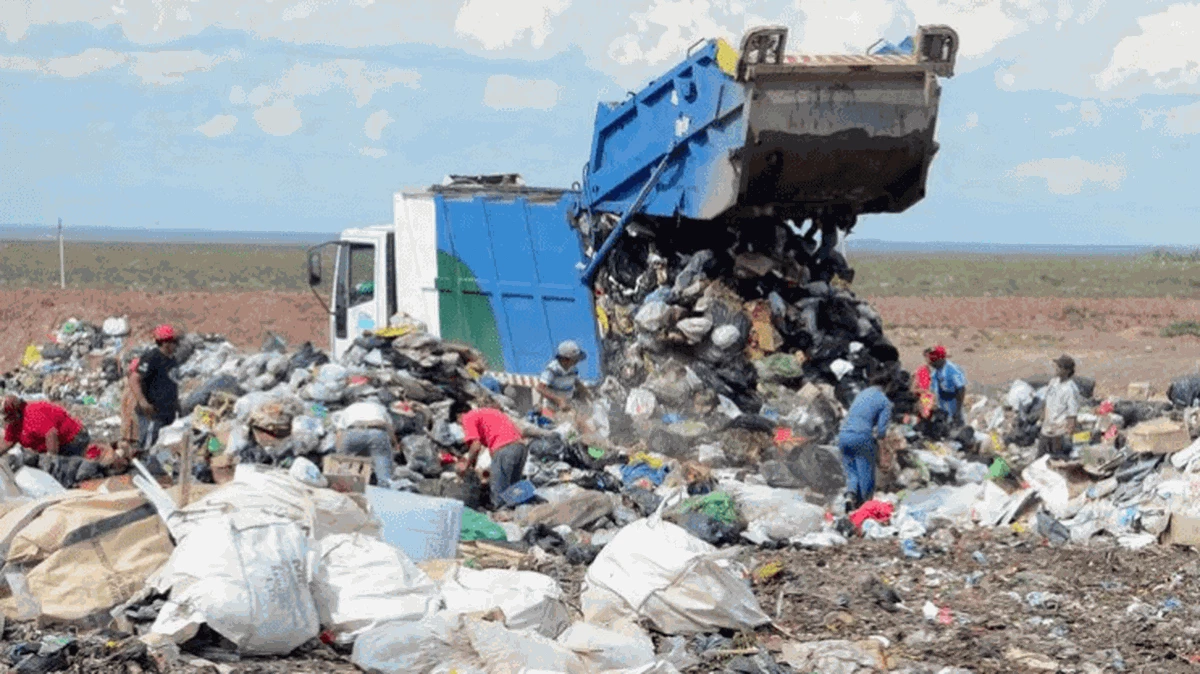 The issue of the Luján landfill.
Research with Territorial Commitment
The proposal promoted by UNL is part of a knowledge co-production approach, where the university works together with social and productive actors from the beginning of the project.
The Oriented CAI+D projects arise from specific needs of communities. In this case, the goal is not only to develop science but to ensure that this science is applied in a concrete, sustainable, and transformative manner.
The plant remediation project is a clear example of how research can be a tool for environmental, health, and social change, from a collaborative and responsible perspective.


