



A multidisciplinary team in Russia achieved a historic breakthrough in the field of plant biology by reviving a plant extinct for over 30,000 years.
The achievement was made possible thanks to seeds preserved in the permanent ice of Siberia, making the species Silene stenophylla the oldest organism restored from plant material.
This scientific milestone was documented in the prestigious journal Proceedings of the National Academy of Sciences. It significantly surpasses the previous record of plant regeneration, which was held by a 2,000-year-old date palm found in Israel.
The discovery: frozen seeds in a Pleistocene burrow
The scientists found the seeds in an unusual context: an ancient Arctic ground squirrel burrow. This burrow was located 38 meters underground in the Kolyma River region, in northeast Russia. The fruits and seeds that this small rodent had stored during the Pleistocene were sealed in ice for millennia.
Through radiocarbon dating, it was determined that the plant material was 31,800 years old. Far surpassing any previous attempts of plant regeneration from fossils or frozen remains.
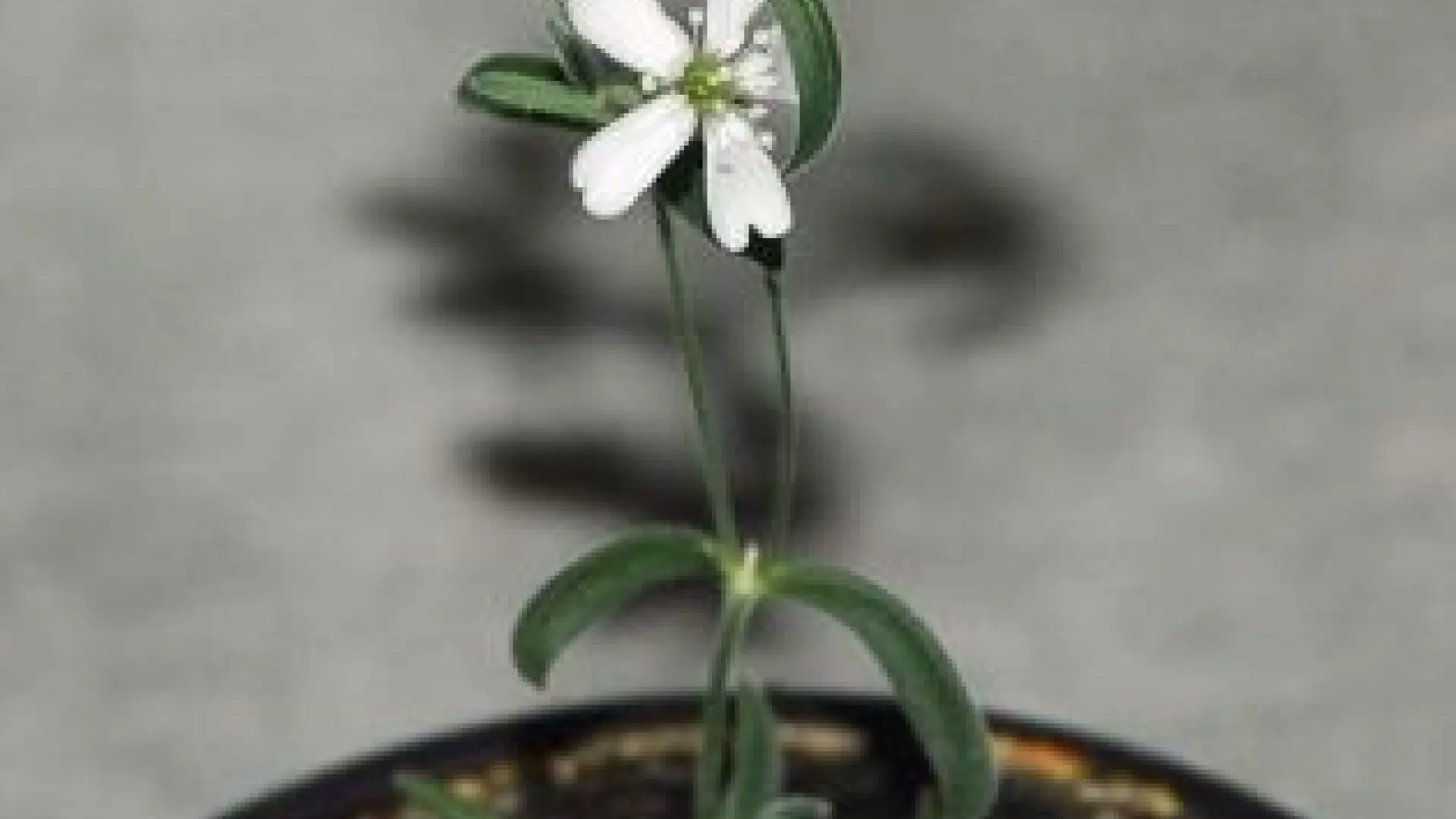
In vitro cloning after failed direct germination
The initial attempts to achieve direct germination of the seeds were unsuccessful. As an alternative, the team chose to extract placental tissue from the fruits and perform an in vitro culture. This allowed them to develop 36 genetically identical specimens through controlled plant cloning.
The white flowers formed correctly, the plants were fertile, and the germination rate of the new seeds reached 100%, marking an absolute success in the biological reactivation process.
Characteristics of the ancestral phenotype and open questions
One of the most intriguing findings was the morphological difference between the recovered plants and their current counterparts. The petals were longer and more spaced out, suggesting the existence of an extinct phenotype or evolutionary traits lost over thousands of years of adaptation.
Although there are no certainties about the origin of these differences, it is suggested that they could represent extreme adaptations to glacial climates, typical of the Ice Age, that have not been preserved in modern populations.



